The fall foliage show of
reds, yellows and golds will be beginning shortly in many parts of
Illinois, and then will be finishing up before we know it. One good
freeze up north will take care of any more fall color as the leaves come
down, left in the landscape and on the lawn.
If
you are out in the country with natural woodlands, leaves play a part
in preserving the natural habitat of native trees, shrubs and flowers.
If that is the case, just let those leaves lie. The leaves will
decompose and return valuable nutrients to the soil to be used by soil
microbes that support plant growth.
Where
your lawn and trees exist together, mulching the leaves with a mower
allows the small pieces to fall between grass blades, benefiting the
soil, trees and lawn. But at some point, there may be more leaves than
can be mulched in. This is the time to mow and bag them so that the
leaves do not smother the lawn.
Where
the vegetable garden is adjacent to the lawn, consider either mowing or
blowing the leaves into the beds to be worked in either this fall or
left as a mulch layer for the soil and worked into the soil next spring.
Whole leaves can be used as mulch around the base of tender plants like
roses. Using the whole leaf means the mulch will not pack down,
defeating the purpose of protecting the crown of the rose plant.
Now,
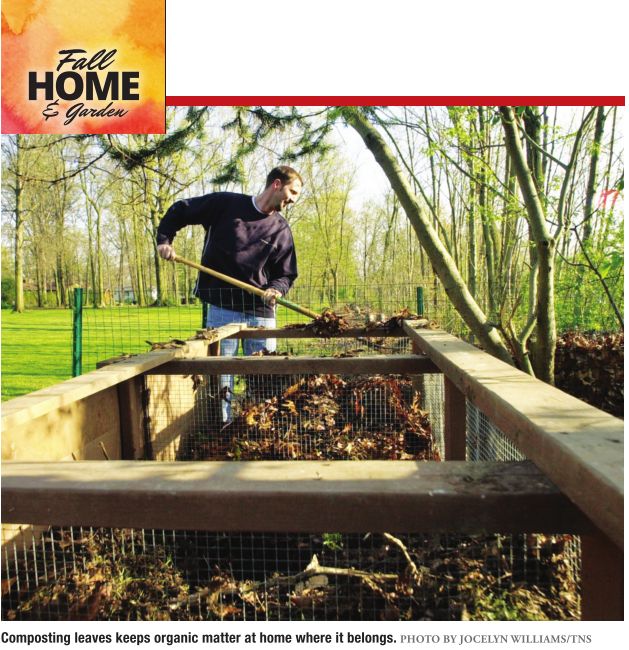
back to the leaves you have collected with the lawnmower. Consider
using them to start a compost pile or build upon one you already have.
That mower bag contains the two primary ingredients: browns
and greens. When considering where to place the compost pile or bins,
think about the shady areas in the yard where the grass does not do well
anyway. The traditional compost pile will need to be four to five feet
square at the base, with a height of about four feet. As you create the
compost pile, some garden soil should be added in as you go to provide
microbes that will be breaking down the organic matter into compost.
Since
organic matter is naturally acidic, about half a pound of a finely
ground limestone should also be added for every cubic yard of material.
Now your compost recipe is almost complete. Once the pile has been
created, the final ingredient needed is water. If the pile remains too
dry, no breakdown occurs. If left too wet, anaerobic conditions and
decay will occur, giving you a very smelly, slimy mess to deal with.
Fresh
kitchen produce peelings can also be added into the compost pile
year-round. They provide some of the moisture that is important during
the summer and after they have been frozen and thawed from the winter
month’s additions, they provide moisture again. If you are lacking in
the fallen leaves department, just ask neighbors who have bags sitting
out at the curb.
Don’t let that good organic matter get away! Build a compost pile.
Richard Hentschel is a University of Illinois Extension horticulture educator. Contact him at [email protected].


