Illinois State Museum reopens with a plan to revitalize
The Illinois State Museum, founded in 1877, reopened its doors on July 2, 2016, after being closed for nine months due to budget cuts at the Illinois Department of Natural Resources. The closing – which extended to the entire Illinois State Museum system, including Dickson Mounds in Lewiston and the Lockport Gallery, along with the museum proper and Research and Collection Center, both in Springfield – was unpopular with the public, gaining attention from both traditional and social media as well as inspiring passionate protest demonstrations leading up to the closure. In contrast, the reopening has been a relatively quiet affair.
Walking through the museum itself, it mostly feels as though it never closed. Standbys such as the large-scale nature dioramas of lifelike tableaus featuring spectacular taxidermy, the perennial “People of the Plains” exhibit, the bones of the giant sloth – all are here, unchanged. The art gallery space on the second floor is bursting with color and energy thanks to its current exhibit, “Just Good Art: The Chuck Thurow Gift” (see “State Museum showcases contemporary art,” March 2, 2017, at illinoistimes.com).
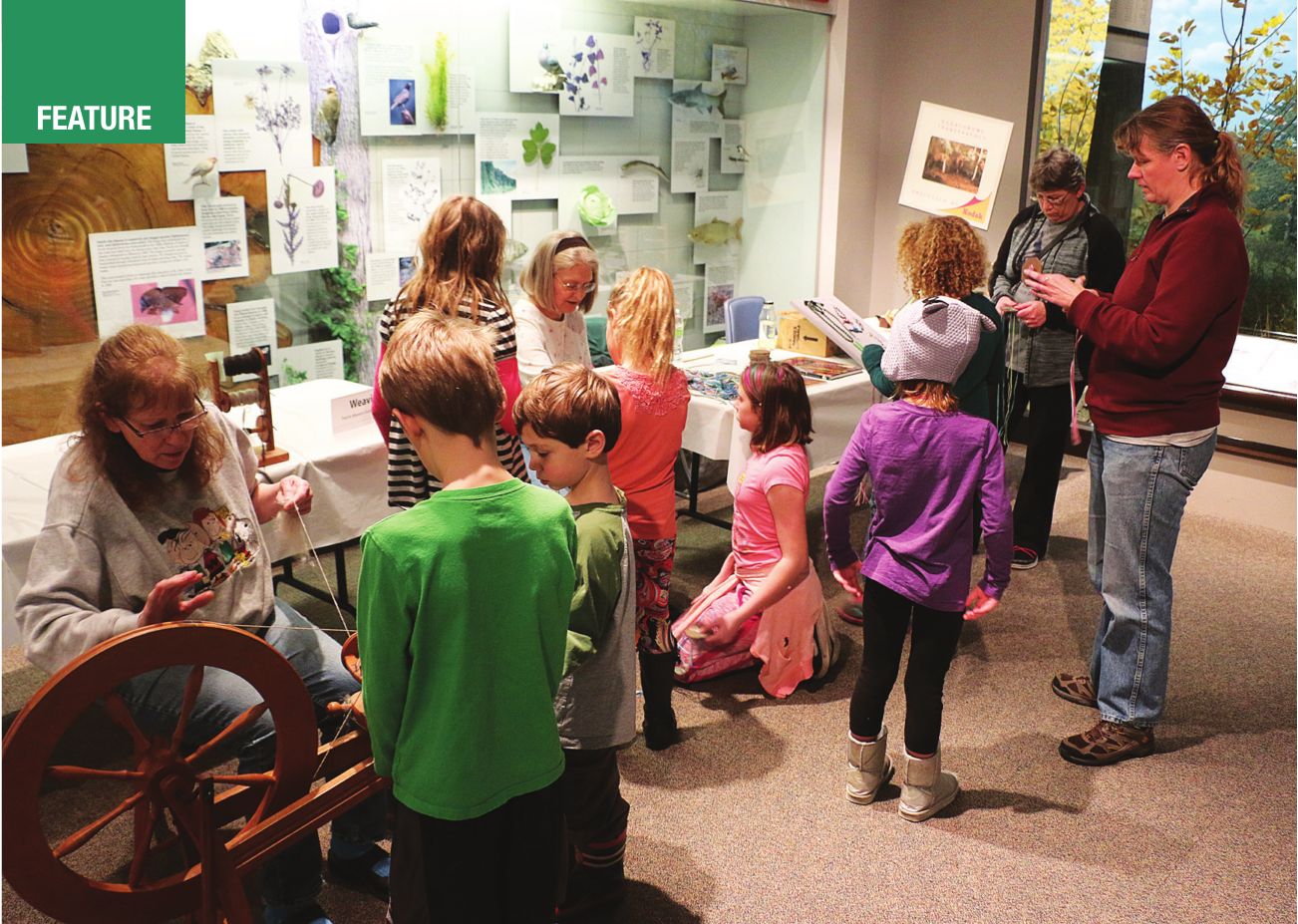
According to Michael Wiant, interim director of the museum as well as longtime director of Dickson Mounds, more than120,000 people have visited the museum system properties combined since they opened back up. The museum declined to offer pre-closure attendance figures for comparison. “Our school group reservations for the months of April and May are approaching what we have done in the past,” he said. “We’re doing a lot of work to improve attendance. Programs – especially family-oriented, hands-on experiences, presentations and field trips – have long accounted for a steadily increasing proportion of on-site attendance.” Wiant describes efforts toward increasing the diversity and frequency of programs since reopening in July. For example, this year’s monthly Super Saturday programs, featuring special, free activities for children between three and eight years old, have attracted more than 200 people to each event and in March, the museum’s lunchtime brown bag seminars have attracted more than 60 people. “While threshold attendance has long been the standard to measure museum performance,” said Wiant, “there are better measures, especially in a world of increasing internet connection.”
For example, the Illinois State Museum loans objects to other institutions for exhibitions – objects from the museum’s collection are on view in the ISM system and other venues across the country, including the Springfield and Central Illinois African American History Museum and soon the Smithsonian Museum. “Parts of the collection are often on loan to other institutions for study and scholars from the United States and elsewhere often travel to the Research and Collections Center to conduct research,” Wiant added. The museum’s website and other digital platforms received more than one million unique visits in 2016.
One
obvious difference in the museum since reopening is the institution of a
$5 entry fee (entry used to be free of charge). Wiant says the response
to the fee has been positive. “Two individuals in the first month of
operation each purchased 100 tickets. They spent $500 apiece and offered
those tickets to the next 100 people who came to the door,” he said,
noting that other comments have been positive, suggesting that patrons
appreciate the value of what the fees pay for. As for school groups
visiting the premises, all students are free of charge, with the museum
also accommodating a certain number of chaperones. “Effectively, school
groups and their teachers continue to enter the museum at no charge,”
says Wiant.
Upcoming exhibits 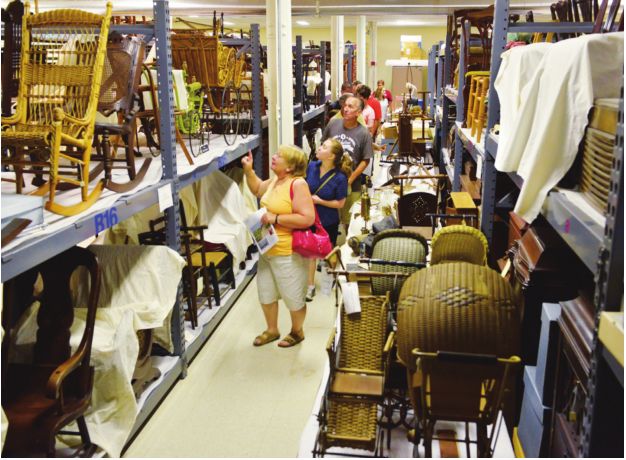
Of
course, the best way to get people in the door is to provide
outstanding content which people want to see. The main art gallery at
the Illinois State Museum has long been a changing gallery. In addition
to the main art gallery, the museum also has a small gallery with the
purpose of displaying lesser-seen works from the museum’s holdings. The
gallery will feature the work of Osaka-born, Chicago-based artist
Michiko Itatani, in an exhibit kicking off with a Museum Society
reception on Thursday, March 23. Other upcoming programs include an
acoustic concert series to be held at the museum on the third Thursday
of each month beginning in May, which is being developed by
musicianproducer Chris Vallillo, who has produced the Hickory Ridge
concert series at Dickson Mounds for two decades.
Bicentennial plans
On
a larger scale, plans are in the works for a multiplatform exhibit
celebrating the Illinois bicentennial in 2018. “We have two plans,”
explained Wiant. “One will be a virtual exhibit posted on the web and
available to anyone with web access. We won’t limit ourselves to just
the past 200 years because the museum’s collection is a chronicle of
Illinois as a place [as opposed to just as a state].” The widening of
scope will allow the exhibit to include fossil records, Native American
history and early American settlement, areas all wellrepresented by the
museum’s collections.
“This
will serve two purposes,” Wiant said. “It both celebrates the place and
it brings the breadth and depth of our collection to the attention of
the public.” The objects included in the online exhibit will also be
physically on display in the museum.
Positions available
Within
the past few weeks, the museum posted job listings for the first new
positions since reopening, including curators in decorative arts,
history and education as well as a librarian and office assistant for
the museum. The Research and Collections Center (RCC) is seeking an
anthropology curator. Despite losing several prominent employees during
the period of closing, there is still a core of curators who manage the
RCC. Current work there falls into the broad categories of collection
management, providing access to collections through loans to other
institutions and research undertaken by curators. “We are in the process
of digitizing collection data, which is the first step in providing
more access to collection information to the public,” Wiant explains.
“At the same time, we are improving housing of the collection to meet
contemporary standards.” Much of this work is being done by volunteers
under the supervision of museum staff. The RCC’s curator of botany, Dr.
Hong Qian, has recently submitted a proposal to the National Science Foundation to study invasive plants.
Dickson Mounds and Lockport Gallery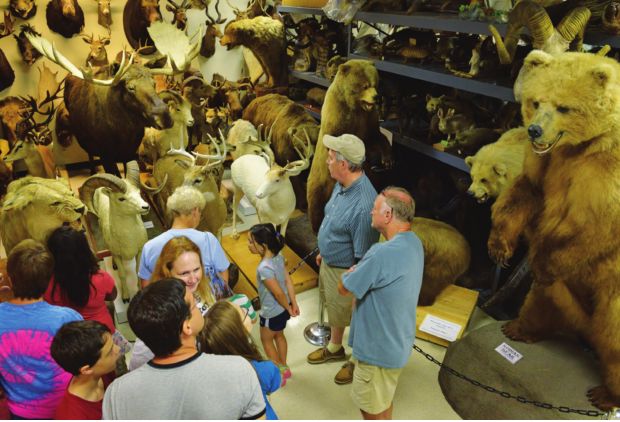
Since
reopening in July, Dickson Mounds in Lewiston (about an hour’s trip
north of Springfield on I-97) reintroduced programming including the
popular Artifact Identification Day, during which regular citizens can
bring in found objects for identification. On March 18 the facility
hosted a “spring gathering,” described by Wiant as a celebration of
Native American life in the Illinois River valley. George Godfrey of the
Illinois Natural History survey spoke about the removal of the
Potawatomi in 1838, providing an historical dimension to the
proceedings. A group called “The Spirit of the Rainbow Singers”
performed, bringing a large traditional drum and singing songs related
to the Northern Plains. “Many people come in dance regalia and it’s an
extraordinary opportunity for the public to witness and be a part of a
traditional Native American ceremony,” said Wiant.
Dickson
Mounds is situated in what has been described as an underserved area
for cultural opportunities and one program Wiant is particularly proud
of addresses this deficit directly. “We have a program there we call Tot
Time which is designed for really young ones who are still homebound
with parents or caregivers,” Wiant said. “Once a month we bring them to
the museum for a program designed for their age level – and it has
turned out to be extraordinarily popular. There was a program on
mastodons, for example, where we had large bones that kids could touch
and so on. It’s been an effort to address a part of the community that
is not generally served in this capacity and they have welcomed it.”
The
Lockport Gallery (located 30 miles southwest of Chicago) was reopened
on Sept. 24, 2016, and is functioning much the way it always had,
changing exhibitions of art created by past and contemporary Illinois
artists and artisans, some from the museum’s collection, some from
elsewhere. “It is a venue for compilations that we put together here [in
Springfield] and move there for review,” Wiant said. “We also offer a
series of educational programs through the gallery.”
Museum store
The
museum store, which was run by the Museum Society for many years and
which specialized in offering works by Illinois artisans for sale, is
the most glaring absence in the current version of the museum, with the
space it once occupied nearly empty. Wiant says that there are plans to
eventually find a way to replace the museum store but it is too early to
provide many details. “We are looking at past performance [of the
museum store] and we’re going to try to build on the strengths of that
operation.” In the meantime, shelving has been vacated in order to adapt
that part of the lobby to other uses until a plan for a new museum
store are in place. “It has turned out to be a welcome addition – we
have a museum use policy which allows public groups to rent the space.
We have used it on a variety of occasions and have many others
scheduled. It provides a unique space in the museum for groups to gather
and that has been serving us very well.”
As
for the now-defunct Illinois Artisans Program which once provided art
and craft works to the museum store, Wiant says, “We have not lost
contact with the artisans who were part of that enterprise for so many
years and it is the subject of considerable thought. The retail world
has changed a lot in a relatively short period of time and so we’re thinking about not
only the physical presence of objects made by Illinois artisans but
other ways by which we may draw attention, through the museum, to those
artists. Right now, we’re contemplating what a future-looking artisans
program would be like.”
Accreditation 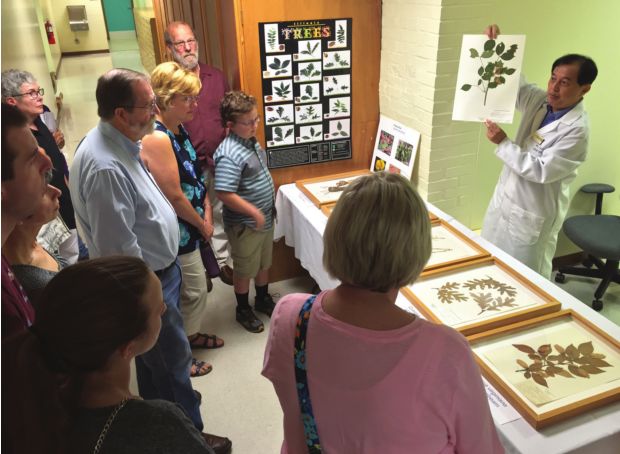
One
adverse result of the nine-month closure of the museum was the highly
pulbicized suspension of the venerable institution’s national
accreditation by the American Alliance of Museums. According to the
alliance’s website, accreditation “increases [a] museum’s credibility
and value to funders, policy makers, insurers, community and peers.
Accreditation is a powerful tool to leverage change and helps facilitate
loans between institutions.” As such, revocation of this status can
prove devastating to an institution’s ability to flourish.
Wiant
said that steps are being taken to reaffirm the ISM as a top-quality
museum. “We submitted a reaccreditation document on Feb. 1,” said Wiant.
The document consists of museum policies and strategic plans going
forward, among other requirements. The alliance will pick two
individuals who represent museums from the United States to visit the
museum at some point this coming summer whose job will be to review the
documents and conduct onsite examinations at all three of the ISM
system’s public locations. Afterwards they will deliberate on their
findings. “I suspect sometime before the end of the year we’ll have the
results of their review,” Wiant said.
Contact Scott Faingold at [email protected].


