’Tis the season for
braising! This hands-off cooking method, in which foods are covered and
slow-cooked at a lower temperature with a small amount of liquid,
transforms tough, cheaper cuts of meat and hard, fiberrich vegetables
into sumptuous one-pot meals. Not only do these dishes pair well with a
blustery December night, they can be prepared ahead of time and often
taste better the next day.
Often
referred to as pot roasting, this low and slow cooking method uses
moist heat to break down the abundant collagen and connective tissue
found in cuts of meat such as lamb shanks, chicken legs, pork shoulder
and beef short ribs. Collagen, which is initially very tough and chewy,
breaks down into gelatin when cooked for a long period of time. This
gelatin is what gives the finished product its unctuous mouthfeel and
texture. A braise is differentiated from stews by the quantity of liquid
and the size of the pieces of food being cooked. In a stew, meat and
vegetables are cut into smaller sizes and submerged completely in
liquid.
Vegetables are often
braised alongside meats to enhance their flavor, but they can do more
than just play supporting roles. Vegetables such as winter squash,
leeks, artichokes, celery, green beans, cabbage and kale are especially
well-suited to this cooking method. When braised with beans or served
alongside a protein-rich grain like quinoa or wheat berries, they make a
delicious and nutritionally complete meal.
Once
the basic methodology of braising is mastered, the possibilities are
virtually limitless, and you can tailor the dish to suit your particular
taste. Start with an oven-safe, heavy-bottomed pot with a tight-fitting
lid. Salt the meat well and sear it on all sides over high heat.
Transfer the meat to a plate, reduce the heat, and then add garlic,
onion, shallots or any combination you like to the pot. Sauté for two to
three minutes, then return the meat to the pot. Add vegetables such as
carrots and celery that have been cut into two-inch pieces, and enough
liquid to come halfway up the side of the meat. Broth, wine, beer and
juice can all be used as braising liquids, and even plain water will do in a pinch.
Seasonings
can be added at this point, such as bay leaf, herbs and whole spices.
In this way, a basic recipe can have many variations. Chicken legs
braised with carrot, onion, mushrooms, bacon and wine becomes classic
French Coq Au Vin. Swap out the wine for broth, and exchange dried
apricots, cumin and a cinnamon stick for the mushrooms and bacon for an
exotic, Moroccan-spiced meal. Increase the heat and bring it to a bare
simmer, then cover and cook for 1-3 hours depending on the type of meat
and size of the cut. The dish can also be finished in a 275-degree oven,
or the contents transferred to a crockpot to cook. Meals cooked in a
crockpot will take slightly longer to finish as crockpots generally cook
at a lower temperature than the oven or stovetop.
The
dish is done when the meat is tender and falls off the bone. Remove the
meat and vegetables from the dish. At this point you may want to
thicken the cooking liquid by mixing 3 tablespoons of flour with ½ cup
water into a slurry, then increase the heat and whisk the flour slurry
into the simmering pan liquid. Simmer, whisking constantly for about
five minutes to allow the starches in the flour to thicken the sauce.
Return the meat and vegetables to the dish, rewarm and serve.
Vegetables
are prepared in much the same way, but do not require the searing step
that is essential for deep flavor when braising meat. Vegetables will
not require as much cooking time as meat, usually around 30- 40 minutes,
and care must be taken not to overcook them into mush.
Basic Braised Vegetables
• 2 pounds vegetables, such as leek, celery, carrot, parsnip, beets, kale or a combination – washed, peeled and trimmed
• 2 tablespoons butter, divided
• 1/4 cup minced onion or shallots
• 2 cloves minced garlic
• 1/3 cup white wine
• 1/1/2 cups low-sodium broth
• ¼ teaspoon salt
• 1/8 teaspoon pepper
Heat
the butter or olive oil over medium in a wide, heavy-bottomed pan with a
tightfitting lid. Add onion and garlic or shallots and sauté 2-3
minutes, or until they begin to become soft and translucent. Add the
wine and simmer until reduced by half, then arrange the vegetables in
the pan. Pour the broth in, add salt and pepper, cover and simmer for
about 20-30 minutes. The vegetables are done when they pierce easily
with a knife but still retain some firmness and their shape. Remove the
vegetables from the dish, then increase the heat and reduce the liquid
to ½ cup. Take the pan off the heat and let it sit for one minute, then
swirl the remaining tablespoon of butter into the reduced liquid. Pour
over the vegetables and serve.
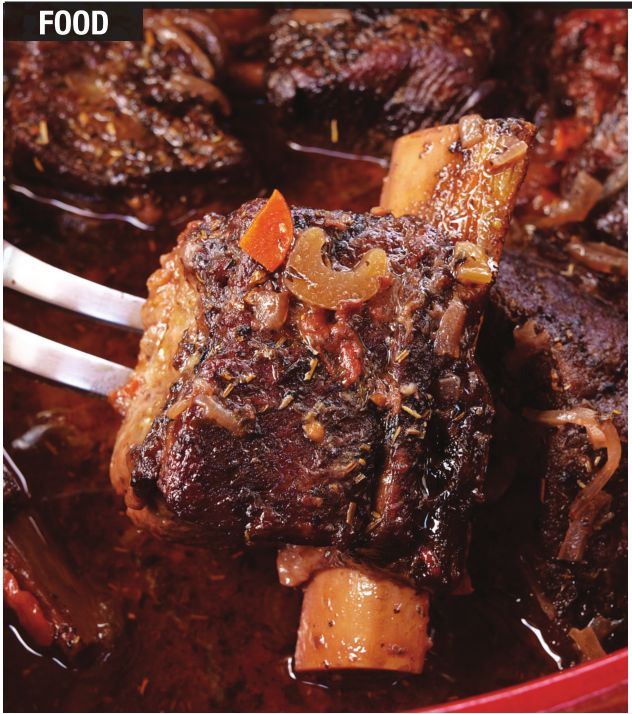
Beer-braised Short Ribs
• 2 pounds beef sort ribs
• 4 ounces bacon or pancetta, diced
• 1 onion, minced
• 3 cloves garlic, minced
• 1/3 cup prunes
• 2 carrots, peeled and cut into 2-inch lengths
• 2 stalks celery, cut into 2-inch lengths
• 1 bottle dark beer, preferably Belgian-style
• 2 cups low-sodium beef broth
• 2 bay leaves
• Salt and pepper to taste
• 3 tablespoons flour
• Chopped parsley, to serve
Salt and pepper the short ribs. In a heavybottomed pot with a
tight-fitting lid, fry the bacon or pancetta over medium heat until
crisp. Remove from pan and set aside. Increase the heat and sear the
short ribs on all sides until well browned. Remove them from the pan and
add the onions and garlic and sauté until slightly softened. Return the
meat to the pan, along with the bacon, carrots, celery, prunes, beer,
broth and bay leaves. Season to taste with salt and pepper, bring to a
simmer, then cover and cook over low heat for two and a half to three
hours, until meat is fork tender.
Remove
the meat and vegetables from the pan. Pour the liquid into a gravy
separator and let it settle, then pour off most of the fat. Return the
defatted liquid to the pot and bring it to a simmer. Mix flour with ½
cup cold water into a slurry and whisk it into the simmering liquid.
Simmer for 5 minutes to thicken, then return the meat and vegetables to
the pan and warm through. Garnish with chopped parsley and serve with
mashed potatoes or noodles.
Braised White Beans with Tomatoes and Fennel
This hearty one-pot meal makes a satisfying vegan supper when paired with some country French bread and a fresh green salad.
• 2 cans cannellini beans, drained, or 3 cups cooked cannellini beans (about 1 pound dry beans)
• 2 tablespoons olive oil
• ½ cup thinly sliced onion
• 2 fennel bulbs, sliced
• 3 cloves garlic, minced
• ½ cup white wine
• 1 cup low-sodium broth
• 1 can whole tomatoes in their juice
• Salt and pepper to taste
• ¼ teaspoon crushed red chili flakes (optional)
• Grated Parmesan cheese to serve (optional)
Heat
the olive oil over medium heat in a wide, heavy-bottomed pan with a
tight-fitting lid. Add the onion, fennel and garlic and sauté until
slightly softened. Add the wine and reduce, then add the beans, tomatoes
and broth. Season to taste with salt, pepper and chili flakes (if
using). Cover and bring to a low simmer for 30 minutes, stirring
occasionally. Garnish with minced parsley and serve with grated
Parmesan.
Contact Ashley Meyer at [email protected].