Former guidance dean reports from the front lines on District 186 racial disparities
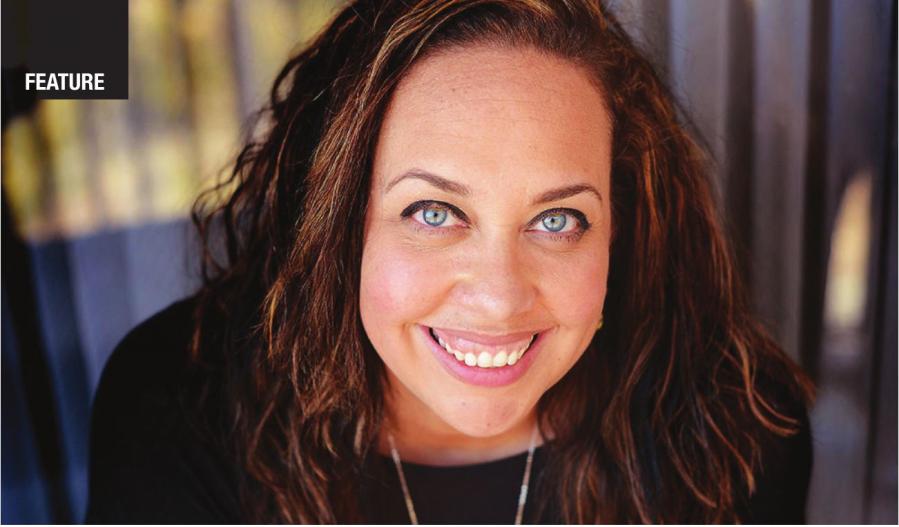
Kelly Wickham Hurst spent
about 20 years with Springfield School District 186. As guidance dean,
she frequently took to her blog and social media to share stories of
black students being treated unfairly, and her efforts to advocate on
their behalf. Under her social media handle – MochaMomma (an homage to
both her love of coffee and the color of her skin) – Hurst gained 11,000
Twitter followers, 25,000 monthly impressions on her blog and a
presence on bigger platforms like NPR and Katie Couric’s show. Sprinkled
in among the stories she shared online were hints that some schoolhouse
colleagues resented her, like the time a teacher inadvertently flashed a
text message over the classroom projector and students saw Hurst
referred to as a “bitch.”
There
was never one explosive confrontation, but over the years, these
stories of small indignities (academics call them microaggressions)
piled up. So it was no surprise when, over the summer, she parted ways
with the school district and started an initiative called Being Black At
School.
Do you want to give an
example or two of things that you saw happen, and I will tell you that I
will run it past (school district officials) to get their side of it as
well.
Okay,
here’s one. As guidance dean, one of my roles was to make sure that we
got parents in the door, and that happens for multiple things, like band
concerts or choir concerts or sports. … But this was around
parent-teacher conferences. And the protocol was to make a list of
students that you wanted to see their parents, and that list was given
to me. One year, I got a list from a grade level that was two lists –
one said “academic” at the top, and the other list was “behavior.” And
the behavior list was 16 kids, and 14 were black boys.
Who was on the academic list?
I can’t recall the number, but it was mostly white – for either not
doing their classwork or homework or not understanding a concept.
I wonder why they decided to break it up that way.
I don’t know but they shouldn’t have when they gave it to me, because I
recognized it right away for what it was, and that was that we only want
to talk to black students’ parents when they’re a behavior problem that
we want the parent to come in and fix. I mean, I know these kids are
struggling. I see their grades, I’m in their classrooms, I know exactly –
those teachers were not calling the wrong parents in. But if they’re
delineating that these kids are academic concerns and these kids, we
want to talk to their parents because we want better behavior from them,
I found that very problematic.
Were
there no students who were both? Were all the white students with
academic struggles perfectly behaved and all the black students with
behavior problems doing great in academics?
That
was my question to them! And they came back with, “No, there’s
crossover on both of these lists.” The child who’s not working well in
the classroom is probably having some issues at home. Such a great
example that you and I talked about is that whole iceberg thing: You see
the problems at the top, you don’t see all those issues going on
underneath. So what you perceive as being their behavioral problem is
going to be rooted in some academic issues as well.
But
I never got a list like that again. I think what solidified it for me
was watching a whole lot of things unfold that were unfair all the
time…. Once I became an administrator, what became very difficult was
being the person that had to discipline the students when I knew that
some implicit bias brought that kid into my office. So trying to have
those conversations with colleagues, and they didn’t want to admit any
of it. It’s not a fun place to be. We don’t want to talk about race in
this country.
An
incident happened in the spring, where we had a white student that
brought drugs to school, and was given all kinds of supports – the
social worker, psychologist, he had to see me so that he could get his
grades up and I could help him with homework. And the following week,
another student who was black was absent from school and the principal
called the police, and asked the police officer in the building to talk to
him. Which is not protocol. It’s absurd. And I tried to make that point
with her, to say calling the [police] on a black child sometimes has
them end up dead. It was that serious for me.
If
I recall your account of that incident on social media, the black
student’s mother approved. Correct. When I found out that our school
resource [police] officer was asked to speak to this child, I was a
little incredulous, and pushed back on that. And when I did, my boss
said to me, “But I’m going to ask another one, the young black guy who’s
also a police officer, to come talk to him.” And then I was just
flabbergasted that she felt that it was necessary to call two police
officers on a child for truancy. But we had a known drug dealer in our
school building that she didn’t ask the police to speak to. And she
said, “I asked his mother and she said it was OK.” I went and contacted
the mother – not because I didn’t believe [the principal], I believed
[the mother] said it was okay. I believe it was sold to her in such a
way that we were going to do her child a favor by bringing police into a
situation where police had no business being.
Was
the mother aware that there were these other options – for example, the
services that were provided to the white student who brought drugs? No.
She was not aware. She said, “I thought that you, as a school, had my
best interests at heart,” and I assured her that that’s not the way we
should’ve handled it.
You
refer to systemic racism in schools. Why don’t you give me the building
blocks of that? It’s disparate discipline, disparate access to advanced
classes, it’s… what else? We don’t reward students of color as easily
as we do white students. We don’t nominate them for things. We don’t
give them recognition, we don’t give them awards or rewards. White
students are more represented in the advanced-placement and dual-credit
courses. That’s in high school, but if we’re going to go ahead and walk
it all the way back, from elementary to middle school, teachers get to
make recommendations about where students should be in classes. And yes,
there’s absolutely some tests and assessments that also tend to deny
access.
I want to just
clear up one thing. In all the time that I’ve known you, and watched
what you’ve posted on Facebook, I don’t think I’ve ever seen you accuse
anyone in this school district of being an intentional racist. I think
what I’ve seen you complain about is more people who don’t want to make
waves, want to preserve the status quo, so do you think they have a bad
heart? Or do you think it’s kind of normal … and that is the problem?
I
like the way you characterize it, because I think it’s exactly what
I’ve done: I indict the system. I don’t say “this person” and I’ve
rarely named people unless it’s been kind of egregious. I also know that
whiteness protects itself. It privileges white students, it is always
going to protect itself, so it does not like it when you pick those
scabs and say, “You’ve got some problems here, and by the way, it’s kind
of stemmed on race.”
You
know, the black students that I had to discipline, that came to my
office, almost 100 percent of the time would say, “I absolutely did that
behavior. I did that thing they said I did. But so did some white kids,
and they are sitting in those classrooms getting an education, and I’m
in here, and I’m going to get another consequence, and then I’m going to
fall further and further behind.” That’s a systemic issue.
Have you always been this conscious, or was there a point where something happened?
I was not always this conscious. There were things I missed. But once
you finally recognize it, you can’t unsee it and then you’re angry about
it. You’re angry about the system, and I was angry at myself for
participating.
So what happened?
I worked at a high school years ago as a teacher, and we had two
guidance deans – one black and one white. And the black guidance dean
–everyone used to talk about
her disparagingly. And I wasn’t picking up on that; that clue was just
lost on me. It was, “She never does anything. You know, she doesn’t know
how to schedule anyone.” And scheduling is a huge issue. It’s a big
part of your job as guidance dean. It’s like a giant Jenga puzzle that
you try to fit every kid into where they need to be and the correct
number of kids in each classroom. I listened to that, and I started to
repeat it, because I didn’t see it for what it was! I used to just say,
“Yeah she doesn’t know what she’s doing. She doesn’t know how to
schedule anybody and the white one has to do all the work.”
And
then I became a guidance dean. And I had a white boss. And there was
another black guidance dean – two white guidance deans, and two black
guidance deans, and we were all firstyear. It seemed like she was always
working with the white guidance deans, but she wasn’t teaching us
anything. I kept asking: “Can I come to this meeting?” And she’d say,
“Oh no, you don’t have to worry about that.” And then I realized: People
are going to say that I don’t know what I’m doing! And that was my
moment.
I am
embarrassed, sort of mortified, that I didn’t recognize it until it
happened to me. And then I thought oh my gosh, I did this same thing to
that woman 10 years ago. And that’s AWFUL. It was heartbreaking to me,
to realize that I’d participated in something that the system
perpetuated, and that it was now going to be done to me.
You’re
fighting for black kids, but you don’t have a black kid. You’re mixed;
your children all have white fathers, so they look white; you live in a
predominantly white neighborhood. Does that give you like a double-agent
view?
There
have been times where I’m trying to speak on behalf of our students of
color, not just black kids, and people for whom I do not present as
black will sometimes say something pretty racist and reveal their hand.
Like, “Well you know, black parents just don’t care about their kids,”
or, “Well you know, black parents just don’t care about school.” Or
“Black kids just don’t do as well in school.” With no data and no
research; just a completely blatantly racist statement.
People have said those things to you? People in 186?
Absolutely.
People in 186, people in this community. So I think what I’ve tried to
do is make it very, very clear that I am black. And that’s my identity,
and what I fight for, and what I write about, what banner I wave. I’ve
made it extremely clear why I’m doing what I’m doing.
Let’s go on to what you’re doing now. So you’ve started a business?
I
also call it an initiative. This is an initiative that I would like to
be able to affect policy with. I’m building it into two things. There’s a
business side, and a nonprofit side. The nonprofit side is going to be
the thing that effects policy. The business side is the consultant side.
Your professional career has been mainly in Springfield, and by your own account, it’s got some problems. Now
you’re presenting yourself as a consultant. There are some districts
ahead of Springfield on this path, and you haven’t worked at those
districts. So how do you feel that you can be a consultant when you
haven’t worked in a district that gets it right?
That’s
a good question. I feel like personally, I feel like this is part of my
own trauma working within a system that didn’t believe me, didn’t trust
me, didn’t think I knew what I was doing – I think I have had personal
successes. I hate that they’ve come about because I have not trusted the
system to do it right. And so, I have had my own meetings with black
students. I have had my own meetings with black parents, in order to
say, “Here’s how you navigate the system.” And those have been, on a
much smaller scale, successful. I wish that they didn’t have to be so
sneaky. I wish that we could’ve addressed this as a whole system. But
I’m spending a lot of time, doing a lot of research and visiting a lot
of school districts that are getting it right. And that has helped me
tremendously and humbled me, because I have looked at things I’ve done
in the district and thought, “I could’ve done that so much better.” Or
“We could’ve done that so much better.” I don’t think I know everything.
I absolutely don’t. And I think that that’s actually my superpower.
What policies do you have in mind?
Some
of them are around restorative justice, but most of them are around
making sure that teachers are culturally competent, making sure that
before you go into the classroom, or as a practicing teacher, that
cultural competency is a part of your pedagogy.
How
do you infuse someone with cultural competence? I almost feel like if
they want to be culturally competent, they’ll find a way.
I see some truth in that, but I also recognize that they’ve all come
from systems that were also culturally incompetent, and so we have a generation of teachers
right now in the U.S. who all went to primarily white, Eurocentric
[schools], who have not had to see all of this stuff. Sometimes I give
people a pass on that, because it’s not your fault you didn’t learn this
when you were in school. But we are actively discussing race in this
country now. I’ve never before in my life seen so many people talk about
how we don’t need to celebrate Columbus Day anymore. You know, that
wasn’t happening when I was a classroom teacher. So can we now look at
our curriculum? Can we now look at the programs we have in school? ….
This is multi-step and this is long term.
I’ve noticed you’re crowdfunding. How much have you raised and what is it paying for?
About
$5,000 and a lot of it has paid for my time that I’m putting into this.
Some of it has gone toward website development and paying for an
attorney to do our nonprofit stuff. And we’ve got T-shirts and mugs so
people can support us that way.
Can
you make a T-shirt or a mug that explains why being “colorblind” is not
good? For people who don’t know they don’t know? Please?
Colorblind
is a way to say “I got everything I have in life because I worked hard
for it, and you can too.” Colorblind gives us the bootstrap theory, that
everyone should pull themselves up. That’s fine. But generational
wealth in this country is an actual thing. And the fact that your
parents or grandparents may have actually benefitted from the GI bill,
or were not treated poorly when they were in the armed services, or got
to have loans for their houses or their businesses... I mean really, if
you are still in 2016 saying that you are colorblind, I am so concerned
about your lack of historical knowledge. If you’re not paying attention
to the history, then your colorblind means jack.
You said you couldn’t change the system from the inside. Are
there missteps you made that took you out of that possibility? Is there
something you could’ve done where you didn’t piss so many people off?
Could you have proposed solutions or come up with nicer ways to say
things?
I think I
came up with nice ways to say things. I imagined myself in this role of a
leader who valued race and equity, so I found myself in places where I
thought I was contributing to how we could make changes, not realizing
that once I left that space, people were just like, “No, we’re not going
to do these things.” Which is why I came up with that phrase that I
continue to say – whiteness protects itself. I feel like, in some ways,
that I was patronized for my contributions. I think I did say things
nicely, and that didn’t get me anywhere. So I started saying things
really bluntly, and then that didn’t get me anywhere. So I don’t know
what I could’ve changed.
You
took a leave of absence without pay. Is that different from quitting
and saying screw you I’m never coming back? Doesn’t that leave the door
open for you to return?
It does, but I won’t. At the time, I needed to retain my health
insurance. That was the biggest part of it. And maybe I was afraid that
what I was going to do next wasn’t going to work. But after three months
of doing this, I realize I don’t have to go back. There’s no way I
could go back after I’ve been free.
I’m
not going to be silent on issues of race. I’m not going to be
complacent. I’m not going to be a good little soldier and fall in line
and let the system destroy children in the process. I couldn’t figure
out how to change the system in the system. In the system, I was
marginalized or punished for trying to change the system. Outside of the
system, I want to disrupt this narrative completely. I want to be an
interrupter.
Dusty
Rhodes is the Education Desk reporter at NPR Illinois. This is an
extended version of an interview that first aired on WUIS 91.9 FM.