Exelon, Dynegy reportedly seeking compromise
Controversial legislation
to subsidize unprofitable nuclear plants in Illinois may see a vote
after the election as lawmakers return to Springfield for the fall veto
session.
Characterized
as a “bailout” by opponents, the bill may undergo last-minute changes,
including a new way of charging customers for electricity and a
roundabout subsidy for coal plants.
Power
giant Exelon wants Illinois lawmakers to pass Senate Bill 1585, a
proposal designating nuclear power as a “low-carbon resource.” The
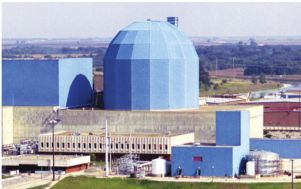
measure is aimed at keeping two of Exelon’s unprofitable nuclear plants
at Clinton and the Quad Cities from closing.
Under
Exelon’s proposed Low Carbon Portfolio Standard, 70 percent of the
state’s electricity would have to come from low-carbon sources, and
companies producing that power would be able to charge more for it
through a system of “low-carbon credits.” Exelon says its plan would
also help Illinois meet future requirements to reduce carbon dioxide
emissions.
Opposition
from environmental groups and coal plant operators has kept the bill
from passing, but Exelon is reportedly in negotiations with Texas-based
coal power company Dynegy. A potential bargain between the two companies
could yield a proposal in which the state takes over what are known as
“capacity payments” – agreements in which power grid operators pay power
producers in exchange for a promise to provide electricity during peak
demand. If state regulators take over that task, it would likely mean
higher payments to power producers, ensuring income for Dynegy’s
downstate coal plants which face possible closure as environmental
regulations tighten.
Environmental
groups have opposed Exelon’s plan, not only out of concerns about the
bill itself, but also because Exelon has blocked attempts to fix a
problem with the state’s Renewable Portfolio Standard. Adopted in 2008,
the RPS calls for 25 percent of Illinois’ electricity to come from
renewable sources by 2025, although a technical problem in the law
prevents money from being spent out of a special fund set up for
renewable power projects.
Abe
Scarr, director of Illinois Public Interest Research Group, says one
concern among environmental groups about the Exelon bill is a potential
“demand charge,” which would change how residential customers are
charged for the electricity they use. Currently, the energy charge on a
residential customer’s bill is a standard rate per kilowatt-hour.
Exelon’s subsidiary utility ComEd instead wants the rate to be based on a
customer’s highest usage during a certain interval of time.
Scarr
says demand charges are difficult to understand, which makes it harder
for customers to determine how they can reduce consumption and cost. Two
customers who
use the same overall amount of electricity in a month could see wide
variation in their bills, he says, due to differences in how much power
they use during times of peak demand. Utilities in other states have
proposed demand charges, Scarr says, but those plans were all rejected,
withdrawn or rescinded shortly after implementation because of customer
opposition.
Rebecca
Stanfield, vice president of policy and energy markets for solar panel
company Solar City, says Exelon’s proposal would also effectively gut
“net metering,” a practice that lets customers with solar panels get
paid back when their panels produce more energy than they need.
Stanfield says net metering has been crucial to building solar markets
in other states. Without net metering and a fix for the Renewable
Portfolio Standard, she says, Illinois’ market for solar power won’t
grow.
Val Jensen,
senior vice president of customer operations for ComEd, declined to
answer questions about the details of a possible deal between Exelon and
Dynegy. Jensen issued a statement instead, saying the company is
working with stakeholders on a bill which is “urgently needed.” She said
the bill would mean more than $4 billion in energy savings, provide $1
billion for low-income energy programs, save Illinois’ nuclear plants
and even accelerate the growth of wind and solar energy.
“There
is broad agreement regarding the need to urgently address energy
challenges in Illinois,” Jensen said, “and we hope to finalize the
details of this new bill as we near the start of the November veto
session in Illinois.”
Stanfield
and Scarr see Exelon’s proposal in the legislature as an end-run around
the Illinois Commerce Commission, which would normally have the power
to approve or deny rate hikes. Scarr points out that the ICC has an
adversarial mandate and a system of checks and balances meant to address
the needs of utilities and customers.
“The
legislature doesn’t have those things,” he said. “I don’t think it’s a
surprise they’re trying to do this through the legislature instead of
through the regulatory process.”
Veto session begins Nov. 15.