
Sports drinks can be harmful
There are few things that one can do to have an immediate and positive impact on one’s health. Increasing physical activity and changing one’s diet are critical steps in improving overall health and vitality, but persistence, organization and dedication are required to get results.
Thankfully, there is something everyone can do to instantly improve their well-being, and it’s practically free. And delicious to boot!
Just. Drink. Water. Recent studies suggest that as many as 75 percent of Americans are chronically dehydrated. Most folks know that water is essential to sustain life, but many are unaware of the ramifications of chronic dehydration. Water is necessary for the proper absorption of vitamins and nutrients, liver and kidney detoxification, and proper digestion. Failure to consume enough water leads to exhaustion, weight gain, ulcers, headaches, high blood pressure, joint pain and kidney disease.
The solution to this chronic problem is both simple and complex.
Consumers are constantly bombarded with beverage advertisements that promise nutritional benefits or enhanced performance. Go to any kids’ sports practice or game and you’ll see bottles of Gatorade, Powerade and Vitamin Water on the sidelines. Well-meaning parents and coaches have been led to believe that these drinks are healthful alternatives to soda, and that they will help to refuel little athletes and replenish electrolytes after a game. In reality, unless one is engaging in extended endurance athletics in extreme heat and humidity, water is the most perfect form of hydration available.
In addition to being unnecessary, sports drinks can actually be harmful. Scientific research overwhelmingly indicates that consumption of sugar-sweetened beverages (SSBs) leads to weight gain and obesity in children and adults. Obesity has now surpassed smoking and drinking as the number one cause of preventable death in the U.S., with one in three adults and one in six children being considered obese. This affliction opens the door to more than 30 diseases, including heart attack, stroke and type-2 diabetes. SSBs, on average, account for about 13.5 percent of total calories in the American diet today.
Despite its healthful-sounding name, a 20-ounce bottle of Vitamin Water contains 31 grams of sugar. That is the same amount of sugar that is in three Krispy Kreme doughnuts. To put this in perspective, the American Heart Association states that the maximum daily intake of sugar should not exceed 37.5 grams for men, 25 grams for women, 20 grams for teenagers, and only 14 grams per day for young children. A pouch of Honest Kids Juice Drink, labeled as a “certified organic thirst quencher” contains 9 grams of sugar per 6.75-ounce serving. That’s more than half of a child’s daily sugar allowance in less than one cup of liquid.
Alternatives to sugar-sweetened beverages only serve to further complicate the beverage quandary. One hundred percent fruit juice does offer some nutrients not found in sports drinks and sodas, but still contributes to overall daily caloric intake. Research has shown that consumption of fruit juice as opposed to consumption of whole fruit results in a decreased sensation of fullness and increased calorie intake.
Diet beverages, while lacking in sugar, contain caffeine and phosphoric acid, a combination that increases the risk of bone loss. Additionally, these
beverages act as a mild diuretic and actually result in increased
dehydration. Artificial sweeteners are proportionally sweeter that sugar
and, as a result, regular consumption of diet beverages has been shown
to increase one’s preference for sweet drinks and sugary foods.
Basically, making naturally sweet, nutritious foods like carrots, apples
and peas, less palatable.
Also
working against our efforts to simply drink more water is news of
municipal water systems that have failed to provide safe drinking water
to citizens. Despite recent news stories out of communities like Flint,
Michigan, most tap water in the United States has been proven to be as
safe or safer than bottled water. According to a report by Food and
Water Watch, approximately half of the bottled water sold in the U.S. is
simply tap water that companies have put into plastic bottles and
resold at huge profits.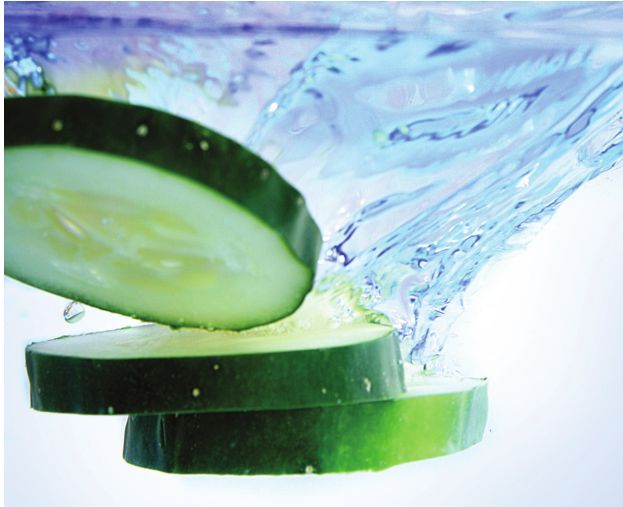
Surprisingly,
regulations for bottled water are usually weaker for some microbial
contaminants. Bottled water is regulated as food by the FDA, whereas tap
water is regulated by the EPA under much stricter standards than
bottled water. Every local water treatment plant is required to make an
annual water quality report available to city residents. According to
City Water, Light and Power’s CWLP 2015 Water Quality Report, “tap water
produced by (CWLP) met all United States Environmental Protection
Agency and State of Illinois drinking water health standards. The
purification process is monitored 24 hours each day, and CWLP is pleased
to report the utility had no violations of any contaminant level or of
any other water quality standards in 2015.”
In
spite of our excellent water in Springfield, and knowing that water is
essential for good health, many people struggle to simply drink it. At
some point it seems like the general population just stopped being OK
with plain water. Corporations led us to believe that they had trumped
Mother Nature, that they had made a product that could make us better.
But our bodies are not easily fooled and, as usual, the simplest things
usually prove to be the best. Eating real is about fueling your body
with whole foods that are unprocessed and as simple and pure as
possible. What could be simpler than water?
-If
you’re looking for a boost after an intense bout of exercise, eat a
banana or clementine along with drinking water. These fruits provide
more potassium and nutrients than most commercial sports drinks, and the
complex carbohydrates will be delivered into the body’s bloodstream at
steadier rate.
-Increase
your consumption of juicy fresh fruits and vegetables. Eating foods
like cucumbers, melon, tomatoes, grapes and citrus are tasty ways to up
your water intake. Brothy soups and fruit and veggierich smoothies also
help keep you hydrated.
-Water
down fruit juice and sugary drinks like lemonade and fruit punch.
Gradually increase the amount of water added to these drinks and kids
won’t be the wiser.
-Fruit
infusions are probably the simplest and most beautiful way to enhance
water without adding sugar or calories. Try adding fresh mint, basil,
cucumber slices, strawberries, melon or pineapple to a pitcher of water
in your fridge. When infusing water, use organic produce whenever
possible and wash it well.
Ashley
Meyer lives with her husband and soon to be 4-year-old daughter in her
great- grandmother’s farmhouse. She enjoys wrangling the old homestead.
In her fi ve years there, she’s never managed to fi nd the time to both
grow green beans and then put them up as dilly beans. This year she’s
settling for quick refrigerator pickles.


