
Illinois’ bicentennial year is less than 17 months away, but the state hasn’t yet made any plans to celebrate.
In 1918, amid enthusiastic statewide celebrations of Illinois’ centennial anniversary of statehood, Vachel Lindsay wrote The Golden Book of Springfield, in which he looked ahead a century to imagine a utopian vision of Springfield in 2018.
Reading the Golden Book in 2014 inspired Lisa Higgs of Springfield, president of the Vachel Lindsay Association, to start thinking about the future of Springfield herself, and about the approaching Illinois bicentennial. As the former board relations manager for the director of the Minnesota Historical Society, she was heavily involved with that institution’s preparations for the Minnesota Sesquicentennial celebration of 2008. In Minnesota, planning for the sesquicentennial began three years in advance of the celebration.
So Higgs waited, figuring that plans to celebrate the Illinois bicentennial in 2018 would be announced in due time.
By the fall of 2015, “it became apparent that there was nothing being coordinated,” Higgs said. So Higgs rolled up her sleeves and created an ad hoc bicentennial planning commission in Springfield. “There have been lots of groups meeting [about the bicentennial], all waiting to see what happens at the state level, but our group decided that we are a year and a half out, and we need to get moving,” she said.
In May 2014, Gov. Pat Quinn signed an executive order establishing a statewide Illinois Bicentennial Commission. A press release put out at that time by the Illinois Historic Preservation Agency indicated that the commission would “plan and coordinate events, activities, publications, digital media and other developments and encourage citizen participation at all levels in every community in the state.”
With a gubernatorial administration change in 2015 and the current state budget impasse, however, the Illinois Bicentennial Commission has been dormant. Meanwhile, organizers at the city and county level throughout Illinois have been aware that the clock is ticking.
Planning for statewide bicentennial celebrations often begins years in advance to allow sufficient time to create a strategic plan, find fundraising and develop initiatives. In Indiana, which celebrates its bicentennial this year, its Bicentennial Commission has been meeting every six weeks since January of 2012.
Texas, which celebrates its bicentennial in 2036, has already begun planning.
“In the local history world we’ve been talking about how far behind we are,” said Dr. Devin Hunter, assistant professor of history at University of Illinois Springfield.
William Furry of Springfield, executive director of the Illinois State Historical Society, agreed. “At the statewide level, the state of Illinois has been very remiss in getting the word out, designing a logo or getting people engaged in any meaningful way. There’s still a lot that can be done, but we need to see some real action, some real leadership that we can rally behind.”
There have been some encouraging signs from the Abraham Lincoln Presidential Library and Museum with the hire of a new director and an Illinois State Historian. When asked about that institution’s plans for the bicentennial, however, Illinois State Historic Preservation Agency communications director Chris Wills declined to comment.
Furry noted that many groups are waiting for a signal from the governor’s office before they begin moving forward with bicentennial plans. “They don’t want to get something going only to have the rug pulled out from under them,” he said.
According to the governor’s deputy press secretary, Allie Dove, plans for the bicentennial are underway. The administration is planning for a year-long celebration between December 2017 and December 2018. A website, logo and events calendar are currently under development, and the Bicentennial Commission will be named soon.
“The Illinois Bicentennial celebration will recognize the many cultural, economic, academic and political contributions that Illinois and our residents have made to the nation and the world since our admission to the Union. The celebration will bring together our communities, businesses and civic and academic leaders to honor our history and celebrate everything Illinois has to offer. Residents and visitors will be inspired, educated, entertained and amazed as they experience our celebration personally and virtually. Bicentennial events will promote Illinois as a destination for tourism and encourage Illinois residents to explore their home state,” she said.
The history of Illinois statehood 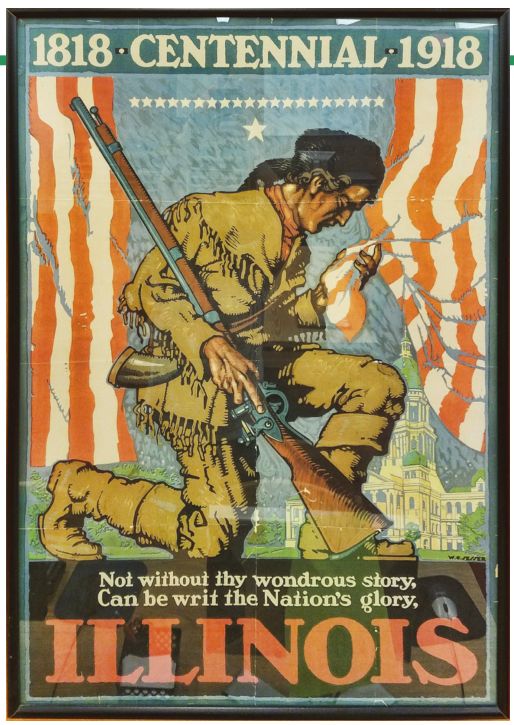
The
bicentennial provides an unparalleled opportunity to celebrate the rich
history of Illinois and its people, a history that spans more than
10,000 years. The first human inhabitants to this area arrived between
10,000-8,000 B.C. Nomadic bands of hunter-gatherers gave way to more
villages of the Woodland Indian culture around 500 B.C. The
Mississippian culture, which flourished between 900-1500 A.D., was one
of the most complex societies in the world. Its largest urban center,
Cahokia, was located near present-day Collinsville. With 40,000
residents at its peak, Cahokia was the largest and most sophisticated
prehistoric civilization north of Mexico.
Besieged
by increasing warfare and disease, Mississippian cultural dominance of
Illinois waned, and by 1250 most of the residents of Cahokia had
dispersed. Illinois was sparsely populated by nomadic native peoples
when the first European explorers, Jacques Marquette and Louis Jolliet,
arrived in 1673. Between the late 17 th century and 1784, the Illinois
Territory passed through the control of the French and British before
becoming territory of the newly independent United States of America.
Between
1787 and 1818, the present-day Illinois was part of the Northwest
Territory, the Indiana Territory and the Illinois Territory,
respectively. Poor transportation networks, the presence of Native
Americans and political uncertainty during the War of 1812 initially
discouraged settlement. In 1810, the federal census revealed only 12,800
people (excluding Native Americans) living in the territory.
After
the war drew to a close in 1815, however, a flood of settlers poured
into Illinois, drawn by the abundance of land made available by the
federal government on favorable terms. By that time many of the native
tribes had been forced westward and the advent of the steamboat made
travel easier, so the European-American population of the territory
nearly tripled.
By the
time Illinois officially became the 21 st state of the Union on Dec. 3,
1818, it was home to more than 40,000 people. Most of these were
migrants from the South or Upland South who traveled west along the Ohio
River. Illinois’ 15 counties were concentrated in the southern portion
of the state. The hub of the state’s commercial activity was
Shawneetown; the new capital city, Vandalia, 80 miles south of
present-day Springfield, was the northernmost town in the state.
The
vast majority of migrants to Illinois were drawn by the promise of
land, the importance of which cannot be overstated during this period of
American history. Cheap western land was the vehicle that drove the
economy of the early republic. It provided an avenue to independence and
advancement otherwise unattainable in the east. The early settlers to
Illinois were movers and shakers, people of energy and vision who began
new lives in a new state in the hope of improving their lives. Over the
coming centuries they would build canals and railroads, interstates and
airports, schools and skyscrapers, in the continuing quest to fulfill
that initial promise of a better life rooted in the state’s rich soil.
Past celebrations
Every
50 years since 1818, Illinois has celebrated the admission of the state
into the Union. By 1868, Springfield had been the capital of Illinois
for more than 30 years. The 50-year anniversary of statehood was marked
by a grand parade culminated by laying the cornerstone for the present
Illinois State Capitol building, which replaced the structure now known
as the Old State Capitol. The state seal was also revised to include the
dates 1818- 1868.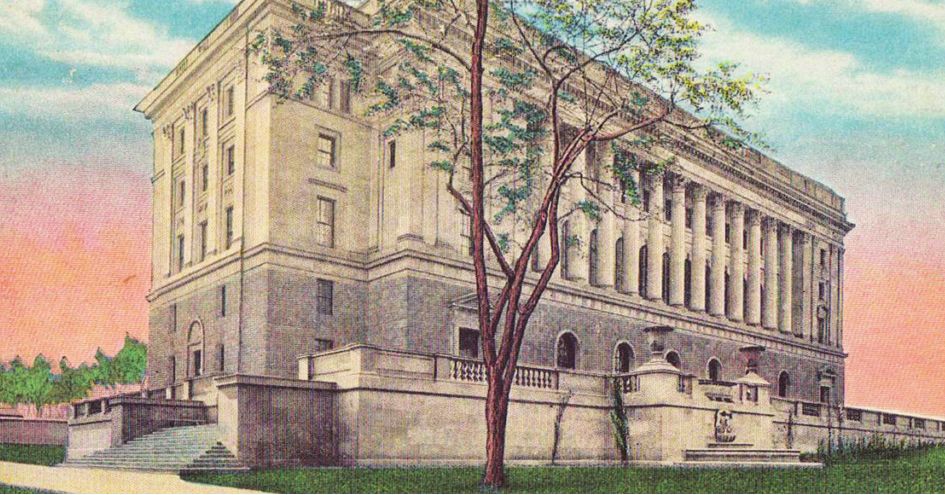
Citizens
of Illinois in 1918 were proud of their state’s accomplishments and
optimistic about its future. The state’s population by then numbered
over six million, and agriculture and industry were thriving. The
Illinois Centennial Celebration spanned the entire year and included
hundreds of events throughout the state. Highlights include the erection
of the Illinois Centennial Monument in Chicago; construction of the
Centennial Building (now called the Howlett Building) at the corner of
Second and Edwards streets in Springfield; placement of statues of
Abraham Lincoln and Stephen A. Douglas at the Capitol Building;
publication of a six-volume Centennial History of Illinois; an elaborate pageant staged at the fairgrounds, and the creation of a centennial flag.
The
1968 the Illinois Sesquicentennial was observed with more than 3,000
celebrations throughout the state. Gov. Otto Kerner unveiled a
sesquicentennial flag. The Chicago Bulls wore special sesquicentennial
patches. And in August, the Old State Capitol building was rededicated
after having been rebuilt and restored at a cost of more than $6.5
million.
The future of the bicentennial
Planning
for the Illinois Centennial Celebration of 1918 began three years
before the event. A strategic plan was presented to the General Assembly
in March of 1915 with the warning that “immediate action” was necessary
for the celebration’s success.
Today,
with less than 17 months remaining until the start of the bicentennial
year, grassroots organizations have sprung up throughout the state to
plan events in advance of activity from the Illinois Bicentennial
Commission.
Under
Furry’s direction, the Illinois State Historical Society is planning to
release special, bicentennial-themed issues of its publication Illinois Heritage and the Journal of the Illinois State Historical Society. It
also plans to host a Bicentennial Trivia Night for representatives of
every county in the state to meet and share the history of their area.
In
southern Illinois, 40 counties have joined together to form the South
40 Illinois Bicentennial Celebration Commission. Executive committee
member Pete Houseman said that planning began this past April.
“We
kept waiting to hear something from the state Bicentennial Commission
and we didn’t hear anything, and we realized we were running out of
planning time so we started working on our own. We hope the rest of the
state will catch up with us,” he said.
The
South 40 coalition’s bicentennial plans span three years between
2018-2020 and include writing, art, photography and filmmaking
challenges; traveling trunks of artifacts for use in schools;
fifth-grade genealogy activities; six major, handson projects throughout
the area and an exploration of the “Thug Run” corridor of US 51 that
Chicago gangsters followed to the southern part of the state during the
Prohibition era.
In
Springfield, Higgs has been instrumental in the formation of the
Illinois Bicentennial Coordinating Committee. Comprised of local
citizens with an interest in Springfield’s history, the IBCC plans to
coordinate a series of six to 12 public lecture/discussions on a variety
of themes that explore the past, present and future of Illinois.
The
larger goal of the IBCC, however, is to reach out to representatives
from local arts organizations, schools, museums and businesses to get
them thinking about ways that they could honor the state’s bicentennial.
“We’re
going to serve as a communication hub to help people come up with ideas
of ways to celebrate and to put people in contact with each other,”
said Higgs. “We don’t want to supersede the state commission, but once
it’s in place we’ll be organized and ready to help.”
Inspired by Vachel Lindsay’s Golden Book, the group is particularly excited about challenging people to dream of a vision for the state’s future.
“We hope that Springfield citizens will want to write their own, new Golden Book – not
only honoring our shared past but celebrating where we are today and
considering the best possible future for Springfield in 2118,” said
Higgs.
The IBCC has
worked with the Community Foundation for the Land of Lincoln to
establish the Illinois Bicentennial Celebration Fund, which will support
projects and activities in Springfield that celebrate the Bicentennial
of Illinois in 2018.
“The
Community Foundation is thrilled to be a small part of a significant
grassroots effort aimed at making this anniversary truly meaningful for
Illinoisans,” said Stacy Reed, vice president for programs at the
Community Foundation. “The bicentennial is a great cause for
celebration, and we applaud this local committee for taking the lead in
planning efforts.”
Members
of the IBCC report a great deal of enthusiasm and excitement for the
bicentennial among the groups they’ve talked to in Springfield.
IBCC
co-chair Pam van Alstine said, “Already, our volunteer committee has
been overwhelmed by the amount of community interest in making
Springfield’s contribution to the Illinois bicentennial worthy of the
state’s capital. It goes without saying that the Springfield area’s
history is really representative of America’s story. It can all be found
right here on our doorstep.”
Writer and historian Erika Holst is the author of Wicked Springfield: Crime, Corruption, and Scandal During the Lincoln Era and Edwards Place: A Springfield Treasure.
To
contribute to the Community Foundation for the Land of Lincoln’s
Bicentennial fund, donors may visit www.cfl l.org or mail contributions
to the CFLL offi ce at 205 S. 5th St. Suite 930, Springfi eld, IL 62701.
If donating by mail, be sure to indicate that your contribution is for
the “Illinois Bicentennial Celebration Fund.”


