A grand plan to give the Illinois Executive Mansion new life
The Illinois Executive Mansion has fallen into disrepair before. At least this time, no one is trying to demolish it.
The mansion has been the Springfield residence of Illinois governors stretching back to 1853, but it has been 44 years since the mansion was last renovated. A plan unveiled this month would change that.
Before its last renovation – much like today – the mansion overlooking Fourth and Jackson streets was dilapidated. Then-governor Otto Kerner is believed to have been the driving force behind a 1963 vote by the Illinois House of Representatives in favor of demolishing the Executive Mansion and building a new one somewhere else in Springfield.
In Kerner’s defense, the building was dilapidated to the point of being dangerous. According to a news account at the time, pieces of slate roofing fell to the ground without warning. The lead pipes leaked – and not just at the joints. The ceiling beams were so dry that they were like tinder waiting for the exposed wiring to set them alight. A fireman called the mansion a “firetrap,” and Helen VanDiver, the head housekeeper at the time, said the home was “just a shell.”
“It’s a real wonder no one has been killed or hurt in this place,” she said.
Kerner himself was worried about the safety of his wife and seven children.
“If a fire gets started here, I’m afraid we won’t get out,” Kerner said.
Preservationists like the late Floyd Barringer, president of the Sangamon County Historical Society at the time, rallied to save the mansion. Barringer and others sent letters to Kerner, pressed legislative allies into action and wrote editorials decrying the demolition plan. The Illinois Senate ultimately stopped the bill to demolish the mansion, but renovation didn’t begin until 1971 because of political and personality clashes.
Today, the mansion is again in need of repair. Although it’s on the National Register of Historic Places, the last major renovation of this 45,120-square-foot residence was completed 44 years ago in 1972, shortly before former governor Dan Walker took office. Today, there is damage from leaks and flooding, paint is peeling, the porches sag, exterior wood is rotting and buckling and problems have developed with the heating, ventilation and air conditioning.
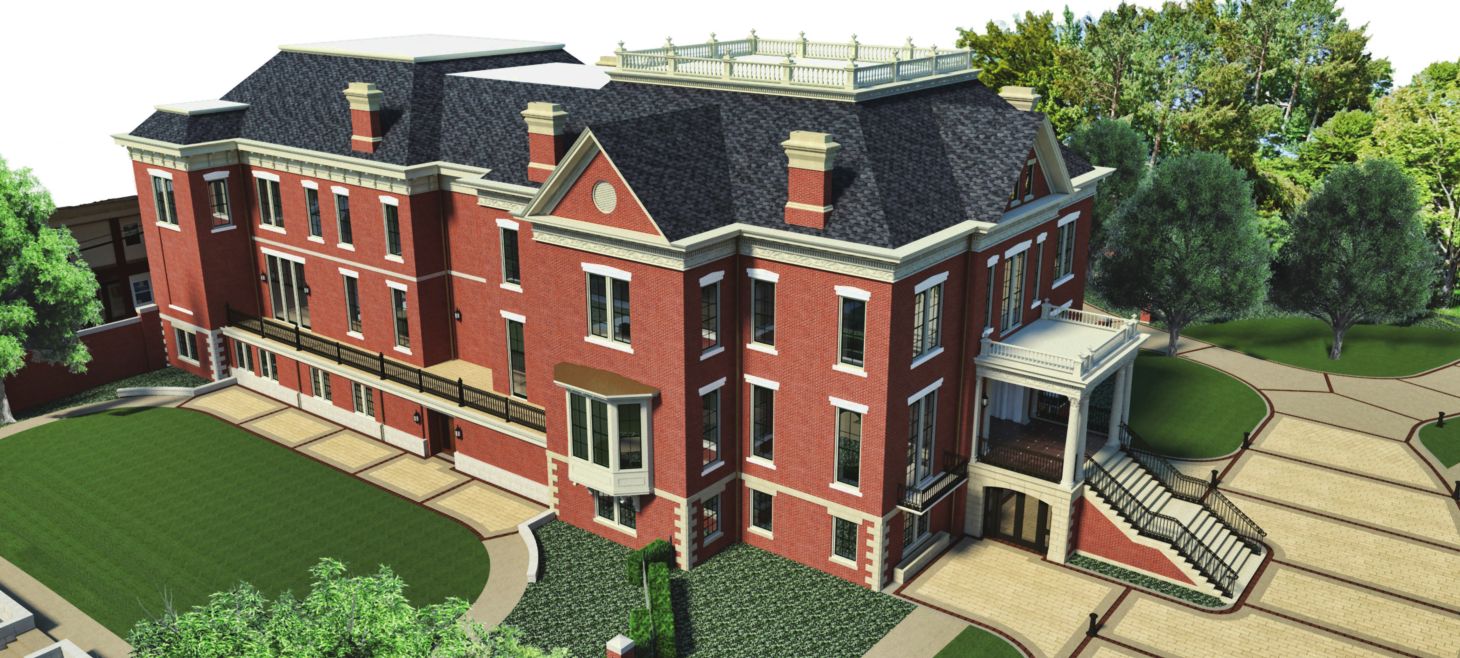
On July 19, Illinois first lady Diana Rauner and the Illinois Executive Mansion Association announced a $15 million renovation plan which calls for updating the mansion inside and out using private donations instead of public dollars. As a result of the renovation, the historic building may better live up to its role as the People’s House.
Modernization and preservation Philip Hamp, an architect and principal at Vinci Hamp Architects in Chicago, says the mansion has undergone numerous changes in its history, so the focus this time would be on emphasizing elements of the original design. Vinci Hamp is the lead architectural firm on the project.
“When it was renovated in the 1970s, a lot of the historic fabric of the mansion was removed,” Hamp said. “There just isn’t that much there of the original. … We’re architects, but we specialize in preservation. Our baseline is understanding the building as it was originally.”
Hamp says the Illinois Historic Preservation Agency provided detailed historical records and photos of the house, which served as a reference for the new plan. He says work on the mansion would accentuate the remaining details of the original design and make the 1970s additions to the house “sympathetic but simpler.”
Inside, the mansion would receive a new HVAC system, a significant security system upgrade and some light plumbing and electrical work. The elevator, used to bring guests with mobility issues from the ground floor to the main floor, doesn’t actually work, so it would be replaced with a more modern version.
Some exterior features of the original mansion were removed or covered up by past renovations, like the original cupola that crowned the mansion. The cupola won’t appear in the new renovation, but Hamp says smaller early details will be reinstated, like the original box gutter design built into the decorative cornices instead of the current modern gutters.
Probably the most significant change to the exterior would be reconfiguring the mansion’s main entrance which faces north. Currently, the front entrance is a two-level “porte cochere” which allows cars to drive up and unload on the ground floor, below the main-level pedestrian door. The stairs at the end of the port cochere lead east and west.
Under the renovation plan, the porte cochere would move to the west side of the mansion. That would allow the front entrance to be shortened and the stairs to be reoriented leading north, as in the original 1853 design of the mansion.
Gates and gardens Besides renovating the mansion itself, the plan includes a redesign of the grounds, gates and gardens. It’s that aspect of the plan which could most improve how the public uses the mansion and tie in with efforts to redevelop Jackson Street and the YWCA block.
Kent Massie, a landscape architect with Massie Massie and Associates, says the mansion’s symbolic role as the People’s House played a significant role in the new design for the grounds. Massie’s firm, which he runs with his wife, Sue, is subcontracting to design new landscaping for the mansion grounds.
“We wanted the north yard to be very public, and to be able to see the mansion as you approach it,” he said. “The mansion is really a historic
structure. Presidents have slept there. Lincoln was there, and so on.
There needs to be interpretation of that by people coming to Springfield
when the mansion may not be open, so you can at least walk by and see
it.”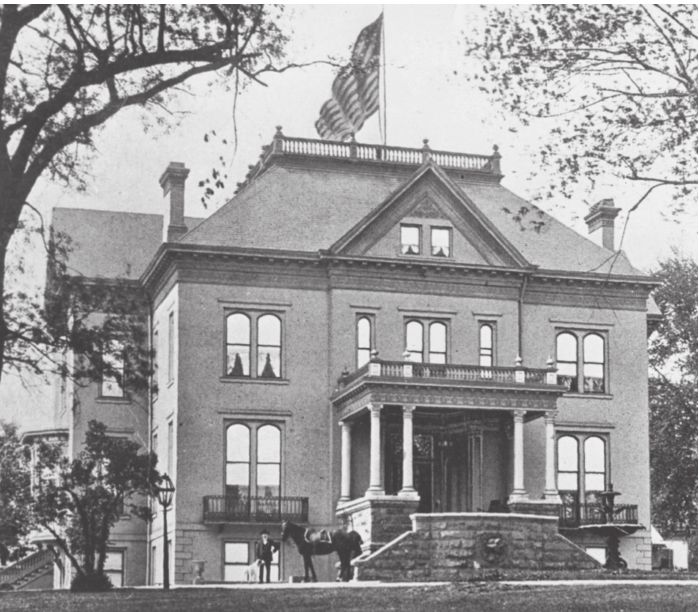
Currently,
the mansion is shrouded in trees, making it difficult to see from the
street. The renovation plan calls for removing some of the trees in the
north “front” yard to make the mansion more visible. Massie says some of
the trees need to be removed anyway, due to old age and disease.
The
entrance gates for the mansion grounds are currently on the east and
west, but the redesign places a new gate on the north side of the block.
The east and west gates would remain, along with the semicircular
driveway connecting the gates to the mansion. The north gate would be
for pedestrian visitors.
Although
Hamp says there hasn’t been a north gate in the past, the lawn used to
be much more open, so a new north gate would help make the mansion more
inviting to visitors. He likens the mansion to Springfield’s version of
the White House, saying the Executive Mansion’s visibility affects how
much of a draw it is for tourism.
Massie
says the north gate also allows for better compliance with the
Americans with Disabilities Act. That federal law sets requirements for
the slope of a ramp, which the mansion’s current east and west driveways
don’t meet. Adding a north gate allows more space for a gentler slope
that meets the ADA specifications, Massie said.
The
brick wall which lines the south side of the mansion block will remain
in place, as will the iron fence lining the north side and most of the
east and west sides.
The
mansion’s ornate gardens in the front yard would be mostly removed,
creating a more English-style open lawn. Rather than direct pedestrians
straight from the north gate to the mansion’s front entrance, an oval
walkway would frame the yard, with a large open lawn in the middle.
The
mansion’s west yard, which is used for utilitarian purposes like
parking, would remain mostly hidden from the view of visitors.
Meanwhile, the gardens in the mansion’s east yard would be pared down
and simplified. The existing French-style parterre garden would
remain – albeit in a smaller footprint. That allows a small open lawn in
the east yard to be expanded, creating more room for events like tent
parties. It also creates an opportunity to grade the east yard so that
the ground slopes away from the mansion to alleviate flooding.
Massie says
the plants which would be removed from the front yard and east yard
were collected over past decades, so they would be moved to other sites
whenever possible.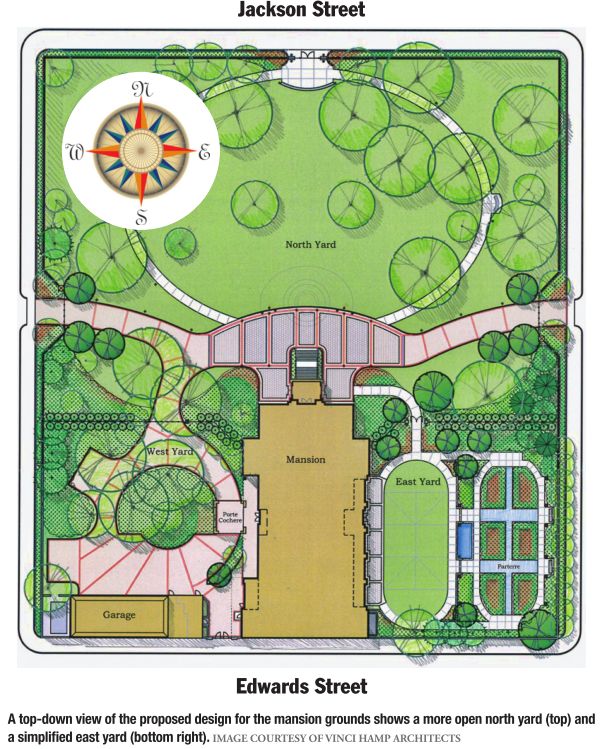
“We’re
aware that taking out stuff may bother people,” he said. “We don’t want
to have just a backhoe come in and rip stuff out. Part of our goal is
to strategically relocate this material. Hopefully, people will
recognize that we’re being conservative. … We don’t want to be bad
stewards.”
Creating synergy with history If the mansion renovation comes to fruition, it would reinforce two projects proposed nearby.
Jackson
Street, which runs east to west and fronts the mansion block on the
north, is one of Springfield’s oldest streets. In 2014, Massie’s firm
created a Jackson Street redevelopment plan for the Greater Springfield
Chamber of Commerce and the Historic Preservation Fund within the
Community Foundation for the Land of Lincoln. The plan would give
Jackson Street a new identity as a bike and foot trail connecting
Abraham Lincoln’s home to the Executive Mansion and the Illinois
Statehouse.
Mansion renovation plan at a glance
Cost: $15 million Funding: private donations Scope: interior repairs and updates, exterior repairs and historical details, redesign grounds Wage: Although
Gov. Bruce Rauner originally proposed renovating the mansion without
paying prevailing wage, he ultimately hired a unionized Springfi eld
contractor to fi x the mansion’s roof earlier this year. The full
renovation project will also likely pay prevailing wage.
Just north of the
mansion, between Jackson Street and Capitol Avenue, sits the North
Mansion Block, popularly known as the “Y block,” which the City of
Springfield purchased from the state in 2014. It currently holds the
empty YWCA building and a gravel parking lot. The city is mulling three
proposals to redevelop the Y block. One idea, submitted by Flaherty & Collins
Properties, would include street-level retail space facing Capitol
Avenue, with 200 apartments on upper levels, a hidden parking ramp and a
small park on the southwest corner of the block. Under that plan, the
YWCA building would be preserved and renovated.
Another
idea, submitted by Seth Molen Construction, would include eight
apartments in the east half of the YWCA building, with the west half
being demolished. That plan would claim a small portion of the land
around the YWCA for parking and landscaping, leaving the remainder of
the block for other projects.
Massie
Massie and Associates submitted the third idea under consideration,
which calls for turning the entire block into an urban park. The plan
suggests adding sculpture or nods to the city’s history. Hamp says
making the Y block into a park would offer a natural quiet space in the
downtown.
“That would be terrific,” he said. “It would balance the mansion on the other side.”
Combining
the Executive Mansion renovation, the Jackson Trail concept and
redevelopment of the Y block could add significantly to Springfield’s
tourism appeal. There is currently little activity on Jackson Street,
but making that strip attractive and pleasant for pedestrians could draw
foot traffic further south in the downtown and create a more natural
visual connection between the existing attractions.
Massie
notes that the bicentennial celebration of Illinois becoming a state in
1818 is approaching in 2018. The Illinois Executive Mansion Association
hopes to finish its renovation project by then, enabling a grand
reopening of the mansion for the state’s 200 th birthday.
“We
all hope something happens (with the Y block) instead of just a gravel
parking lot,” Massie said. “For someone who’s been looking at it for 30
years, the idea is that the stars are aligning now to really make this
something.”
Contact Patrick Yeagle at [email protected].


