
Business brisk for migrant construction workers
Less than 90 minutes after quitting time, the last member of this work crew from Mexico emerges, freshly showered, from the bathroom in a house that’s walking distance from a farm where they are employed as construction workers, performing such tasks as welding, installing doors and framing buildings.
“Construction of livestock buildings” is the “primary crop,” according to a U.S. Department of Labor database that also includes such primary crops as cucumbers, berries, apples, cotton and other stuff that is planted and ultimately harvested – as opposed to things that are built with hammers, nails, saws and, of course, sweat.
More than a dozen workers sit on fugly couches in the bare-walled living room of the house where they have all lived together, as many as four to a bedroom, since spring. They are watching a Spanish language version of Dancing With The Stars on a television that is the only visible luxury. They draw lots to determine the order in which they will use the only bathroom and shower.
“We are like a family,” says one worker who’s been coming to America for two years to labor in the Midwest summer sun. Call him Robert. He and his co-workers have agreed to speak with a journalist who showed up unannounced.
To protect Robert and his comrades, Illinois Times is not publishing their true names, nor the location of their work site, nor the name of their employer, a construction company headquartered outside Illinois that secured visas. Critics of guest worker programs say that such programs are inherently exploitative, given that migrants must work for companies that arrange visas, and those companies, despite protections written into federal law, can find ways to fire workers who fall out of favor, forcing them to return home.
Robert’s crew is part of a growing trend in Illinois and other parts of the Midwest, where construction of confinement facilities for hogs and other livestock is on the rise. So far this year, the Illinois Department of Agriculture has received more than 200 applications to either build new confinement facilities or expand existing ones. Last year, the department received 125 applications. Escalating pork prices are fueling the surge, and much of the construction likely will be done by migrant workers who don’t raise or slaughter animals or work in fields. Nonetheless, they are deemed agricultural workers by the U.S. government, which allows employers to pay lower wages than if the work was done outside a farm.
Consider a job description for concrete laborers submitted last year to the U.S. Department of Labor by the Mulford Concrete Company based in Iowa. The company wanted visas for 20 migrant workers. “Measure and layout footings and foundation. Excavate footings and level earth to grade specifications. Tie rebar, position aluminum wall forms and place all concrete. Clean site.” Wages were $14.69 per hour for a 40-hour work week, with $22.04 per hour for overtime.
A job description submitted this year by Alewelt Concrete, also based in Iowa, is nearly identical for a project 180 miles away from the Mulford job site, save for references to farming: “On farms, construction of livestock buildings. Measure and layout livestock buildings. Excavate footings and level the earth to grade specifications. Tie rebar, position aluminum wall forms and place all concrete. Clean site. Must be able to lift and carry 75lbs/75 yds.” The position paid $12.17 per hour for a 45-hour work week, with no provision for overtime.
Aaron Bernard, an Iowa lawyer who prepared both applications, notes that the U.S. Department of Labor routinely approves such arrangements.
“It’s pretty simple,” Bernard says. “It’s on a farm or not on a farm – that’s what it comes down to, whether the work is on a farm or not on a farm.”
Isn’t the work the same? “I don’t pour concrete myself,” Bernard answers. “I don’t know. They’re building, typically, different things. Typically, if you’re on a farm, it’s a farm structure.”
Robert and his colleagues say they have no complaints. Their employer provides free housing, but they are not free to do
as they please on the premises. They must always wear shirts, both
inside and outside. They have to keep the place clean, and the house is,
indeed, spotless, with a well-kept yard outside. They cannot enjoy a
cold beer here after a day spent laboring in the sun – alcohol is
forbidden in their quarters, as is smoking, as are any romantic
relationships. Once a week, they travel 20 miles to the nearest town
with a grocery store to buy provisions. A typical dinner consists of
tortillas, scrambled eggs and beans.
They’ve
been in the United States for three months and do not know when they
will return home to the town just south of Texas from which they have
come. Some have been making the trip north to work for years. For some,
this is their first trip to perform jobs that either no else will take
or that are being stolen away from citizens and permanent residents –
whether the guest worker programs that make this possible are godsends
or curses depends on whom you ask.
These
workers say it’s a blessing. Why did you come to the United States to
work? The question draws laughs from the men, all of whom appear to be
in their 20s or early 30s. OK, how much do you earn for this kind of
work in Mexico?
If we told you, you wouldn’t believe us, Robert answers. Try me, I respond.
In
Mexico, Robert explains, construction workers get paid by the day, not
the hour. The going rate is $50 a day for the same work that gets them
$12 an hour in the United States. Here, they start work at 6 a.m. and
quit at 6 p.m., five days a week, with no overtime pay – it works out to
nearly three times as much as they can earn in their native country.
Critics
say foreign workers are exploited while supporters say it’s the only
way to get work done thanks to labor shortages in the construction
industry. Robert says that he and his fellow workers know that guest
worker programs aren’t universally popular, but he says that they will
continue coming to work in the United States as long as there is work
available.
“We like it,” he says. “We don’t complain about it.”
Agricultural
versus non-agricultural Guest workers have been admitted to the United
States since at least 1942, when Mexicans were brought in to alleviate
wartime labor shortages. The so-called Bracero Program (bracero means
manual labor in Spanish) lasted until 1964. Complaints about the Bracero
Program are similar to ones made today, with detractors complaining
that guest workers were being exploited while wages were undercut for
Americans.
Today’s
guest worker program is divided largely into two parts, the H-2A visa
program, which is intended for agricultural workers, and the H-2B visa
program, which provides visas to non-agricultural workers hired to fill
jobs that are supposed to be temporary or seasonal. And guest workers
perform a dizzying array of jobs, according to hundreds of job titles
listed in federal databases that document how many guest workers are
admitted each year, the names of their employers and what work they
perform.
Bartenders.
Beekeepers. Artificial inseminators. Tax preparers. Sous chefs. Pub
managers. Flight instructors. Movers. Truck drivers. Ski instructors.
Quarry workers. Berry pickers. Shepherds. Soccer coaches. All these,
plus hundreds of other jobs, have gone to migrant workers.
Employers
who bring in guest workers must certify that they’ve tried to hire
Americans or permanent residents who hold green cards and can legally
work in the United States. Typically, the government requires two
help-wanted ads in a newspaper, including a Sunday edition, and
notification to state unemployment agencies that help the jobless find
work. Minimum pay requirements for occupations are set by the government
with a goal of ensuring that wages aren’t so low that pay for Americans
will be adversely affected.
There’s
a cap on how many H-2B visas for non-agricultural work can be granted
in a given year, which has rankled advocates for employers such as the
U.S. Chamber of Commerce, which has pushed Congress to allow more
non-agricultural guest workers on the grounds that American businesses
are suffering due to an annual cap that now sits at 66,000. This year,
the cap for the fiscal year that ends in October was reached in May.
There
are no caps on H-2A visas issued for agricultural work, which is
supposed to be seasonal or temporary. Last year, the U.S. Department of
Labor approved more than 325,000 agricultural guest worker positions,
with some jobs being filled by the same traveling crews. When it comes
to pay, migrant workers with non-agricultural visas tend to be better
off than those with agricultural visas. For one thing, workers with H-2B
visas are entitled to overtime pay; agricultural workers, by contrast,
don’t get extra pay for overtime. And base wages for non-agricultural
guest workers tend to be higher than for agricultural workers.
Agricultural workers with H-2A visas are also exempt from Social
Security and Medicare taxes, according to the Internal Revenue Service.
Even so, paperwork filed with the Department of Labor by companies that
use workers with H-2A visas for construction work on farms indicate that
such taxes are being paid.
Guest
workers holding H-2B, or nonagricultural visas, last year earned an
average of $12.64 per hour, with provisions for added overtime pay,
according to Department of Labor records. Agricultural workers holding
H-2A visas were paid an average of $10.89 per hour, with no provisions
for overtime pay.
Construction
trades account for one of the largest percentages of guest workers
under the non-agricultural H-2B program. Last year, for example, the
government under the H-2B program approved more than 1,100 jobs for
concrete finishers and cement masons who were paid an average of more
than $15.21, plus higher pay for overtime.
Department
of Labor spreadsheets for agricultural workers with H-2A visas don’t
include a category for concrete finishers and cement masons, but the
average wage last year for more than 1,600 jobs that involved
constructing livestock buildings was $12.43 per
hour, with no provisions for added overtime pay. Alewelt Concrete of
Iowa, which has won approval to use migrant agricultural workers on 36
projects in Illinois since 2011, including one last year in Elkhart,
paid an average of $12.59 per hour for 751 concrete-finishing positions,
more than $2 an hour less than the average wage for concrete finishers
with non-agricultural visas.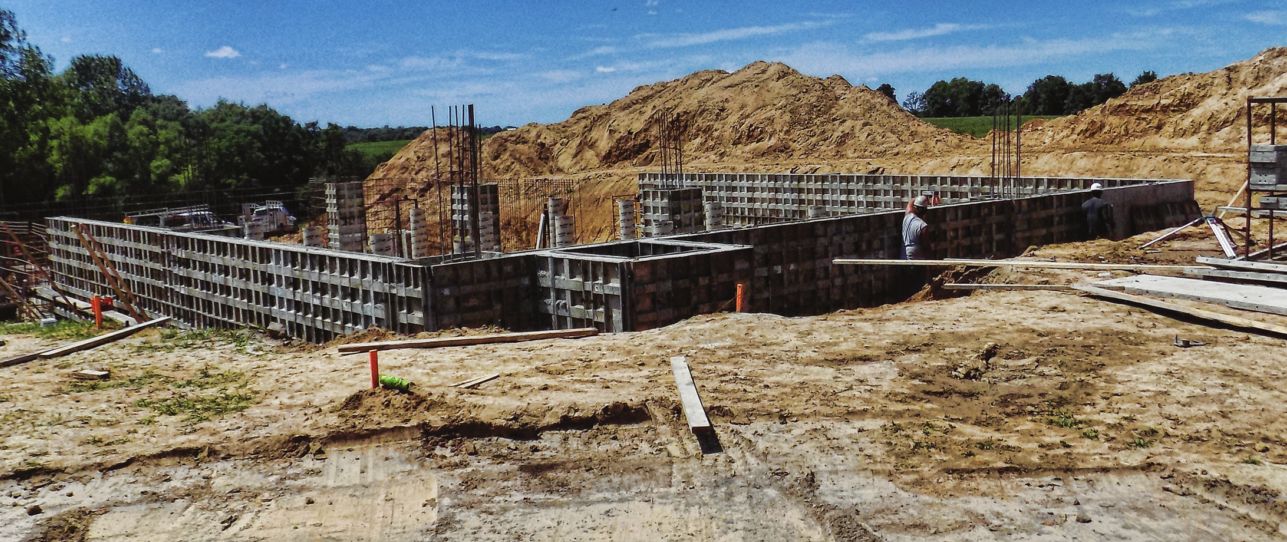
“Utilizing
a legal work force with updated technology, we are able to stay
extremely lean and efficient,” Alwelt boasts on its website.
Marc Alewelt, company president, did not return a phone call.
Bernard,
attorney for Alewelt, says that he’s heard complaints about using
agricultural visas to obtain labor to build livestock facilities.
“I’ve
definitely heard them before,” says Bernard, whose law firm last year
handled paperwork that allowed nearly 1,500 construction jobs on farms
to be filled by migrant workers with agricultural visas. “We don’t hear
them much anymore because this has been going on for quite awhile,
almost a decade. … It’s what is correct under the law. That’s the main
thing. People treat this like you’re getting away with something.”
The
government hasn’t always greenlighted agricultural visas for migrants
who do construction work on farms. In 2008, the Department of Labor
rejected a request by Alewelt, then headquartered in Springfield, to
allow a roving crew of 20 concrete finishers with agricultural visas to
help build livestock confinement facilities throughout Iowa. They would
be paid $12.30 per hour and work six ten-hour days each week.
Initially, the department said no and questioned whether the jobs were truly agricultural labor.
“The
requested workers will not be raising, feeding or caring for the
livestock in the facilities,” the department noted in a letter to the
company.
Alewelt
appealed and the matter settled, with the department reversing its
initial objection. The company argued that the legal definition of
agriculture includes work done “incident to” farming, and it would be
impossible to raise livestock absent confinement facilities. Bernard,
who represented the company, also notes that a clause in the
government’s definition of farmworker states such workers “may construct
trellises, repair fences and farm buildings.”
Bernard
says that the government has required agricultural visas, as opposed to
nonagricultural visas, if migrant workers are used to build livestock
confinement facilities.
“I’ve
had applications where clients wanted to do both (H-2A and H-2B) and
they (Department of Labor officials) say no – you have to do the H-2A
program if it’s on a farm,” the lawyer says.
A
decade ago, there were no construction companies that used migrant
workers with agricultural visas for construction work in Iowa or
Illinois, according to Department of Labor records. Last year, Iowa
construction companies, many of which do business in Illinois, accounted
for the bulk of agricultural visa applications in the Hawkeye State,
filing 176 of 253 such visa petitions, according to U.S. Citizenship and
Immigration Services records.
Criticism
of a growing trend When Phil Tomko started searching for contractors to
erect a building with room for 300 cattle, plus a separate feed storage
facility, on his family’s property near Jacksonville, he journeyed to
Iowa to check out similar buildings to judge craftsmanship and determine
whom he should hire. And he got pitches from construction companies
that use guest workers with agricultural visas.
The
price difference between companies that use guest workers and those
that do not was substantial, Tomko recalls. One contractor told him that
the cost would be greater if the work was done in the winter because
local workers, as opposed to guest workers, would be needed, he says.
Tomko,
who opted for companies that don’t use guest workers, said he figures
that the project, which will cost more than $1 million and is being
financed with a loan backed by the federal government, will cost
$150,000 more than if he’d hired a company that used migrant labor.
“I’m
not willing to support migrant labor that doesn’t support us,” Tomko
explains. “We keep the work here at home. We keep the money in our
community.”
Tomko
allows that his decision to use companies that don’t employ migrant
workers was not entirely altruistic. Morton Building, the
Illinois-headquartered company that will erect the walls and roof on his
buildings due for completion this fall, has built other structures for
his family, and Tomko has been happy with the quality of their work. He
also praises the company’s warranty program.
A
call to Morton corporate headquarters was not returned, but a search of
available online Department of Labor databases shows that the company
has not sought guest worker visas since at least 2006.
Michel
Concrete Construction of Springfield got the contract for concrete
work. Federal databases going back a decade show that Michel has neither
sought nor been granted permission to hire guest workers.
Mary
Wilson, Michel president, says that her company hasn’t been getting as
many contracts for work on farms as it did a decade ago, when her
business was divided roughly in thirds between commercial, residential
and agricultural. Now, she says, less than 10 percent of her work is on
farms.
Four years ago,
Wilson’s company landed a contract to help build a hog confinement
facility in Le Roy, about 80 miles northeast of Springfield. Michel was
paid more than $800,000 to pour and finish 7,000 cubic yards of
concrete, which required nearly 19,000 hours of labor at an hourly rate
of $16.75, including overtime, Wilson says. The job sparked hope after
years of diminishing agricultural work, she said.
“You
think you’re getting your foot back in the door again,” says Wilson,
who suspects that competitors that employ migrant workers are affecting
her business. “But you’re not getting phone calls.”
Wilson
says she doesn’t employ migrant workers because her workforce
fluctuates with available jobs, so she can’t satisfy a prohibition on
hiring migrant labor if a company has recently laid off native workers.
While it may not be easy to find employees willing to do hard manual
labor, it isn’t impossible, she says.
“In
good conscience, I can’t say I can’t go and find workers because I know
there are workers out there who are willing to do this kind of work,”
she says.
Even if it’s
legal, Brad Schaive, business manager for Laborers Local 477 in
Springfield, says that hiring migrants to do construction work – and
other jobs, for that matter – isn’t right, regardless of whether visas
are H-2A or H-2B. If employers offered sufficient wages, they’d find
workers without having to look south of the border, he said. Guest
worker programs are also exploitative, he said, given that migrant
workers aren’t free to work for anyone except the employer who arranged
visas.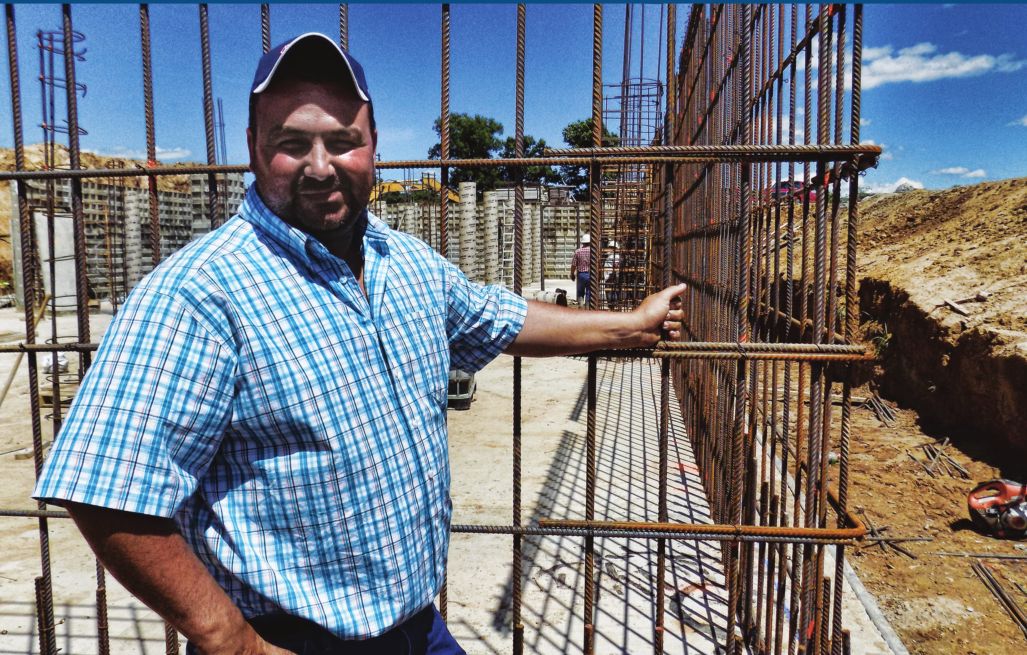
“That’s
21 st century slavery, in my opinion,” Schaive said. “If you don’t do
exactly as you’re told, the employer terminates you, and you go back to
where it is that you came from.”
Sonia
Ramirez, director of government affairs for North America’s Building
Trades Unions based in Washington, D.C., allows that she’s no expert on
agricultural visas for migrant workers. But she says that hiring migrant
workers on the grounds that construction work is temporary or seasonal
is ridiculous. Construction workers, she says, have traditionally worked
when work is available and collected unemployment benefits when work
runs out or during winter months when weather holds up projects.
“Construction
work is temporary work,” Ramirez says. “It is short-term work by
definition – you are, inevitably, going to finish building whatever it
is that you are constructing. … We call our construction workers
journeymen because they journey to wherever the work is. They’re willing
to travel.”
Meanwhile,
Tomko gazes at his barn under construction near Jacksonville and says
that he can’t see how workers in hard hats who build structures worth
seven figures can be considered farm workers.
“I don’t understand how anyone can consider construction work agricultural,” Tomko says. “That makes no sense.”
Contact Bruce Rushton at [email protected]


