
The state’s monuments to the past are in spiraling disrepair and their communities despair over the ultimate fate of these endangered sites, a BGA Rescuing Illinois report finds.
PRESERVATION | Judith Crown, Better Government Association
Illinois’ history is crumbling away.
Mansions, museums and monuments that showcase Illinois’ past, and honor famous luminaries, ranging from President Abraham Lincoln to famed architect Frank Lloyd Wright, have been battered by years of fiscal decline and subsequent state-imposed austerity measures, according to a BGA Rescuing Illinois investigation.
The 56 sites operated by the Illinois Historic Preservation Agency (IHPA) require nearly $146 million of dollars in deferred maintenance through 2020. Many of the buildings’ plumbing, electrical, heating and cooling systems have outlived their useful lives, according to interviews with IHPA officials and documents obtained by the BGA under the Freedom of Information Act.
In recent years, staffing has been reduced two-thirds to 48 full-time employees, according to data from the IHPA division running the 56 historic sites, and most of the venues are now closed on Mondays and Tuesdays, according to their websites. The Lincoln Tomb, an exception, is open seven days a week.
Some locations, including Shawneetown Bank and the Crenshaw House State Historic Site, both in far downstate Gallatin County, have been closed to visitors. Other attractions can be seen only by appointment.
Also closed are the Illinois State Museum and its five branches, which focus on the state’s natural and cultural history, and are run by the Department of Natural Resources (DNR). Last summer, Gov. Bruce Rauner closed them citing budgetary reasons, but the administration now plans to reopen most of the museum facilities next month.
The neglect puts key historical markers, and state tourism dollars, at risk. It’s also straining the civic connection many local communities have with these sites, which are used by schoolchildren for educational purposes and as a point of pride for residents.
The mark of Abraham Lincoln – the state’s main historical attraction – can be found beyond the newer Presidential Library and Museum in Springfield. The reconstructed village of New Salem shows where Lincoln lived as a young man, and the Lincoln Log Cabin near Charleston preserves the site of the last home and farm of the president’s father and stepmother.
“These sites are jewels, we can’t ignore them,” said Rep. John Cavaletto, R-Salem, whose district includes the Vandalia State House, the state Capitol from 1836 until 1839 and where Lincoln served as a young representative. “They must be taken care of and coddled.”
Beyond Lincoln
Other locations reflect the state’s cultural diversity. Cahokia Mounds, a UNESCO World Heritage Site near Collinsville, is the home of the largest prehistoric Native American city north of Mexico. Galesburg hosts the birthplace of the poet Carl Sandburg, and Galena is the former home of Ulysses S. Grant, the Civil War general and U.S. president.
Advocates for museums and historic preservation acknowledge that it’s difficult for historic sites to compete with critical public services for scarce resources. For that reason, they say, a new model is needed, such as private-public partnerships. Already, volunteers are being trained as interpretive guides.
Local foundations and community groups are raising funds for repairs and maintenance and pitching in to beautify the grounds – although state officials doubt these drives will come close to filling the agency’s outsized needs.
A 2008 survey conducted for the state of Illinois by the Boston architectural and engineering firm VFA Inc. estimated that IHPA sites required funding of $146 million for deferred maintenance through 2020. IHPA facility manager Michael Norris said that although some deficiencies may have been addressed, underpinnings of historic sites likely have further deteriorated since that report.
The agency has an annual maintenance budget of $75,000, which covers only the most routine repairs.
When an air conditioning unit was vandalized at the Lewis and Clark State Historic Site in 2014, the agency received emergency funding of $65,000 from the Capital Development Board (CDB) for the repair, Norris said.

Repair, restoration
Each
year IHPA requests funding for its most pressing needs through CDB,
which manages state capital projects. For the 2016 fiscal year, it
identified 23 repairs, restorations and replacements amounting to more
than $37 million. Among the most urgent: $2.2 million is needed to
repair and restore the Frank Lloyd Wright-designed Dana-Thomas House in
Springfield, including the storm water drainage system. The Lincoln Tomb
in Springfield requires $1.1 million for masonry and other site
repairs. The New Salem site needs $2.1 million to update heating and
cooling systems, repair or replace the sewer system and upgrade
electrical service at the campground.
None
of the projects proposed in the past three years have been funded,
according to Ryan Prehn, superintendent of state historic sites for
IHPA.
At the Vandalia
State House, water has damaged wood windowpanes and plaster on the wall,
according to Cavaletto. Replacing 33 windows will cost nearly $100,000,
he estimates. A local nonprofit is working to raise funds for the
repairs. But Cavaletto said the state must raise revenue to take care of
Vandalia and other sites. Though he doesn’t relish the idea of gaming,
one option is an instant lottery scratch-off ticket, from which proceeds
would be dedicated to the upkeep of historic sites – similar to the
ticket that raises cash for veterans programs. Vandalia and other
historic sites, he adds, should be open seven days a week, especially
during the summer tourist season. “That would give an economic boost to
the area,” he said. “If we limit hours, we cut our own throats.”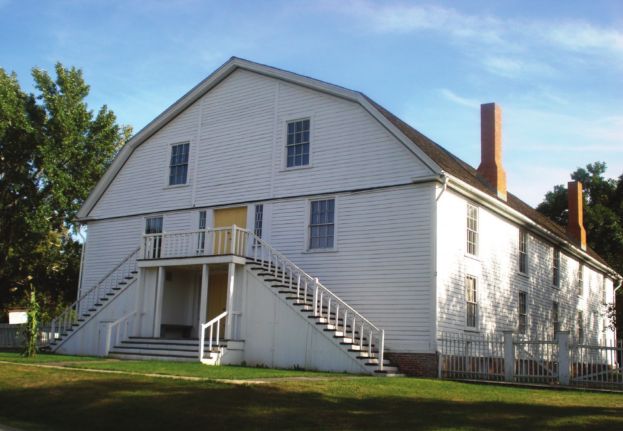
In
New Salem, water has sometimes damaged log cabins, most of which were
constructed during the 1930s under the New Deal’s Civilian Conservation
Corps program. Moss has overtaken the roof of an old barn, which
indicates that water is being retained in the underlying structure, said
IHPA architect Jane Rhetta. If that were ignored over time, she said,
“the structural integrity of the building could be threatened.”
Elsewhere on the site, water has damaged the chimney assembly of three cabins, which also will require restoration.
This
work isn’t even on the official requisition list, Rhetta said. It will
involve obtaining estimates from specialists in historic restoration,
then working with a local nonprofit to raise the funds.
Rescue volunteers
Staffing
has been cut at New Salem to eight full-time employees from 22 in 2002.
In addition, the site used to employ seasonal workers from May to
October to demonstrate blacksmithing, weaving and other oldfashioned
crafts. Now the site draws on a roster of volunteers.
New
Salem is well staffed in comparison to other sites, many of which have a
single full-time, or contract employee. At Bishop Hill, the site of a
utopian religious community founded by Swedish immigrants, staffing has
been cut in half to three from six in 2002. The state operates four of
the site’s 18 buildings while others are operated by the nonprofit
Bishop Hill Heritage Association and other local groups that have picked
up some of the slack.
The
Heritage Association last year took over the autumn harvest festival,
modeled on a late 19 th century county fair with food, music, dancing
and crafts. Funding had fallen to about $2,000 a year from a peak of
roughly $10,000 in the late 1980s. “We’ve been able to increase the
support, although we’re not at the level of the heyday,” said
administrator Todd DeDecker.
DeDecker said the
association raises money in the United States and abroad. “In Sweden,
we’re a big thing,” he said. “We get a lot of Swedish visitors.”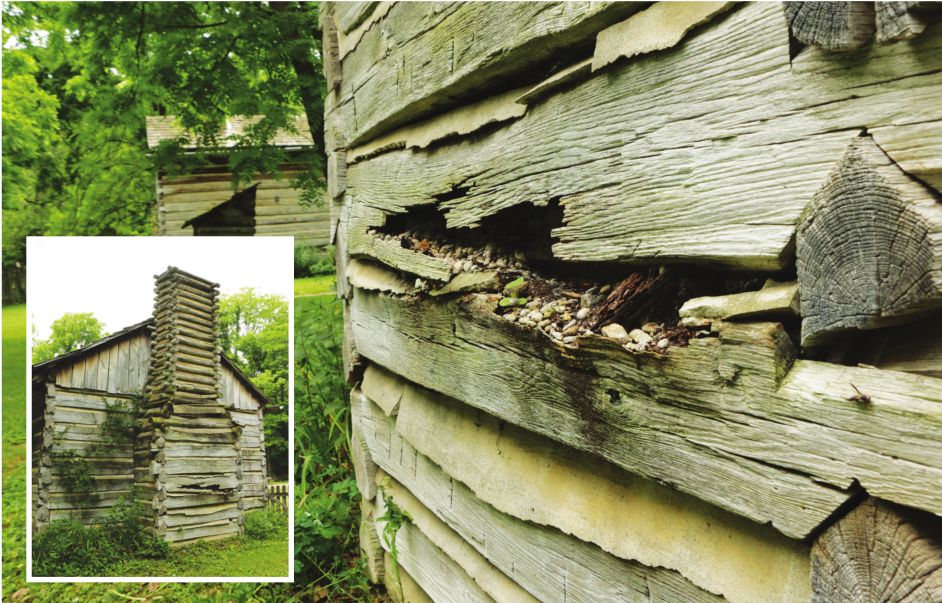
The
combination of lack of reinvestment in historical sites and limited
marketing dollars could hurt in-state tourism and related economic
activity.
The
Department of Tourism through its $65 million budget promotes the state
broadly and also funnels money to local convention and visitor bureaus.
IHPA doesn’t have its own marketing budget to promote the sites,
according to IHPA’s Prehn.
A
recent study for the Illinois Council of Convention and Visitor Bureaus
by industry consultant Tourism Economics projected that a 20 percent
budget reduction would cost the state $2.3 billion in visitor spending
and 4,600 jobs.
A new model?
Given the immense requirements for the state’s historic sites in an era of scarce resources, what can be done?
It’s
not just physical repairs that are needed, advocates say. The state
needs to invest in order to properly market these destinations to
prospective visitors in Illinois and out of state, and then offer a
top-notch experience when they arrive.
For
example, Cahokia Mounds, outside St. Louis, falls under the radar. It
has a valuable interpretive center and museum, said Jean Follett, a
Wheaton-based consultant and board member of the Chicago
nonprofit organization, Landmarks Illinois. But signage isn’t adequate
and there aren’t enough places to eat and shop, she added. “The
surroundings are depressing,” Follett said. “They need to do more to
promote it.”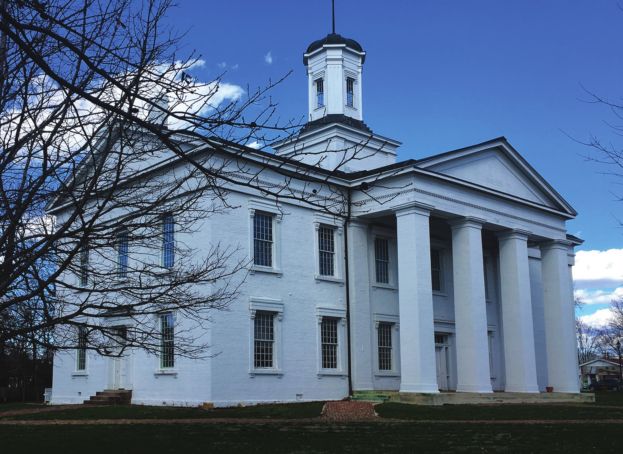
For Follett, the overarching problem is that over the years, the state took on more sites than it could handle.
“There are way too many,” she said. “This is not a model that we can support.”
The
state, she added, should hang on to locations that are truly historic,
and cede control for others to local nonprofits and friends groups.
The
possibility of private-public partnerships has been proposed by Rep.
Don Moffitt, R-Galesburg, whose district includes the Carl Sandburg
State Historic Site.
Last
year he introduced a bill that would authorize IHPA to team up with
private companies, colleges or other nonprofits to oversee maintenance
and administration of 10 sites in a pilot project. The bill was referred
to committee. Moffitt maintains such partnerships could offer a way to
salvage and promote sites that are languishing.
The Sandburg site is open only Thursday through Sunday and is run day-to-day by a single contract employee.
Moffitt
said Galesburg-based Knox College would be an ideal partner. Student
interns, for example, could be recruited to assist with operations and
marketing. “A site like this should be viewed as an economic engine,” he
said.
Karrie
Heartlein, director of government and community relations at Knox, said
the college would welcome the opportunity to collaborate. She said Knox
in the past has discussed with state officials the idea of students
serving as docents, assisting in preservation efforts or developing new
exhibits. The idea of the college’s staff assisting with building and
ground maintenance hasn’t been explored. “We don’t want the Sandburg
home to fall into disrepair but we don’t want to steal thunder from
volunteers who have been active,” she said.
Privatization concerns
Museum
specialists acknowledge that such partnerships may be inevitable but
they worry about the potential for private groups to skew historic
interpretation.
In a statement last year reacting to Moffitt’s bill, the Illinois Association of Museums (IAM) warned of a “slippery slope.”
“Privatization
raises serious questions about corporate influence, voices of
authority, proper care of the state’s historic resources and artifacts
and subjective interpretation of Illinois history,” the association
said. “IAM believes that it is the state’s responsibility to care for
its history and historic properties and it should not be the
responsibility of private individuals or companies to operate state
historic sites.”
Jeanne
Schultz Angel, former IAM executive director, now executive director of
The Nineteenth Century Club and Charitable Association in Oak Park,
said nonprofit organizations such as colleges and universities would
likely prove judicious guardians of historic sites.
But
she worries that acquisition by corporations or wealthy donors could
lead to subjective inclusions and omissions of stories – whether
deliberate or due to a lack of knowledge, adding, “the public voice is
lost.”
Judith Crown
is a business journalist, who has worked for major news outlets
including BusinessWeek Chicago and Crain’s Chicago Business. She has
covered public fi nanace stories for the BGA and can be contacted at [email protected].


