Smart, taut and timely, Gavin Hood’s Eye in the Sky is an unflinching look at the nature of modern warfare and the devastating emotional effect it has on those who wage it. Focusing on a drone mission that’s altered by unforeseen circumstances, the sterile sort of combat at its core proves to be far messier than anyone bargains for. The technology used to spy from space or deploy bombs from safe distances actually puts the combatants in situations that require them to more closely examine the carnage they’ve wrought, resulting in emotional damage none of them could anticipate.
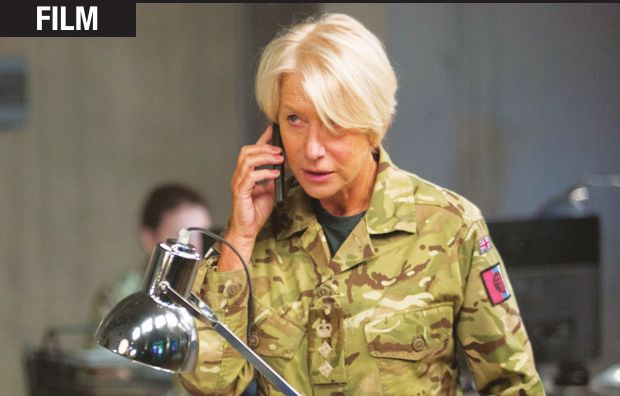
Switching back and forth between four different locations – a military center in Surrey, England, a high-level cabinet meeting in London, a drone command outpost in Las Vegas and a hot zone in Nairobi – the film opens on Colonel Katherine Powell (Helen Mirren), who’s about to coordinate a mission that’s been in the works for a long time. Seems an international terrorist and former English citizen, Ayesha AL-Hady (Lex King), and her cohorts have been located in the suburbs of Nairobi. As they are among the five most wanted terrorists in the world, capturing them would be a feather in Powell’s hat, as well as a major victory for the British government that is intent on bringing AL-Hady back for trial. Using a drone piloted by Captain Steve Watts (Aaron Paul), who’s stationed in Las Vegas, to eavesdrop on a meeting of the criminals, all the pieces are in place to take these fugitives into custody. However, when they’re seen outfitting two young recruits to be sent out as suicide bombers, things take an unexpected turn for the worse.
At this point, the purpose of the mission changes as does the film itself. Hood begins to build the tension of the piece, steadily increasing the pace of the ever-escalating situation that ensues, despite having to switch back and forth between the four locales. The complications that emerge are clever, plausible and raise the stakes in a way that never feels manipulative. What was once a clear-cut line of action becomes a dilemma for all involved, from either a legal or moral perspective.
The most frustrating aspect of this situation is that no one wishes to get their hands dirty, thus any sort decisive action is repeatedly delayed. None of the Prime Minister’s cabinet members will give the final authorization to use deadly force, which results in repeated delays that frustrate those in the military and gives their subjects more time to escape. Eventually, Watts himself requests that further information be gathered before he drops his payload, as the prospect of numerous civilian casualties causes him to question the viability of the mission.
Guy Hibbert successfully walks a narrative tightrope with his script as he evenhandedly presents each faction’s reasons for their actions, or inaction, as the case may be, so that we may understand their respective points of view. No judgment is leveled towards any quarter and the sense of ambiguity the film leaves us with powerfully underscores the quandary those who make these sorts of decisions find themselves in every day. No, it may not be the warfare of yesterday in which troops literally had to get their hands dirty while protecting their interests; however, that doesn’t make the remote fighting of today any easier where matters of life or death are concerned. Eye lays out these moral complications and resists the temptation to offer up any easy answers to them, making it the best film released in 2016 so far.
To read an interview with director Gavin Hood, go to the Cinemascoping Blog at http:// illinoistimes.com.
Contact Chuck Koplinski at [email protected].