Springfield police Timothy Day and Russell Lehr were cleared March 23 of allegations of excessive force.
In 2014, Christopher Pulley, a Jacksonville man with a history of convictions for drug possession, filed a federal lawsuit against the officers, alleging that Day and Lehr used excessive force while arresting him. The lawsuit stemmed from a drug possession charge Pulley faced in February 2013. A six-person jury discounted Pulley’s claims in the federal court and the case was finally closed.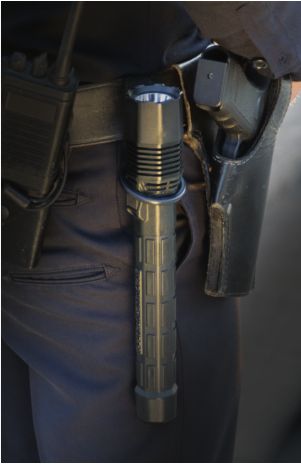
“This was a case where the defendant resisted and attempted to run,” said Steven Rahn, attorney for the city of Springfield. “What else did he expect to happen?
On Feb. 28, 2013, the Central Illinois Enforcement Group, a narcotics task force, received a tip that Pulley was transporting large amounts of marijuana on the Amtrak train from Chicago to Springfield.
Rather than obtain a warrant, the police planned to stop and search Pulley while he was driving. On Feb. 28, 2013, Springfield police officer Timothy Day stopped Pulley and Krystal Harris, Pulley’s girlfriend, at Fifth and Canedy streets in Springfield for improper lane usage.
After preliminary questioning, Day used a narcotics dog to conduct a “free air” sniff test for drugs. In a free air sniff test, if the dog signals its handler that it smells drugs, the police are allowed to search the vehicle. As Day expected, the dog detected a scent, and the search yielded a pound of marijuana in Pulley’s luggage from the trunk of the car.
Pulley attempted to run, and the incident still haunts him three years later.
At the trial for Pulley’s lawsuit last week, Springfield police officer Russell Lehr testified to tackling Pulley as he attempted to run. As a result, they fell forward together and Pulley hit his face on the sewage drain with his hands under his body. Lehr then began to shout, “Give me your arms and stop resisting arrest.”
Pulley testified that Lehr struck him in the head with a hard object prior to being tackled to the ground and that he lost consciousness prior to being hit with Day’s flashlight.
Day said he saw the two falling and ran to assist Lehr. Day had his flashlight in hand at the time and testified to striking Pulley twice with it.
“When actively resisting, any number of things can happen, such as a policeman’s armor being pulled,” Rahn, the city’s lawyer, said. “Officers are taught to engage in a distractionary (sic) technique that allows them to strike the offender in an area of large muscle mass to regain compliance as quickly as possible.”
In the end, Pulley agreed with the events as Lehr described them, but says he could not hear Lehr’s commands because he was unconscious at that point.
Pulley testified that he has had reoccurring headaches since the incident, but has not seen a medical specialist to date.
Jason Johnson, Pulley’s attorney, asked Day why he used the flashlight to hit Pulley.
“I used what was immediately available,” the officer said.
Johnson then asked whether Day observed any further resistance once Pulley was on the ground. Day’s response was no.
“Let’s be real here, this wasn’t a distractionary technique,” Johnson said in his closing remarks. “It was a beating.”
The jury deliberated for about an hour and 15 minutes before deciding against Pulley.
“Justice was not served today,” Pulley said. “We have rules and regulations, and police do, too. At the end of the day, police always get the upper hand.”
Contact Brittany Hilderbrand at [email protected]


