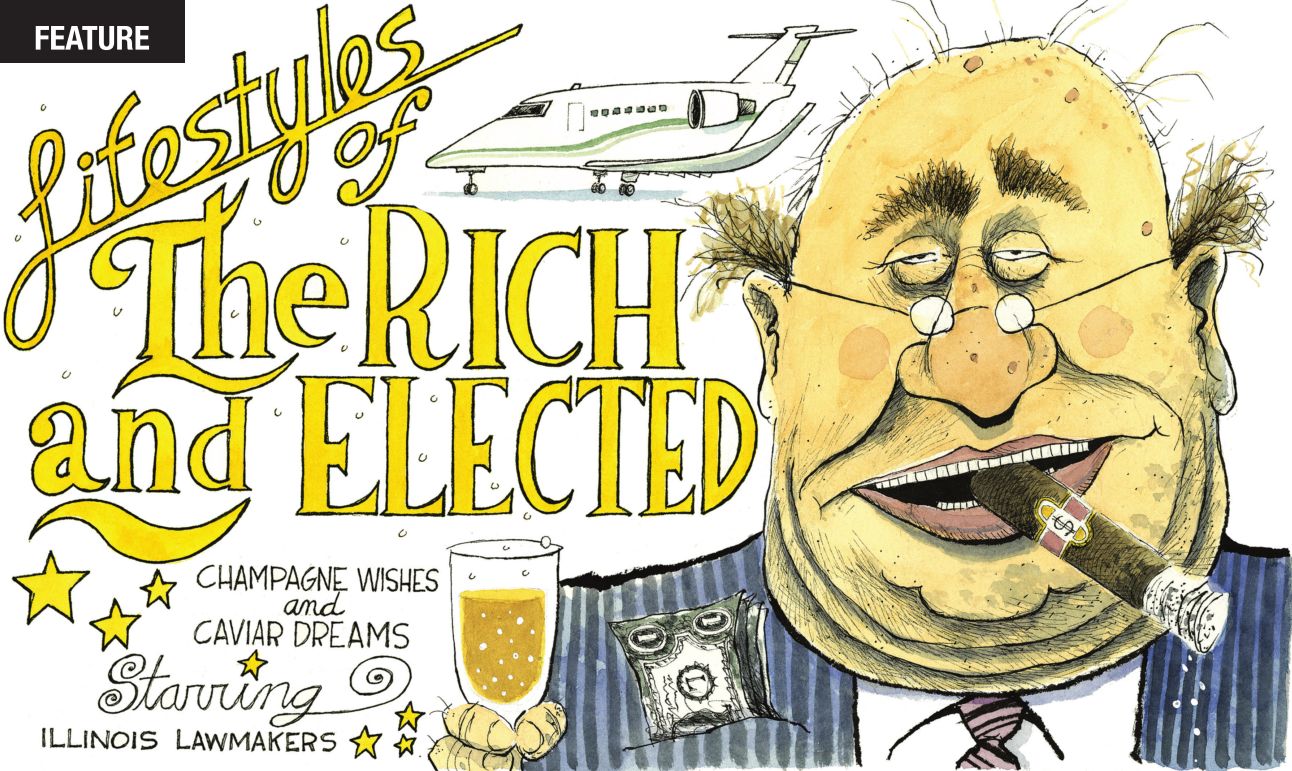
State pols live high with campaign funds
Fancy cars. Luxury hotels. Trips to the tropics and beyond. Money paid to “unknown.” Meals bought in bars without kitchens and money sent to an address that doesn’t exist.
All this and more appears on campaign disclosure reports filed by Illinois legislators, who are barred from spending campaign money on anything but expenses connected with political or government work. But a review of campaign expenditure reports filed by all 177 members of the General Assembly shows that rules can be stretched as legislators rack up huge bills for dining, lodging, airfare.
Consider Sen. Kimberly Lightford, D-Westchester.
Twice since 2013, Lightford has used campaign funds to stay at the Ritz-Carlton in the Cayman Islands, racking up hotel bills of $3,931 during her two stays. In 2012, she reported spending $553 for lodging at the Desert Longevity Institute in Palm Desert, California, a holistic health clinic that offers such services as hyperbaric oxygen treatments and colon cleansings but does not rent rooms.
Lightford said that the reported payment to the health clinic was in error – after Illinois Times brought it to her attention, she said that she corrected it. She makes no apologies for the Cayman Islands.
Loretto Hospital in Chicago was in danger of losing its insurance, which could have forced closure, explains Lightford, who is on the hospital board. After exhausting other possibilities, she said that the hospital set up a captive insurance company, essentially a form of self insurance, in the Cayman Islands.
“We cannot convene in the United Sates because it’s a captive in the Cayman Islands,” Lightford says. “Our meeting every fall is in the Caymans so that our auditors can come in, and we have our yearly meeting there. That’s (the Ritz-Carlton) the location that we stay when we’re there.”
Lightford says the public isn’t interested in how campaign dollars are spent.
“What is the concern?” she asks. “The public isn’t making any contributions to our campaigns. … I don’t know that there are constituents in the public saying, ‘How do you spend campaign dollars?’” Lightford is right about at least one thing. Tens of millions of dollars that flow into campaign accounts for legislators are coming, by and large, from corporations, political action committees and various interest groups, not voters. Kent Redfield, a retired University of Illinois Springfield political science professor, says the public has an interest in how lawmakers spend that money.
“You don’t have the money because you’re a nice guy and you have a winning personality, you have the money because you’re an elected official,” Redfield says. “The issue is, when spending starts to get into something that is either a perk, allowing you to live a better lifestyle than you would have been able to live otherwise, or something that could clearly be perceived as a perk, the question becomes, is your loyalty to your contributors or to your constituents?”
Lax rules To review campaign reports by Illinois politicians is to see an honor system on steroids, where regulators take at face value what politicians report and what laws exist are filled with loopholes.
The law says that campaign money can’t be spent for personal use and specifically bars candidates from spending money on clothing. So, why is it that Rep. Luis Arroyo, D-Chicago, spent $183 in 2010 for “work attire” at Terry’s Men’s World in Springfield?
Tom Newman, director of campaign disclosure at the Illinois State Board of Elections, explains that the law isn’t as straightforward as it might sound. Yes, there is a ban on buying clothes with campaign funds, he acknowledges, but it’s not necessarily clear cut.
“There is, additionally, nothing that prohibits the expenditure of funds for a political committee to defray the customary and reasonable expenses of an officeholder in connection with their governmental duties,” says Newman, quoting from the statute.
Translation: Politicians have customarily worn clothing, and so they can use campaign funds to buy suits and other things to prevent nudity.
The law also says that legislators can’t use campaign funds to buy cars, and so politicians report spending as much as $1,300 a month on automobile leases. Repair bills from Mercedes and Cadillac dealerships show they’re not driving heaps.
The law decrees that legislators can’t use campaign money for personal travel or pay more than fair market value for anything or pay someone without receiving actual services. Contributions to charity are OK because they are deemed to build good will, which helps come election time. Politicians have used campaign funds to pay bonuses to legislative staff and buy wedding gifts, Christmas presents and funeral flowers. It’s common for legislators to buy tickets to sporting events without disclosing who went to games.
Some lawmakers make direct payments to themselves, with scant documentation on how the money was used.
Since 2008, Arroyo’s campaign reports show that he has paid himself
more than $17,300 for “Election Day expense,” “campaign work,” “field
work” and “expenses for services rendered,” plus $1,000 on Dec. 23,
2011, for “reviewing contested petitions,” an apparent reference to
petitions needed to get a candidate on the ballot. Arroyo isn’t alone.
Campaign disclosure reports are rife with politicians who report giving
themselves money, often in round figures, for similarly described
expenses. Newman says it’s permissible for politicians to pay themselves
for campaign work, even an hourly wage for doorbelling.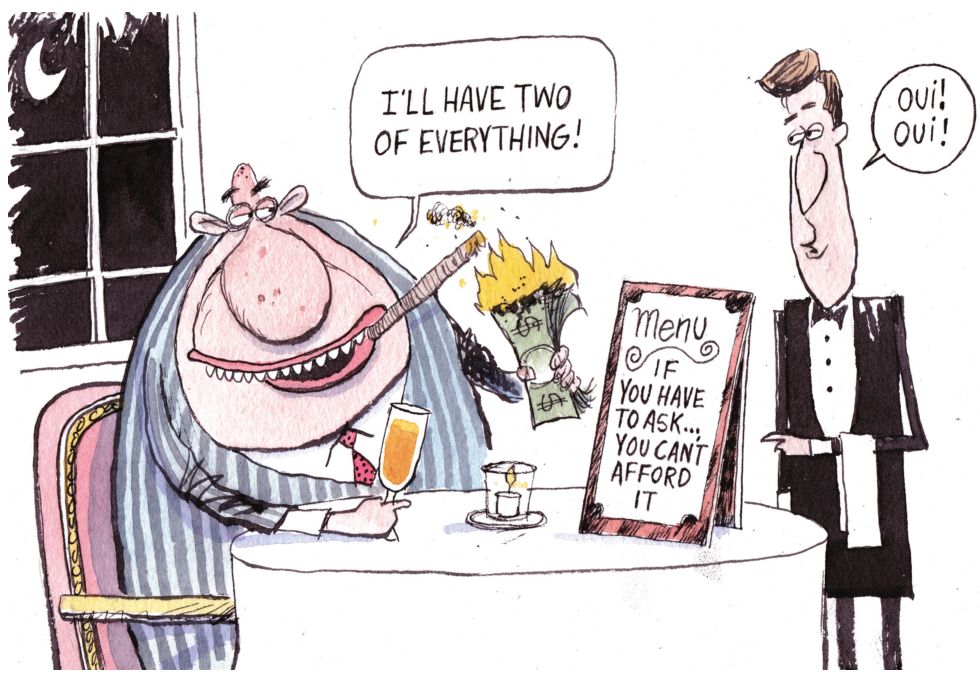
“In
theory, sure,” Newman says. “As long as they’re paying themselves for
doing something, I would say it’s possible to do that.”
Arroyo
could not be reached for comment. The election board doesn’t often get
into questions about whether an expense is personal, Newman says, so
long as politicians accurately report the amount that is spent and who
received it. And so Arroyo is on his honor when he says that at least
five trips to Puerto Rico and the Dominican Republic since 2007 were
connected to his duties as a state representative and candidate, as was
the $3,000 he gave to the Oscar De La Hoya Celebrity Golf Classic, which
benefits disadvantaged youth in Los Angeles, during a trip to
California in 2013. So, too, is Sen. Mattie Hunter, D-Chicago, who
reports spending more than $84,800 on hotels, airfare and payments to
travel agencies since 2006.
Hunter’s trips include
at least two jaunts to China, trips to Puerto Rico, Toronto and New
Orleans, plus airfares paid to South African Airways and Etihad Airways,
an airline based in Dubai, for destinations that aren’t clear from
reports. She’s stayed at Ritz-Carltons in Philadelphia, Shanghai and
Laguna, California, plus the Excelsior Hotel in Hong Kong. Closer to
home, Hunter has spent more than $8,600 on lodging in Chicago, even
though she lives in the Windy City. She has used campaign funds to
donate to an alumni chapter at Jackson State University, where she
earned a master’s degree, and she’s also bought “tickets” from the
chapter, according to disclosure reports that show campaign funds were
also used for lodging in Jackson, Mississippi, where the university is
located.
Rep. Daniel
Burke, D-Chicago, and Rep. Jerry Costello II, D-Red Bud, have traveled
to Istanbul with campaign money. Burke and Costello reported
destinations when disclosing airfare expenses in their campaign reports,
but that isn’t required. It’s common for legislators to report only the
name of an airline or travel agency.
Burke
says that about 20 legislators and other public officials, including
House Speaker Michael Madigan, D-Chicago, went to Turkey with him on the
2012 trip. Meals and lodging during the eight-day trip were provided by
the Chicago Turkish American Chamber of Commerce and the Niagara
Foundation, a nonprofit that “strives to foster civic conversations.”
Burke describes the journey as an “educational mission” in forms that
legislators must fill out when they receive gifts.
Former
state Rep. Kathleen Ryg, D-Vernon Hills, traveled to Turkey in 2008 and
wrote about a day on the Aegean Sea and tours of ruins in an online
review posted last year by the Niagara Foundation, which helped fund
legislative trips to Turkey for at least four years.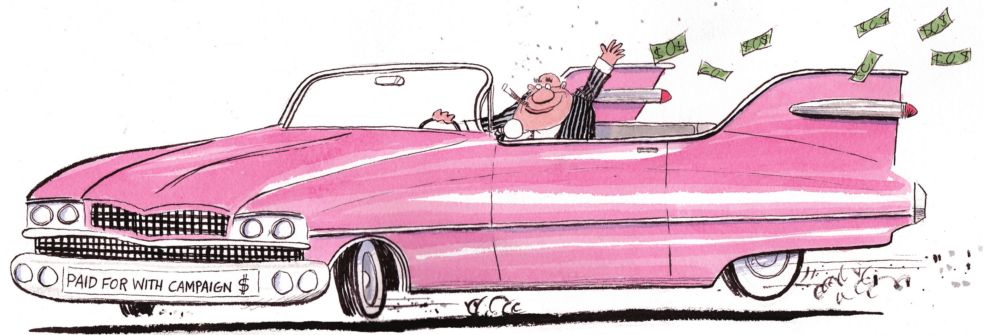
“This
trip helped me cross bridges in my own life as a state representative,”
Ryg wrote. “I really did not know many of our traveling companions.
Some were from different areas of the state, many from the other side of
the aisle. Our Turkey experience quickly diminished our differences and
offered unprecedented opportunity to share common interests as leaders
in our state and home communities.”
Sen.
John Mulroe, D-Chicago, reported spending $2,400 in 2013 for “guest
chips” at a Des Plaines casino. During a fundraiser at the casino the
following year, he reported spending $6,450 in three payments for guest
chips, food and beverages. Mulroe did not return a call.
Shortly after Illinois Times began
calling legislators about campaign spending and interviewed a few, a
reporter received a call from John Patterson, spokesman for Senate
President John Cullerton, D-Chicago. Ethics rules, Patterson explained,
forbid legislators or staff from discussing campaign spending with state
phones or on state time. Asking that a legislator call back isn’t
allowable if a reporter utters the word “campaign,” he said.
“Enough of them got calls (from Illinois Times) that our ethics officer got looped in,” said Patterson, who called from his cellphone.
Payments to “unknown” Regulators are driven by complaints. The elections board took no action when Illinois Observer last
summer reported that Sen. Sam McCann, R-Jacksonville, had received more
than $59,000 in reimbursements for mileage and “grouped expenditures,”
with no further details, from his campaign fund in recent years. A
complaint wasn’t lodged until February, and so McCann’s campaign
spending became an issue in the primary election.
After Illinois Times reported
that state auditor general Frank Mautino, while a Democratic state
representative, had reported paying thousands of dollars to a Spring
Valley bank for poll watchers, parking, travel and other expenses that
had nothing to do with banking, the election board informally asked
Mautino to clarify reports (“Money for nothing,” Jan. 25, 2016,
“Carelessness or something more?,” Jan. 28, 2016). But a hearing that
prompted Mautino to call in a lawyer wasn’t held until David Cooke, a
Streator resident, filed a complaint that included questions about more
than $200,000 paid to a service station in less than 11 years.
Mautino has declined to answer questions about his campaign spending since questions were first raised in January.
Some disclosure reports filed by legislators can’t be true.
For
instance, Rep. Arthur Turner II, D-Chicago, reported spending $1,000 a
month in January, February, April, May and June of last year for
lodging. He reported sending the money to Alisha Kulek at 202 Bruns
Court in Springfield. There is no such address. Public records show that
Kulek, a bartender at the Butternut Hut in Springfield, owns just one
piece of property in Sangamon County, an owner-occupied house she
purchased in 2011 for $77,000. It is not the address listed by Turner in
his reports. In addition, Turner reported making two $500 payments for
lodging in January of last year, the same month he paid $1,000 to Kulek
for lodging. Turner did not return a phone call or respond to an email;
Kulek did not respond to a message left for her at the Butternut Hut.
All
told, Turner in January of last year paid $2,000 for lodging. Half went
to the mortgage company that holds the note for a Springfield house
co-owned by Arthur L. Turner. That’s the name of Turner’s father, a
former state representative who once held the seat now occupied by his
son.
Then there’s Rep.
Monique Davis, D-Chicago, who has a history of filing disclosure
reports that are nothing short of bewildering. Some are mathematically
impossible, as she has corrected, then corrected and corrected yet again
reports that are supposed to ensure transparency in campaign accounts.
According to an amended report filed in 2015 for the quarter ending
Sept. 30, 2012, she had a negative balance of $24,287 in her campaign
fund and no debt. Expenditures contained in her initial report for that
period are missing in her amended version, and vice versa. She initially
reported receiving $8,350 in contributions; she reported receiving no
contributions in her amended report filed last year.
Davis
has been fined three times by the state board of elections for a total
of $1,700 for filing nine late reports. She has never been sanctioned
for filing an inaccurate report. By contrast, Gov. Bruce Rauner’s
campaign last year was hit with a $27,458 fine for being eight hours
tardy in reporting more than $2.7 million in contributions that came in
one week before Election Day in 2014.
Davis said that she was unaware of problems with her disclosure reports, nor was she aware of any fines.
“I
have a group that takes care of that (disclosure reports),” said Davis,
who could not recall who keeps track of her campaign spending. “It’s
all been very, very, very much in order.”
In
2013, Rep. Elgie Sims, D-Chicago, made five payments totaling $2,550 to
“unknown” for such things as computer maintenance, photography, office
supplies and miscellaneous. In 2014, Sims collected $4,450 from his
campaign, mostly for “field work,” plus an additional $12,000 he
reported spending on poll watchers. Sims could not be reached for
comment.
State Rep.
Brandon Phelps, D-Harrisburg, last year reported spending more than $300
for food during three trips to the Butternut Hut, which doesn’t have a
kitchen but offers free popcorn and frozen pizza cooked one at a time.
Newman says that the election board isn’t necessarily concerned with
whether money went for food or booze, so long as the payee is properly
reported. Phelps says that he bought both pizza and beverages for
legislative staff at the Butternut Hut. As many as 35 people were his
guests, he said.
Last
year was profitable for Phelps, as he began 2015 with $188,700 in his
campaign account and ended it with $678,400. A Republican is running
against him this year. Phelps last faced an opponent at the polls in
2008, when he got 71 percent of the vote. He said that he hopes to boost
the campaign kitty to $1 million and that he needs the money to stave
off Rauner, who is flooding legislative races with cash.
Last
year, Phelps reported spending $12,154 on vehicle leases – he says he
drives a GMC Yukon. His airfare bill totaled $2,596. Lodging came to
$6,299. The tab for meals, not including expenditures denoted as food
purchased for fundraisers or receptions, came to $12,687, which included
dinner at TAO, a Las Vegas restaurant, that cost $1,020 – he says that
he picked up the tab for several diners. In November and December of
last year, Phelps also spent $1,106 for “maintenance” at Outlaw
Motorsports in Harrisburg, which sells and repairs motorcycles,
snowmobiles and ATVs. Phelps, an avid deer hunter, says that a
four-wheeler he uses in parades needed work.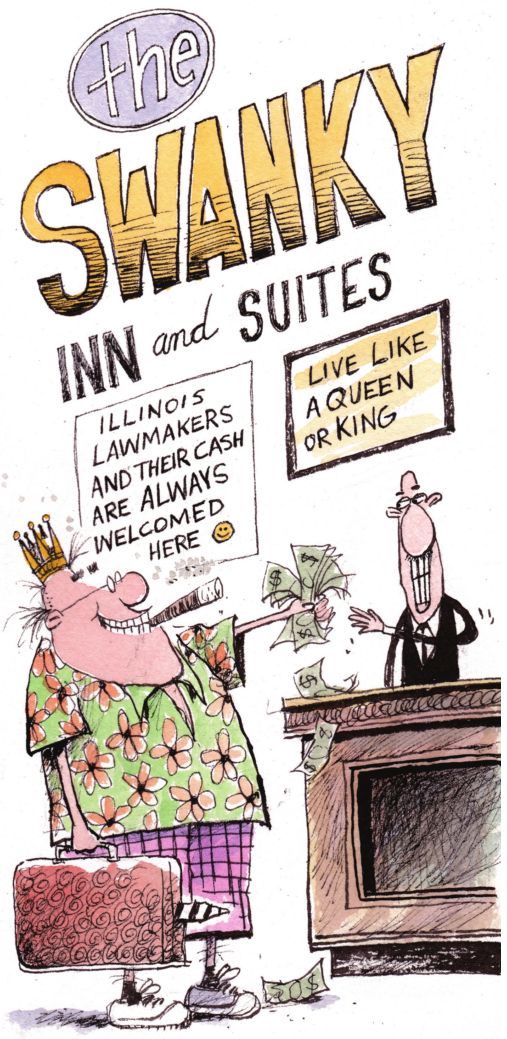
Phelps’
expenditures in 2015 included a $1,100 donation to the Central Florida
Shootout, a fishing tournament in the Sunshine State. He said in an
interview that he did not attend the tournament. He spent time at Lake
of the Ozarks last summer and also went to Las Vegas in January 2015 to
attend the Shot Show, a gun exposition. The tab for his stay at the Hard
Rock Hotel during the gun show came to $1,340. Coincidentally or not,
Adult Video News was holding its annual adult entertainment convention,
which draws crowds of porn stars and their fans, at the Hard Rock at the
same time as the gun show was in town.
Phelps
said that the National Rifle Association arranged for his lodging and
that he did not rub shoulders with porn stars. He says that he checked
out when he discovered that porn stars were coming.
“When
I heard that, I left early,” Phelps says. “They (the porn convention)
came in the day after I left, supposedly. I was not there. God knows
that I was not.”
Improvement
needed Pursuant to a change in state law, the election board beginning
in 2012 began ordering random audits of campaign committees. The law
passed by the General Assembly caps the number of audits at no more than
3 percent of active political committees.
Last
year, the election board ordered 77 random audits. There were more than
3,800 active committees that year ranging from campaign committees for
legislators to committees for local politicians to political action
committees not attached to any candidate. Committees pay the cost of
random audits. The law prohibits the board from releasing the names of
committees that have conducted audits unless a fine is issued or there
is reason to believe there has been a violation of campaign finance law.
Redfield, the retired UIS political science professor, says that the law doesn’t go far enough.
Redfield
said that all legislative campaign committees should be required to
perform regular audits. If lawmakers knew that CPAs would scrutinize
records, they’d be careful in the first place, he said.
“You’d get more accuracy, you’d get more thorough reporting,” Redfield said.
Lawmakers
should also be required to file more precise reports, Redfield says. If
campaign money is being spent for football tickets, for example,
candidates should have to state that, as opposed to simply saying that
they gave money to the University of Illinois. Similarly, lawmakers
should have to provide more details on travel expenses, he said,
particularly if money is spent for travel outside Illinois.
“Where did you go, and what was the purpose?” Redfield says. “You’ve got the records, it’s just a matter of writing it down.”
The
state should also institute a uniform method of calculating mileage
expenses, Redfield said. Legislators now are free to use any method they
choose.
“You have to
address the reporting, you have to address the recordkeeping,” Redfield
said. “It’s about hardening the target and making it more difficult to
be corrupt.”
But
change won’t be easy. “The system is created by the political culture
and it’s reinforced by the political culture,” Redfield says. “It’s hard
to break out of it.”
Contact Bruce Rushton at [email protected].


