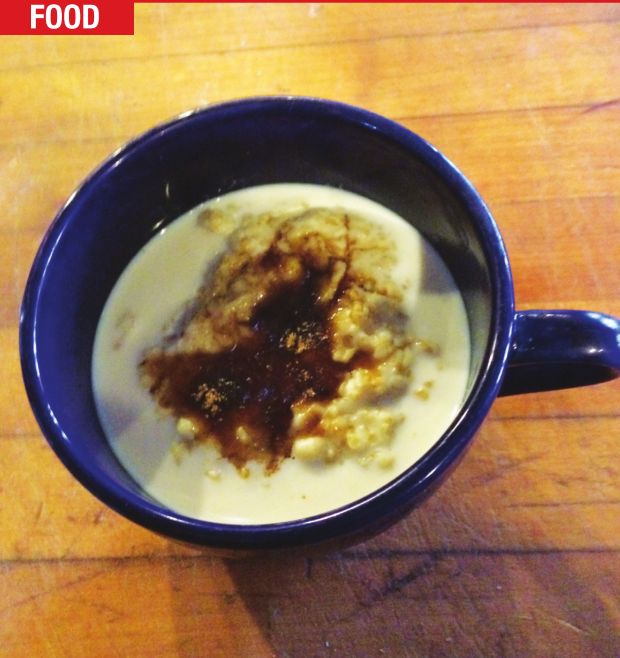
I’ve written more than once about my longterm dislike of cold cereals. Well, not actually (some) cereals as such, but the concept of putting it into a bowl with milk. The first bites aren’t so bad, the ones wherein the cereal retains at least some of its crunch. For me, it was always a race against time because once the cereal/milk turned into a soggy mushy mess: yuck!
I realize that many folks don’t share that opinion, not least because of one of NYC’s most lauded chefs, David Chang. He has several establishments in New York, as well as Washington D.C. and Toronto. One of Chang’s spin-offs, in conjunction with his original pastry chef, Christina Tosi, is Milk Bar, a bakery with specialties such as “crack pie.” Having never experienced crack, I can’t really compare. But it is damned good.
Tosi has become almost as famous as her former boss/now partner. She’s a two-time winner of James Beard Foundation awards and the author of two cookbooks (one of which contains a recipe for that crack pie.)
One of Milk Bar’s other best sellers is “cereal milk”. It’s made with milk, cornflakes, brown sugar and a pinch of salt. Customers can get cereal milk in a bottle or as part of a smoothie or shake. Milk Bar’s website says that it tastes “like the milk at the bottom of a bowl of cornflakes.” I’ve tried it, and yes, that’s exactly what it tastes like.
Whatever. Hot cereal – the stick-to-your-ribs, warming concoctions that give you the strength to face frigid mornings – is another matter, as far as I’m concerned. Not as an everyday breakfast for sure, certainly not when the sun shines hot and humidity rules the day.
But on cold, chilly mornings there’s no better way to brace yourself than with a bowl of hot, cooked oats or other grains to face the journey to work, school or even just chores outdoors – for which you might even need a second bowl.
For April Bloomfield, porridge has become more than just classic; it’s become iconic.
Bloomfield has two wildly successful restaurants in Manhattan. I’ve been fortunate to eat at one, The Breslin. Bloomfield’s cuisine is creative, tied to her training at one of London’s most renowned restaurants, The River Café; yet at the same time it is rustic and firmly tied to her roots.
Bloomfield is a “celebrity” chef, although not a household name throughout America. She appears with regularity in major cooking publications and has hosted a PBS cooking show, The Mind of a Chef. Her restaurants are the sorts of places that just-out-of-the-kitchen chefs come to hang out after a stressful day on the line.
So when her first cookbook, A Girl and Her Pig, came
out in 2012, there was a fair amount of buzz. Recipes such as
sausage-stuffed onions, tomatoes either stewed with white wine and
saffron or roasted with marinated peppers and lamb meatballs with
yogurt, mint and garlic intrigued both home cooks and professionals
alike.
It was a
surprise for Bloomfield and her fans that the single thing everyone who
has looked at and cooked from her cookbook – chefs and home cooks alike –
was most excited about was the recipe for her granddad’s porridge. Yup,
that’s right. The same stuff that made Goldilocks famous for declaring
it “just right.” It is oatmeal elevated to a textural and flavor level
beyond (way, way beyond) that of goopy instant-cook or preprepped
single-serving oatmeal options, many of which offer faux flavors to make
the insipid cereal palatable. Bloomfield’s recipe uses both
old-fashioned rolled oats and steel-cut oats and doesn’t require a long
cooking. True, the porridge takes 20 minutes as opposed to “instant.”
But the true taste and character of the oatmeal can be discerned and
savored. Bloomfield’s sweet (and spicy) options are enhancements rather
than cover-ups.
Bloomfield
says in her introduction to her granddad’s porridge: “Even today, the
thought of it makes me go all warm inside. Just the thing for cold
mornings when there was frost on the ground, and you knew that pretty
soon you’d have to leave the house all wrapped up in your scarf, bobble
hat and mitts, and pop off to school. These days, I’ll sometimes add a
bit of crumbled dried chili to my porridge. It goes especially nicely
with maple syrup.”
"These days, I’ll sometimes add a bit of crumbled dried chili to my porridge. It goes especially nicely with maple syrup."
Steel-cut oats used
to be only available as a specialty item in ethnic sections of
groceries, if then. But even Quaker offers them now alongside their
other oatmeal options.
April Bloomfield’s granddad’s porridge
• 1 1/2 c. whole milk, plus extra for serving
• 1 1/2 c. water
• 1 1/2 tsp. sea salt, preferably Maldon sea salt
• 1/2 c. steel-cut oats
• 1/2 c. old-fashioned rolled oats, not “quickcooking” or “instant” To serve: Dark brown sugar and/or pure maple syrup
Combine
the milk, water and salt in a medium (2 quart) heavy pot over high
heat. When it just begins simmering, add both kinds of oats and lower
the heat. It should recover to a steady but slow simmer. Adjust the heat
as needed to maintain the simmer, stirring frequently for about 20
minutes. The rolled oats should be somewhat mushy and the steel-cut oats
just tender; cooked through but still with a nice, chewy bite to them.
At
this point, Bloomfield suggests adding brown sugar and/or maple syrup,
but I prefer waiting to use the sweet elements just as topping. The
porridge is saltier than American oatmeal, and I like the contrast
between them.
Spoon
the porridge into warmed bowl and let it sit a minute or so before
carefully pouring a little cold milk around the perimeter of each bowl.
Serve immediately, with dark brown sugar and maple syrup passed separately for diners to add as they desire.
Serves 4. But for anyone coming in from frigid pre-dawn chores or exercise, 2 servings is probably more accurate.
While
it’s best freshly made, leftover porridge is also delectable, certainly
a desirable alternative to the insipid instant stuff. Reheat leftover
porridge over low heat with a bit of milk or water, either in a
microwave or on top of the stove.


