Lawmakers
return to Springfield with some new ideas, but the unfinished business
of 2015 will likely overshadow other topics in the second year of the
legislative session.
For Statehouse insiders, the start of a new legislative session can have a “back-toschool” feeling: a fresh start, with new lessons to learn and tests to tackle, emptied hallways once again filled with the sounds of shuffling feet and of acquaintances catching up after prolonged break.
Except this year, there was no break.
There will be no fresh start.
After lawmakers and Gov. Bruce Rauner failed to agree on a budget, the legislature has convened at least once each month since May, when the General Assembly was supposed to have adjourned and been finished with its regular business. Those sessions did little to bring about a comprehensive resolution, meaning that when Illinois rang in the New Year, it entered its seventh month without a fiscal plan in place.
There’s no indication that Rauner or the Democrats who control the General Assembly are ready to yield in their stances on workers’ compensation, the prevailing
wage, the civil lawsuit system, term limits and legislative redistricting – all elements of the “Turnaround” agenda Rauner has laid out as requsite before he’ll focus on the state’s immediate balance sheet or discuss revenue.
Which is to say, the budget stalemate and the gridlock that’s led to it will carry into and dominate the 2016 session.
“This is extraordinary. We have never seen anything like this. We have certainly had death matches and death stares between the legislature and … previous governors, but nothing of this magnitude,” says Kim Maisch, a former Republican legislative staffer who has lobbied for the National Federation of Independent Businesses’ Illinois arm for nearly two decades now. “And so I think that 2016, it doesn’t sound like it’s going to be a whole lot different.”
Illinois Issues is in-depth
reporting and analysis that takes you beyond the headlines to provide a
deeper understanding of our state. Illinois Issues is produced by NPR
Illinois 91.9 UIS in Springfield.
A pair of major factors separate this year from last, however.
For one, the longer Illinois continues down this path, the pressure for a deal is apt to intensify as
ramifications compound. The state has largely managed to muddle through
the historic budget situation because of what Rauner’s budget director
Tim Nuding calls the three Cs: continuing appropriations, consent
decrees and court orders. Together, they ensure that state employees
haven’t missed a paycheck, Illinois is making good on its debt service,
and Medicaid, child welfare and other human service payments have
continued. Lawmakers and the governor also approved money for schools
early on and subsequently for needs like 911 call centers and Lottery
payouts. The spending triggered by those budget bills and the three Cs
has Illinois steadily racking up a deficit, increasing the chances that
the state’s credit rating will further tumble. Already the impasse
caused Illinois’ worst-in-the-nation standing to take a hit.
Areas
not covered by a court order, decree or state law are becoming more
desperate as time goes on. Public universities and community colleges
haven’t seen any state cash since June. Anecdotal stories of professors
leaving the state for betterpaying, more secure positions elsewhere
could amplify, as there’s speculation schools without strong foundations
could have trouble keeping classrooms open as soon as spring semester.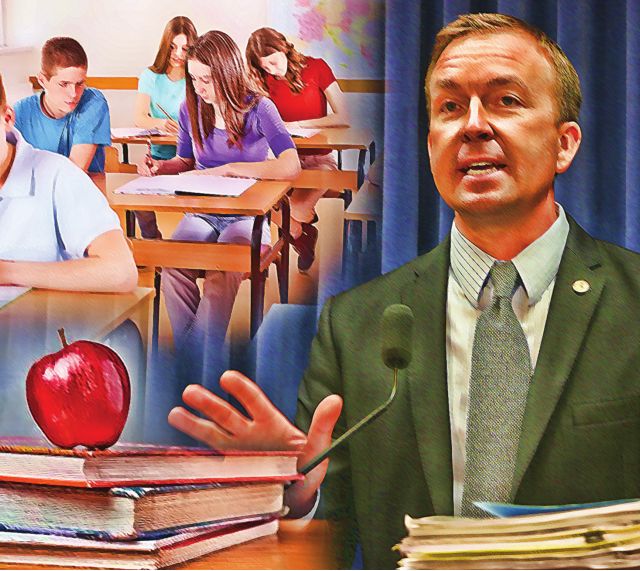
The
other variance is that 2016 is an election year, which could affect
political decisions in any number of ways. The prospect of incumbent
lawmakers having to ask for voters’ support after a time of clear
dysfunction in Springfield could be an impetus for action. Conversely,
politicians tend to steer clear of controversial decisions the closer
they are to Election Day. Especially in today’s hyper-political milieu,
lawmakers may avoid topics like taxes, pensions and items on Rauner’s
agenda until after the March primary, or even November’s general
election. Already, a glance at the legislative calendar indicates this
could be the case. Speaker Michael Madigan canceled the first couple
days of House session. The Senate only met for one day last week.
Neither chamber will return until Jan. 27, when Rauner is scheduled to
lay out his updated agenda in his second State of the State address.
Thereafter, the legislative calendar remains spare – especially for the
House – until April.
That’s not to say nothing will be accomplished in the 2016 legislative session.
If
Rauner is to get his term limits constitutional amendment, or if
advocates of moving the state to a progressive tax structure are to get
their way, this could be the time. Senate President John Cullerton had
wanted all debate on constitutional amendments put off until this second
half of the two-year legislative session.
Legislation
is pending that would make way for automatic voter registration. Sen.
Kim Lightford, a Maywood Democrat, hasn’t ceased advocating for a hike
in the minimum wage. Exelon has lifted its doomsday warnings that it
will close Illinois nuclear plants, but only temporarily. The
Chicagobased corporation could resume its push for legislative
intervention, as renewable energy activists likewise push for updated
standards. Republican Rep. David McSweeney of Barrington wants to free
manufacturers from having to pay income taxes.
Following
Attorney General Lisa Madigan’s finding that daily fantasy sports
qualify as gambling, regulation of the popular activity is in play this
legislative season. Rauner’s criminal justice commission has backing
from Republicans and Democrats alike, as its work pushes forward.
Education activists are hopeful for action on the funding of schools,
police shootings in Chicago have pushed law enforcement accountability
to the forefront, a new report aims to harness Illinois’ multitude of
local governments and other new points of advocacy are also bound to
spring forth in 2016.
Education
“Illinois
is the worst state in America for funding our schools. We’re number 50.
We’re the lowest state for supporting schools from the state
government. And I want to improve that,” Rauner told a classroom of
Chicago Public Schools high school students dually enrolled in DeVry
University’s Advantage Academy, just before Christmas.
It
remains unclear how exactly Rauner plans to do so. Despite often saying
he wants Illinois to send more money to schools, without a tax hike,
Illinois’ surging deficit makes that implausible. For many education
advocates, the emphasis is on how Illinois distributes state aid to
schools. “The only way we’re going to achieve [a healthy system of
public education] as a state is if we have more equitable funding among
our school districts,” says Sen. Andy Manar, a Democrat from Bunker
Hill. “That calls for wholesale reform. And that’s a tough task. That’s a
tough question to ask of our elected officials. But it’s one that I
believe needs to be asked, and needs to be answered.”
Manar
is the sponsor of legislation that has been described as a “Robin Hood”
model. His plan would divert money the state sends to wealthier
districts, that because of local property taxes can spend upwards of
$30,000 per student, to districts that, even when property tax rates are
high, can only spend about $6,500 on a student.
Manar
admits that it’s controversial but says the groundwork is done, and
that “the governor has a leadership opportunity, to say: ‘You know what?
Let’s get people around the table. Let’s get this job done once and for
all, and let’s move forward in a positive way, to bridge that divide
that exists all over the state today.’” There are early signs of nips
and tucks of fund reallocation. The Illinois State Board of Education in
early January voted to pump up the general state aid fund, using
dollars that had been set aside for special education, and to then use
that infusion to send more money to poor districts.
Rauner, however, has
been wary of taking this approach too far. “I don’t support taking money
from some school districts and giving it to others. What I do support
is raising overall state support for public education,” the governor
said in August, without any indication of where the additional funds
would come from, save for improved revenues should there be an uptick in
the state’s economy under his leadership.
Rauner has promised to roll out a specific education agenda early this year.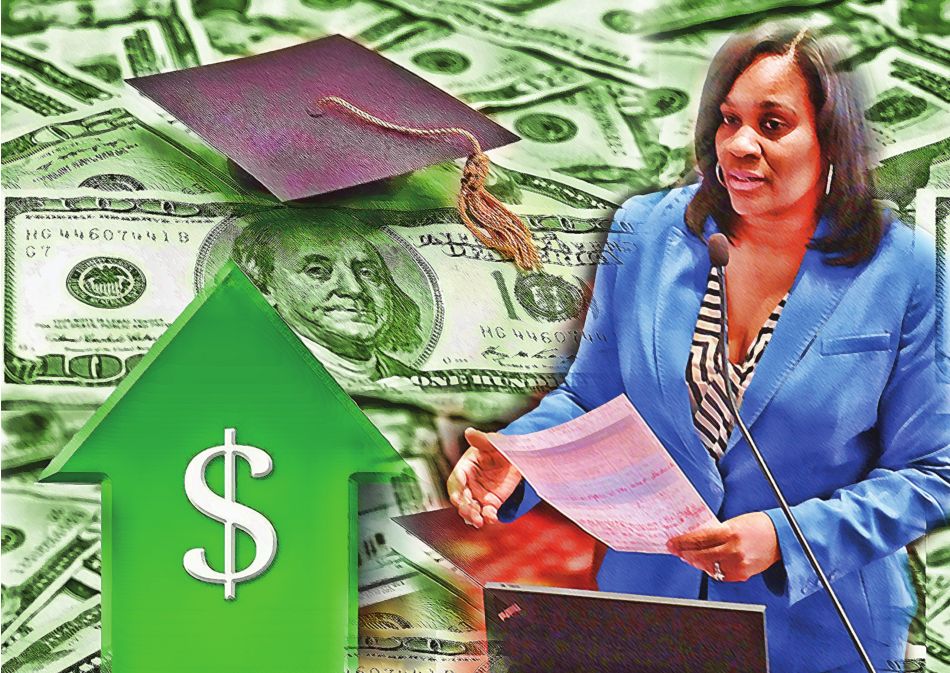
“Here
in January, February, we’re going to be rolling out a very
comprehensive education reform, education improvement plan,” the
governor said during his December DeVry classroom tour. “One of the
things our team has been doing, I’ve been doing, is traveling the state
this year, visiting different schools, with different models. Palatine
schools have a model where they’re working with a local community
college. Rockford does that, Danville. We’re learning about what they
do, what’s working, what’s not working so well, trying to get the best
ideas. And then we’re going to be rolling out our plans here in the very
near future.”
Rauner
continually hinges the state’s ability to fund schools on passage of his
stalled pro-business proposals. One can expect that his immediate plan
may put less emphasis on overhauling the education funding formula, and
more of a focus on improving pathways to career readiness, on
eliminating so-called unfunded mandates on schools, or even on charter
schools and other options.
“The
Turnaround Agenda is a requirement for us to be able to make the
structural changes and improve the overall educational system for our
scholars,” Rauner’s Secretary of Education, Beth Purvis, said recently.
“I don’t think that we’re ready yet to talk about what the right plan is
for educational funding yet.”
Like
Manar, Robin Steans, who recently left her position as director of the
education advocacy organization Advance Illinois, says the state needs
to put its attention toward a new funding formula that has dollars
following student need.
Similar
calls for action have been made since the late ’90s. Whether 2016 is
the year is inextricably linked to the state’s largest schools system:
Chicago Public Schools. Unlike other public school districts, the state
does not pick up the employers’ share of CPS teachers’ pensions.
Decrying the anomaly as unfair, CPS’s budget relies on a $500 million
bailout from the state – or else, layoffs loom. That potential outcome
has Chicago Teachers Union members prepared to strike. “One way or
another, we have to figure out how to get them on stable footing not
only this year, but for the out years,” Steans says. She says that will
require “some hard medicine here in Chicago,” along with help from the
state.
“Something really does have to give,” Steans says.
Illinois’
budget stalemate could make it even more difficult than usual for
legislators to agree to help Chicago. Alternatively, a CPS crisis could
force Rauner, and Madigan and Cullerton who both hail from the city, to
compromise.
Rauner in
August offered to send $200 million from the state to CPS, but only if
it’s paired with a property tax freeze and a rollback of collective
bargaining requirements on the local level, something that’s staunchly
opposed by Democrats. Rauner claims that prevailing wage and other
union-weakening measures will help to improve education. Madigan and
Cullerton quickly rebuffed the idea.
“If
the circumstances, and then the prospect, of the largest district,
that’s educating over 300,000 students, not being able to make it
through second semester … if that’s not enough to trigger people to reach a solution, I’m not
sure what is,” Steans says. “I think the answers are known. I think that
answers are out there. I don’t think they’re necessarily easy, but I
think they’re known and I think they’re doable. … It’s just going to
require some political leadership and some political will. We’ve got
some very real things at stake with very real timelines.”
Beyond
school funding, overarching changes are afoot in education this year,
including the continued implementation of new learning standards, such
as Common Core. And a decision has to come on how Illinois will use the
flexibility states have been given in the new incarnation of what was No
Child Left Behind, now called the Every Student Succeeds Act (ESSA).
That
at some point Rauner will push for an expansion of charter schools, or
for vouchers or scholarships that will enable children to leave behind
their assigned public school, seems inevitable given his campaign
promises. And there is also his private support for charter schools,
including one in the Noble network named in his honor, and Illinois’
successful application for a five-year, $42 million grant from the U.S.
Department of Education to support the growth of public school options,
like charters.
Drug laws
Despite
the feuding that was a hallmark of 2015, lawmakers from both parties
came together to approve a package intended to prevent more people from
falling victim to heroin abuse, and to help save the lives of addicts
who overdose on the drug. Legislators will no doubt watch to see how
those changes fare.
Likewise,
observers are keeping a close eye on the state’s medical cannabis
program. Illinois has collected just over $100,000 in taxes from the
program on $1.7 million in sales. Customers were finally able to
purchase the drug in November after a slow rollout. Authority for the
pilot project runs out in 2018, making sponsor Skokie Democratic Rep.
Lou Lang, uneasy.
Yet,
Lang says he does not expect to ask for an extension this year. He did
last year, but Rauner vetoed it. Rauner has likewise rejected attempts
to add to the list of illnesses that could qualify a patient.
Lang
says if he thinks there is enough support to override a veto from the
governor, he would try again. But without a critical mass, he “will
allow this year to go by.” He says the program needs time to prove its
worth, so next year he can circle back with any tweaks, or attempts to
prolong it. “I think we have an opportunity to make something out of
this program.”
As Brian Mackey recently reported for Illinois Issues, Rauner
will be hard-pressed to reach his goal of reducing the state’s prison
population by 25 percent within the next decade by solely focusing on
sentences for drug crimes. Nonetheless, Rep. Kelly Cassidy’s proposal to
“decriminalize” marijuana would dovetail with that mission.
It’s
Cassidy’s second try. She’d previously ushered a measure that would
have levied fines against people caught with small amounts of marijuana
rather than sending them to jail, but Rauner used his veto pen to change
it. He wanted to lower from 15 grams to 10 grams the amount of
marijuana that would not be subject to criminal penalties. Rauner also
wanted higher fines. At the time, Cassidy rejected those amendments and
didn’t attempt to call a vote to accept them. Now, she’s back with HB
4357, which she says mirrors the language Rauner had wanted – a change
which is apt to help it succeed.
“This
is critically important,” Cassidy, a Chicago Democrat, says. “There are
well over 100 local ordinances with differing factors for amounts that
can be possessed, fines and the process by which the tickets are
processed. These ordinances vary widely, and creates a confusing array
of laws and ordinances – a patchwork – that essentially means that where
you live and what you look like will determine whether you pay a simple
ticket and move on with your life, or go to jail and spend the rest of
your life carrying that consequence with you.”
The Turnaround
Senate
Minority Leader Christine Radogno, Gov. Bruce Rauner and their fellow
Republicans continue to advocate for the governor’s agenda in 2016.
While
legislators continue to push their individual agendas, and the problems
associated with having no budget persist, Rauner and Republicans appear
united in their commitment to advancing his Turnaround Agenda.
“Illinois
is worth fighting for, and the key to change is persistence,” Rauner
said in an interview with Illinois Public Radio on the one-year
anniversary of his taking office. “Democracy is not designed to change
quickly. Democracy doesn’t … uh, doesn’t allow for rapid, large change.
And I know that … big change takes time. But what’s clear is we need big
change. We can’t just nibble around the edges.”
Madigan
takes the brunt of Rauner’s blame for fighting the governor’s vision of
change. Yet he continually insists that he’s compromised with Rauner –
for example, with a willingness to move on a pilot basis to a partially
privatized Department of Commerce and Economic Opportunity.
Cullerton
puts it this way: “I do know that we’ve offered to negotiate in the
areas of workers’ comp, in the areas of collective bargaining. We’re
willing to compromise. But the demands that [Rauner and his fellow
Republicans] make are so outsized compared to the downgrading of the
state’s rating, the dramatic increase in our debt, it’s
disproportionate.”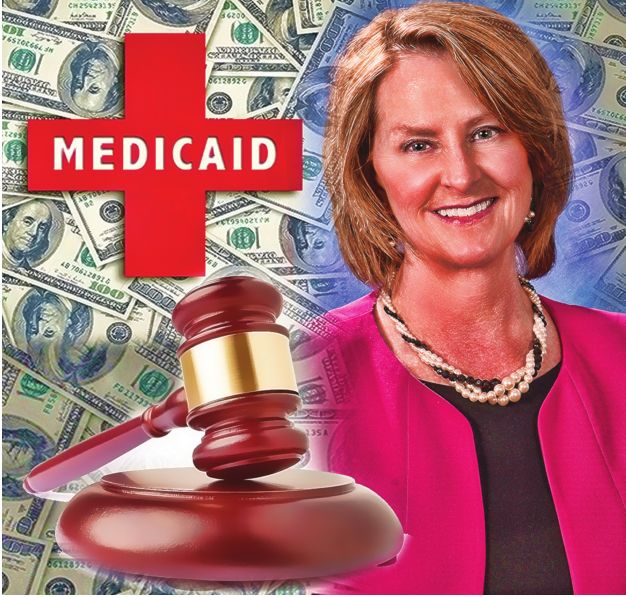
It’s
not just crafting the budget and working through Rauner’s prescription
for a “turnaround” that can only be resolved if the governor and
legislative leaders are able to work together in a bipartisan fashion,
says the top Senate Republican, Christine Radogno, who recently told an
audience at Chicago’s City Club: “There are a lot of issues that are
going to require very delicate negotiations, including school funding
reform, which we desperately needed in this state. Very, very difficult
issue to undertake. We’re going to need to be looking at further reforms
to Medicaid. The criminal justice reforms are very important and
difficult to find the right balance. But all of those are things that
you need statesmen on.”
At
the same time, Democrats continue to see Rauner’s wish list as an
assault on their party, and on labor. As if to exacerbate the divide,
negotiations between Rauner and AFSCME, which represents 36,000 state
workers, have broken down as the two sides attempt to agree on a new
contract. It’s not unimaginable to consider that talks will devolve to
the point that workers strike; last week Rauner set that possibility in
motion by filing a request with the state labor relations board to
declare an impasse.
It could take months before the board rules whether one actually exists.
Matters
in Springfield could come to a head depending on how the contract fight
shakes out, should CPS make good on its layoff threats, or should
universities shut down for lack of state funding. (Chicago State
University is sounding the alarm loudest. The school, which has a
predominately black student body, says by March its funds will be
depleted to the point it won’t be able to make payroll.)
“You know, the state has got to get [its] act together,” says public affairs consultant Thom Serafin.
Political
observers said the same in 2015. When in 2016 Illinois will “get its
act together,” or even if this will be the year, remains to be seen.
What is certain so far in this new year is that the state deficit has
grown, providers’ worries about the future have become all the more
desperate, the level of uncertainty continues to escalate, and election
day is drawing nearer.
Amanda
Vinicky has covered Illinois politics and government for WUIS and the
Illinois Public Radio network since 2006. Highlights include reporting
on the historic impeachment and removal from office of former Gov. Rod
Blagojevich, winning a national award for her coverage of Illinois’
electric rate fight as a result of deregulation, and following Illinois’
delegations to the Democratic and Republican national political
conventions in ’08 and ’12. She contributes to Illinois Issues and occasionally hosts the weekly news panel discussion program “CapitolView” on WSEC-TV.