
Springfield Fire Department resists cuts
Seven years ago, the city of Springfield faced a fiscal crisis so serious that then Mayor Tim Davlin formed a blue-ribbon committee to define the problem and recommend solutions.
The housing bubble had burst and the stock market had crashed. Springfield and other governments were laying off employees and instituting furloughs while the federal government propped up banks. Nearly 12 percent of the city’s corporate fund was going toward police and fire pensions, and the city was dipping into reserves, inviting cash flow problems and increased borrowing costs from lowered credit ratings.
“The financial issues facing the city are substantial and urgent,” the committee wrote in its report. “The inescapable fact is that in order to meet future mandated pension fund payments, the city must reduce expenses and raise revenues to dramatically different levels than exist today. … The city does not have sufficient revenue to meet its pension obligations and maintain city services.”
Since then, the city has raised revenue, increasing the sales tax and sewer fees to pay for infrastructure repairs while raising power rates to keep City Water, Light and Power solvent. Library branches closed to save money have not been reopened. Municipal employment has dipped from 1,706 in 2010 to 1,427 this year, according to data on the city’s website.
Cutting costs in the police and fire departments was critical, according to the blue-ribbon committee. The police department today has about 40 fewer employees than in 2007. Head count at the fire department, however, remains essentially the same, with just two fewer enrollees in the fire pension system than seven years ago, when the blue-ribbon committee warned of fiscal crisis. Unfunded liabilities in the police and fire pension systems have mushroomed in the past seven years, going from $64.3 million in the fire pension fund to more than $120 million; the shortfall in the police pension fund has more than doubled over the same time period, ballooning to almost $107 million from $50.1 million, which has forced the city to increase contributions to the funds to ensure that there will be enough to pay future pensioners.
Springfield two years ago became a poster child in a Wall Street Journal article that painted the capital city as drowning in pension obligations that consumed more than 20 percent of the city’s budget, squeezing out money for libraries, public works and other services. Mayor Jim Langfelder says that reductions in pension benefits for employees hired after 2010 will help ease future pension obligations, but costs have continued to rise, with unfunded liabilities in the police and fire funds growing by more than $1 million apiece in the year since the Wall Street Journal used Springfield to illustrate the pension crisis in municipalities across the nation.
While police have reduced head count, there have been no corresponding cuts in the fire department. Ward 7 Ald. Joe McMenamin has long warned that the city’s pension obligations are unsustainable and will eventually force either higher taxes or reduced levels of service.
“You don’t see it happening because it’s so incremental, but the next generation will pay for it,” McMenamin says. “It deserves a lot more attention than it’s received, that’s for sure.”
Springfield, McMenamin says, needs to start living within its means when it comes to the fire department, and fixing things will require leadership both in the General Assembly, which decrees what pensions cities must pay, and the mayor’s office.
“The pay and benefits for our fire personnel are greatly out of proportion to what the city can afford, what is needed to attract quality applicants and what is enough for a quality standard of living,” McMenamin said.
But neither the mayor nor Fire Chief Barry Helmerichs sound eager to slash payroll and costs.
“The situation, overall, you get what you pay for, really,” Helmerichs says.
Chief defends staffing
Former Mayor Mike Houston, who served on the blue-ribbon committee before becoming mayor in 2011, says that his view of the fire department changed after he took office.
The committee had recommended closing or consolidating fire stations. Houston said that he considered closing stations and so hired a consultant after he took office. The consultant convinced him that the city actually needed two more fire stations, he said.
“If money
was not a problem, I would have increased the number of police and
firefighters,” Houston said. “But, given the economic situation we were
in, that was totally unfeasible.”
Houston
says that the committee that recommended slashing costs had a bias
borne from firefighters refusing to be furloughed to save money when the
recession hit and forced cutbacks throughout city government.
“I do remember the bias,” Houston said.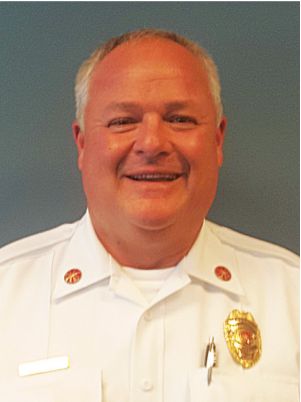
“I think that was a direct result of the fire department not going along with efforts by the city to rein in costs.”
After
Houston took office in 2011, the city hired 20 firefighters, with
salaries for the first two years coming from a federal grant. Houston
says that he did it to reduce overtime costs. Under the city’s contract
with the firefighters’ union, there must be a minimum of 49 firefighters
on duty 24/7, and so anyone who misses a shift for any reason must be
replaced.
The contract
is filled with clauses that dictate how the department must be managed.
In addition to establishing how many firefighters must be on duty in
the operations division that responds to emergencies, the contract also
specifies how many employees must work in the department’s fire safety
division, which is responsible for fire investigations, building
inspections, building plan review and public education. The mayor cannot
go outside the fire department when hiring a chief – that’s either in
the contract or in city code, Helmerichs says.
“The
contract, from a management perspective, really had almost no
management power rights within the department,” Houston recalls. “It is a
very difficult situation to work with.”
The
blue-ribbon report found that the department was overstaffed and
recommended that it be streamlined and reorganized. The city should
consider privatizing emergency medical services, the committee
recommended, and the fire department should shed a dozen employees.
The
committee found that Springfield has 1.9 firefighters per 1,000 city
residents. Comparable cities such as Decatur, Bloomington, Normal,
Champaign and Urbana have 1.5 or fewer firefighters per 1,000 residents,
the committee found. The staffing ratio in Peoria was identical to
Springfield’s ratio, according to the committee, and Rockford, with 1.8
firefighters per 1,000 residents, was slightly lower.
Helmerichs,
however, says that the city’s ratio is 1.55 firefighters per 1,000
residents if the calculation includes populations of areas outside the
city such as Curran and Southlawn that receive fire protection services
from Springfield. He also says that Bloomington, Champaign, Normal and
Urbana are all close to other cities that can help out in emergencies
and so can operate with smaller departments. The Springfield Fire
Department also covers more square miles than departments in other
central Illinois cities, he says.
Helmerichs says that the staffing level in his department is “absolutely” appropriate.
“We
cover a large area, 115 square miles,” Helmerichs says. “It’s hard to
compare us with Decatur and Bloomington and Normal and Champaign and
Urbana and some of those. They don’t cover the square miles. With
Bloomington-Normal, Champaign- Urbana, you’ve got two fire departments
that can help each other. We don’t have that situation here.”
Inspections, education
According
to the contract between the city and the firefighters union, there must
be at least a half-dozen captains employed as building inspectors and
fire investigators in the department’s fire safety division, which
investigates fires, inspects buildings, reviews building plans and
performs public education. The inspectors must all be hired from within
the ranks.
The public
education officer must be either a captain or battalion chief, and the
senior arson investigator must also be either a captain or battalion
chief. The city in 2014 paid nearly $1 million in salaries to the dozen
sworn employees in the division, including nearly $104,000 to the public
education officer tasked with fire prevention programs typically aimed
at schoolchildren.
Helmerichs defends six figures for a public education officer, whom he says must have a rapport with schools.
“He’s
a specialized person who’s interviewed for that job who has the skills
that pertain to that job – it’s not just a guy who passed a test,” the
chief says.
Langfelder says he’s not
sure whether it would be practical to have the city’s building
department review plans and inspect buildings for fire-safety issues.
Helmerichs says that captains who get paid more than $91,000 per year
are doing a good job.
“I
understand they are expensive,” Helmerichs says. “But their knowledge
of fire, fire-related things, is immense. … We’d hate to lose the fire
knowledge those guys have. The (city) building inspector, he’s never
been a fireman.”
Letting
go of building inspections and plan reviews is rare enough in fire
departments that the Scarborough Fire Department in Maine this year won a
state best-practices award from a state fire-protection commission
after the town of nearly 20,000 combined the positions of fire inspector
and code enforcer into a single job, with the building department
picking up salary costs. The person reports to the fire chief on
fire-safety issues and the zoning code administrator on other matters.
According to the state commission in Maine that included the state fire
marshal, legislators, fire chiefs, firefighters and gubernatorial
appointees, the arrangement in Scarborough could serve as a model for
other communities.
Scarborough Fire Chief B. Michael Thurlow says that the goal was to improve efficiency and cut costs.
“I
think it’s been successful on both fronts,” Thurlow says. “It’s a
one-stop shop, instead of applicants having to go to two offices. …
Finally, at the end of the day, we’re also saving a little bit of
money.”
There hasn’t
been any tension between firefighters and the inspector, in part because
the inspector hired by the town two years ago is also a trained
firefighter, Thurlow says. He’s not sure whether the arrangement would
work elsewhere, given that the position requires knowledge of fire codes
and a range of other building codes not related to fire safety.
“I think it is relatively unusual, primarily because it’s tough to find someone with that skill set,” Thurlow says.
Medical response
Three
years ago, Eastside Fire and Rescue, a fire protection district east of
Seattle in Washington state, tried something unthinkable in
Springfield.
Instead
of sending fire engines or even fullfledged medical crews to medical aid
calls, the department started sending one person in an SUV to calls
deemed not sufficiently serious to merit a full-blown response.
“They
were the types of calls that fit between the category of
probably-shouldn’tbe-a-call to isn’t-an-emergency,” says Lee Soptich,
chief of Eastside Fire and Rescue. “They were frequent callers.
Oftentimes, these might be people who had issues with anxiety.”
The
goal was to get an emergency medical technician on scene within 20
minutes, a time frame that Soptich allows raised eyebrows, given that
response times of less than five minutes are typically the goal for
medical emergency response times.
“They
(EMT’s) would get on their cellphone and talk to the person as they
were driving there, which is a little different model than you’d see in
the fire service,” Soptich recalls. “Oftentimes, it would be ‘I’m just
not feeling that well.’” The rig, which ran 10 hours each day, responded
to about 400 calls in one year, Soptich said. On 10 occasions, the
first responder had to summon additional help, often because someone had
fallen out of bed, Soptich said. Just once was a paramedic, the most
highly trained medical responder in the department, called in, he said.
The
experiment, designed to save money and wear on equipment, ended after a
year under pressure from unions, Soptich says, and the department no
longer has a one-person medical rig.
“I think labor was concerned that this could be a slippery slope,” Soptich says.
Soptich
acknowledges that there’s no way to know for certain whether a caller
needs a paramedic or someone to hold a hand and suggest aspirin, but he
says that experienced and well-trained dispatchers coupled with caution
can reduce the need for full-blown medical responses while keeping crews
available for more serious calls.
Bob
Gray, a former member of the Sangamon County Citizens Efficiency
Commission who says that the fire department should be streamlined, says
that too many people respond to medical calls. The blue-ribbon
committee recommended that the city consider privatizing emergency medical care, and Gray says that the idea has merit.
“It’s
almost a laughingstock in Springfield, how many fire rigs show up and
policemen show up and eventually you’ve still got to call the ambulance
company with paramedics if there’s serious injuries and you’ve got to
take them to the hospital,” Gray says. “It just doesn’t make any sense.”
The
idea of a one-man medical response doesn’t get far with Helmerichs, who
is a fan of three-person crews. The city already has three medical
squad vehicles and if any more are acquired, they should be in addition
to, not in replacement of, fire engines, he said.
“Those
little squad cars, they can’t do everything that we need to do on every
call,” Helmerichs said. “You’ll take some wear and tear off of big
rigs, but financially, I don’t know – I don’t think they’re a very good
idea. … You’ve got to remember, the people who handle our calls are
sitting out on Shale (Avenue), sitting in a dark room with six-inch
windows that can be 10 miles from the call. Now, we’re relying on
someone, whatever they might say on the telephone, to be true and
accurate. Three on an engine is a good number. You can do anything with
three.”
Helmerichs
also rejects the idea of privatizing emergency medical care. The chief
says that he plans to increase medical training for firefighters, not
cut back.
“I’d like to change some things, but we want to do things that work,” Helmerichs says.
Soptich
faces different challenges in Washington state than Helmerichs does in
Illinois. For one thing, Soptich’s fire department protects 120,000
people in an area that is experiencing population growth. After three
decades as a fire chief, Soptich says that he’s learned that spending
more money isn’t always the best answer.
“We’ve got to get out of this mindset:
The
only answer is to hire more people,” says Soptich, who is retiring this
year. “I’ve watched fire chiefs come in and their only solution is
‘We’ve got to hire more people.’ Most fire chiefs default to that
position way too quickly.”
Student firefighters
Pat Coughlin acknowledges that he doesn’t get invited to firefighter union picnics.
“It’s
been a challenge to explain it to the fire types,” says Coughlin, a
retired fire chief who says that departments should hire college
students to work as firefighters. “It’s just human nature to react
negatively to something new. … The firefighters will say, ‘Wait a
minute, this is anti-union, union busting. You’re going to replace us
all with college students.’” Helmerichs doesn’t embrace the idea. “I’d
have to look into that, really, in depth,” the chief says. “You know,
we’re professionals. People want professionals showing up to take care
of their loved ones and their homes. I’d have to really look at that
hard.”
Coughlin, who
retired in 1993 after working as a fire chief in Richfield, Minnesota
(population 36,175), and Olathe, Kansas (population 131,185), points out
that departments around the nation are already using college students
as firefighters and says that the idea should be expanded. All told,
about 300 departments around the country rely on college students to
work as firefighters in exchange for tuition assistance and free places
to live, Coughlin says.
“My
experience has shown that these people who sign up and perform this
public service for a free college education are highly motivated,”
Coughlin said. “There are ways to become more efficient. This is a very
good way.”
Cities as
large as Auburn, Alabama, population 58,600, use college students as
firefighters. Coughlin says that students shouldn’t replace career
firefighters for some specialized assignments such as responding to
hazardous material spills or rescuing people from cliffs and tall
buildings. But they can provide much-needed manpower and improve safety,
he says, with the number of students in departments varying with the
needs of communities. It is better, he says, to have a college student
as the fourth person on a fire engine than to operate the engine with
three people, one fewer than recommended by the National Fire Protection
Association and the manning level used in the Springfield Fire
Department.
Departments
that use college students often provide modest hourly wages in addition
to tuition assistance and housing, Coughlin said. The cost is much
lower than paying full-time firefighters who get pensions upon
retirement, he said. Beyond costs, departments can find full-time
firefighters from the ranks of college students who decide on
firefighting as a career, he said, and that can increase diversity in a
workforce that tends to be white and male.
“We’ve
had tremendous success across the board with the program,” says Thomas
Falcone, president of the Hyattsville Fire Department in Maryland, which
has been using college students since the 1970s.
College
students working as firefighters are fairly common in Prince George’s
County, where Hyattsville, population 18,065, is located. Falcone says
at least 18 departments in the county use them. In Hyattsville, career
firefighters work day shifts, then volunteers and college students take
over after 5 p.m. and on weekends and holidays. Falcone says that
college firefighters have come from as far away as Japan.
“We’ve
had them from all over,” Falcone says. “It’s benefited us in so many
ways, not just being able to staff fire trucks. … We have a great
relationship in the firehouse with the career personnel assigned here.
Everybody works together quite well.”
Helmerichs,
however, questions whether career professionals can work together with
volunteers or college students. Such an arrangement might work if fire
protection districts adjoin each other, he says, but Springfield is akin
to an island that can’t rely on outside departments to help in event of
emergency.
“We have
to do what’s best for our community – we don’t have the other suburbs
around us,” the chief says. “The Midwest, it does not work so well. I
think it’s the culture.”
Culture?
“They’re used to doing it out East,” the chief explains. “They’ve
always had volunteers and combination (volunteer and professional)
departments.”
Coughlin,
who was once a rank-and-file union officer, says that his views on
running a fire department changed after he became a chief.
“I looked at it entirely differently,” Coughlin recalls. “Now, I’ve got to figure out how to pay for all these things I won.”
Gray says that the city should convene a task force to study the fire department and recommend changes.
“If
they pull together some really good, fair-minded people and they come
to the conclusion that it costs this kind of money to have the kind of
fire department that the people of Springfield want, fine,” Gray says.
“But I’m of the opinion that we can’t afford the kind of money we’re
spending.”
Contact Bruce Rushton at [email protected].


