Illinois trappers have game in their skins
With the speedometer at 85 and fingers crossed, I fly toward the Macon County Fairgrounds in Decatur.
I have gotten a late start, and so am risking a speeding ticket to see something that I might never have the chance to witness again: Someone skinning a raccoon with an air compressor.
The technique involves poking a hole in an arm of the critter in question, between the hide and flesh, inserting the compressor nozzle and then blowing the creature up, not unlike one would a basketball. Compressed air will almost instantly separate the pelt from the body, accomplishing in seconds what takes considerably longer with a knife. Once you blow up a coon with a compressor, you can pretty much peel it like a banana. Or so they say. It is, according to proponents, a technique particular useful for animals with thin skins prone to damage from the slightest knife slip.
This spectacle scheduled for Saturday morning had been the subject of much talk and anticipation on Friday, the first day of the two-day Illinois Trappers Association Convention, where hundreds of trappers from throughout the state and beyond flock each year to discuss the finer points of tricking possums, coyotes, beavers and assorted other varmints into sticking their paws where they shouldn’t. Trapping season, which begins in November, is just one month away, and now is the time to learn and stock up on supplies.
I arrive just in time and dash to the building where the demonstration is scheduled. A large crowd has gathered, but there is no sign of coons getting blown up. Neal Graves, president of the Illinois Trappers Association, says a leaf spring gave way on the demonstrator’s pickup truck, so he couldn’t make the journey from Iowa.
There will be no raccoons blown up today. Disappointment is palpable. But there is still plenty to see.
From snakes to skunks
The array of stuff sold to capture and skin wild animals is bewildering.
There are fleshing knives resembling swords with handles on both ends, perfect for scraping hides. In case of sub-zero temperatures, there is non-toxic antifreeze so that traps will snap instead of freeze. Rather than tug and pull pelts from carcasses by hand, the well-equipped trapper uses an electric skinning machine resembling a piece of home gym equipment that hoists the carcass skyward with a cable while the skin, anchored to the machine’s bottom, pulls free in a matter of minutes.
Scents that are drizzled near traps number in the hundreds. Extract of lobster. Fox and coyote urine. Butterscotch oil. Essence of cheese. Can’t-miss-secret-recipe potions sold in tiny bottles labeled with such names as Night Bandit, Fatal Attraction and Num-Chuck, the latter a concoction sold for those who are after groundhogs.
Peddling animal pee is not a bad way to make a living, says Logan Ferris as he hawks dozens of scents, most containing urine, for Kaatz Brothers Lures, which is set up next to a table where someone else is pitching Avon products for the ladies. To help ensure a steady supply of product, Kaatz Brothers Lures keeps foxes in captivity and collects pee from cage floors. Before going to work for Kaatz, Ferris worked at a Swiss Colony call center, helping customers in search of nuts, cheese trays, fruitcakes and other holiday goodies.
“It’s the worst freaking thing ever,” Ferris says of his prior gig. “You deal with the dumbest people.”
The urine business is different, but not all urine is created equal. Consider bobcat pee offered by Kaatz Brothers for $40 per gallon.
“The best quality urine available, collected from meat-fed cats and strained with a unique filtering system,” Kaatz Brothers boasts on its website. “I have personally met the bobcats that this urine is collected from, and know this is the best cat urine money can buy. Extremely limited supply!” Scents
outnumber traps by a considerable margin, but there are still plenty of
different doodads of doom, ranging from oversized steel thimbles with
jaws inside that close on a raccoon’s paw to horseshoe-shaped leghold
traps to traps designed to snap shut on necks, killing almost
instantaneously. Even snakes aren’t safe.
 A
few tables down from Kaatz Brothers, Bethell’s Wildlife Control, based
in Woodhull, is offering serpent traps for $4.50 apiece that look
remarkably like 18-inch lengths of gutter downspouts, which is exactly
what they are. The concept is simple: Snakes like dark places, the
inside of a downspout is dark, and so you put the trap in a likely spot
with glue board on the bottom and come back later to collect the bounty.
A
few tables down from Kaatz Brothers, Bethell’s Wildlife Control, based
in Woodhull, is offering serpent traps for $4.50 apiece that look
remarkably like 18-inch lengths of gutter downspouts, which is exactly
what they are. The concept is simple: Snakes like dark places, the
inside of a downspout is dark, and so you put the trap in a likely spot
with glue board on the bottom and come back later to collect the bounty.
Mark
Bethell, a recently retired Henry County sheriff’s deputy, confesses
that he hasn’t sold a single snake trap this weekend. He brought the
traps, he says, largely to convince other trappers that they really
exist.
“We tell people about this and they say we’re crazy,” Bethell says.
The
traps, Bethell swears, are great for catching garter snakes. And why
would anyone trap a garter snake? Because there’s good money in it,
answers Bethell, who gets calls each spring, when garter snakes are
prone to congregate, from homeowners loathe to deal with a harmless
reptile on their own. The charge depends on traveling distance, and
Bethell’s Wildlife Control isn’t close to anything. Bethell gets $65 per
trip to Galesburg, the nearest town of any size, one trip to set the
trap and another to collect the prey, which he releases by pouring
vegetable oil on the glue board. Customers, he says, never complain
about the price.
“It amazes me,” Bethell says with a broad grin on his face. “They pay us to come do it.”
Snake
traps don’t win high marks from Scott Ballard, a biologist with the
Illinois Department of Natural Resources who specializes in herpetology.
Ballard notes that snakes move from warmer to cooler spots and vice
versa to regulate their body temperature, and so traps that keep them in
one place aren’t humane.
 “If
I had a garter snake in the house, I’d sweep it into a garbage can with
a broom, put it in the yard and go back in the house and relax,” says
Ballard, who insists, quite convincingly, that he routinely convinces
homeowners to help when he is called out to deal with rattlesnakes in
southern Illinois.
“If
I had a garter snake in the house, I’d sweep it into a garbage can with
a broom, put it in the yard and go back in the house and relax,” says
Ballard, who insists, quite convincingly, that he routinely convinces
homeowners to help when he is called out to deal with rattlesnakes in
southern Illinois.
Skunks,
however, are a different matter. For those who have the proper state
license, it is legal to trap animals deemed nuisances throughout the
year, and most people who discover skunks under their porch want them
gone. Removing them is both art and science.
Traps
with jaws must be placed at least 100 feet away from houses, and so the
residential skunk trapper must use cage traps. Baits vary, but you want
something that only a skunk will appreciate. Otherwise, you’ll end up
capturing dogs and cats and other things besides skunks. Joe McCall
favors marshmallows and grape jelly.
It
sounds quaint, really, as McCall gives tips on trapping skunks to
fellow trappers during a demonstration at the convention. Once you have
the skunk in the cage trap, still plenty alive, move slowly, he advises.
If the skunk starts pattering its front paws against the cage floor,
freeze.
“Pretty soon, he’s going to turn around and tell you what he’s got for you,” McCall says.
Talking
to skunks keeps them calm, McCall says, and so keep up a steady banter,
in a gentle tone, as you approach the cage. Once within range, jab the
skunk with a syringe attached to three-foot-long chimney sweep’s rod,
modified to allow injection from a safe distance.
“Ninety percent of the time, he’ll put his nose up to the end of the needle and smell,” McCall says.
The
syringe is filled with acetone, which McCall and other skunk trappers
say doesn’t cause pain or distress. But acetone can irritate tissue,
according to the American Veterinary Medical Association, which says in a
2013 report that it is not an acceptable euthanasia agent. Trappers
understand that homeowners might object, and so they recommend telling
clients that the skunk is being dispatched with dimethyl carbonyl, a
fancy name for acetone.
By law, trapped skunks must
be killed out of concern for rabies. Some trappers favor drowning by
immersing the trapped skunk in a barrel of water. Just make sure that
the cage door is against the bottom of the barrel, because no one wants a
soaking wet skunk somehow getting free and leaping into the air,
straight at you. Chloroform is gaining popularity, but it, too, is not
recommended for euthanasia by the veterinary association, which says
that it is a suspected carcinogen that causes liver damage in humans. It
sells for $20 per pint at the convention.
Low prices, evolving methods
The
fur market is not an encouraging one for the modern-day backwoodsman,
who typically makes less money trapping in the woods than someone who
captures skunks and snakes in backyards.
When
the French and Indian War drew to a close in 1763, a beaver pelt
fetched more than $162 in today’s dollars, which helps explain why so
many folks moved westward to trade blankets, booze and assorted trinkets
to Native Americans for fur. Back then, beaver fur hats were de rigueur
for Europeans with a flair for fashion, with Great Britain being a
major hat exporter that saw the value of hats shipped to Spain and
Portugal alone grow from $9 million (today’s dollars) in 1700 to nearly
$37 million in 1750.
The
prospect of making a buck remains a strong lure for today’s trapper,
judging by crowds at the convention that gathered for reports on the fur
market from brokers who had little good news to relay.
“I
know it’s hard to throw them away,” says Greg Schroeder of North
America Fur Auctions as he demonstrates how to separate a coyote from a
pelt he figures is worth $4, not worth the time and effort to skin and
stretch and sell. “I throw lots of them away. It doesn’t bother me.”
Coyote,
mink, muskrat, beaver – regardless of species, prices this year will be
low, predicted Guy Groenewold, whose family runs Groenewold Fur and
Wool Company in Forreston, about 200 miles north of Springfield. Beaver
pelts, for instance, commonly fetch less than $10 apiece. Pretty much
everything hinges on quality, color and the law of supply and demand.
The
thicker the fur the better. With coyotes and coons, you want bellies
with light-colored fur, so time your trapping for mid-winter, before
stomachs turn dark. Buyers – and it is most definitely a buyer’s market –
prefer whole pelts with no holes or other flaws. Fleas can cause fur
damage that costs a trapper, who must compete with farming operations
that produce mink and fox pelts that tend toward pristine and are
selling for rock-bottom prices. Groenewold warns that red and grey fox
fur will be “tremendously cheap” this season, with grey fox pelts going
for as little as $10. By contrast, a pelt from a ranch-raised fox goes
for about $30, he said.
“It’s unbelievable how cheap they are,” Groenewold tells an audience filled with stone faces.
You
don’t have to look far to see how far out favor fur has fallen. Even
here at the convention, trappers prefer camouflage to coonskin caps. The
Internet is filled with bloody videos of animals being bludgeoned and
skinned alive for fur. Leghold traps are banned in the European Union,
which once threatened to prohibit fur imports from countries where such
traps are allowed. Such pressures have led to the development of traps
said to be humane, at least compared to oldschool traps.
Traps
with jagged teeth were banned long ago, and today’s trapper uses
swivels between the trap and the anchor point so that prey can move
around without suffering limb damage. Some traps come with padded jaws,
and so-called offset traps with jaws that leave a small gap between each
jaw are said to reduce injuries and suffering.
The
European Union has published a 361- page report documenting how much
suffering various traps cause and judging what’s humane by the number of
serious injuries caused by traps that restrain and the number of
seconds that elapse until unconsciousness takes hold with traps designed
to kill. Beavers, muskrats and otters are usually caught in traps
designed to drown. The veterinary association says that drowning is
inhumane; the EU study is ambiguous. European Union researchers who
watched muskrats drown reported that doomed animals bit at mesh
enclosures after a minute or so, but otherwise exhibited no distress
before losing consciousness, and heart rates remained low and stable as
death approached. The EU researchers also recognized the necessity of
trapping muskrats. Without traps that drown, the effectiveness of
muskrat traps would be reduced by as much as 75 percent, according to
the study, which could result in too many muskrats.
Animal rights groups hold that trapping isn’t acceptable no matter what.
“Trapping
is an inherently violent practice that is as unnecessary as it is
cruel,” writes the Association For The Protection of Fur- Bearing
Animals on its website. “For most people familiar with the trapping
sector of the commercial fur industry, the issue seems incredibly black
and white: Wild animals should be protected, not trapped and killed for a
frivolous product that no one needs.”.
Veterinarians
are on the fence, particularly with regard to traps designed to kill
rather than restrain animals until the trapper comes back, typically
with a .22 rifle to finish what the trap started.
“Kill
traps do not consistently meet the… criteria for euthanasia, and may be
best characterized as humane killing under some circumstances,” writes a
panel of experts on euthanasia in the 2013 report published by the
American Veterinary Medical Association. “At the same time, it is
recognized they can be practical and effective for scientific animal
collection or pest control when used in a manner that ensures
selectivity, a swift kill, and no damage to body parts needed for field
research.”
The
Illinois Department of Natural Resources endorses trapping as beneficial
to species that might otherwise become overpopulated, leading to
disease and malnutrition, or excessive predation in the case of coyotes
and other carnivores that might feast too much on other animals if their
numbers aren’t kept in check. Except for badgers and river otters,
there are no bag limits for furbearers trapped in Illinois, so trappers
can kill as many beavers, muskrats, raccoons, coyotes and foxes as they
like.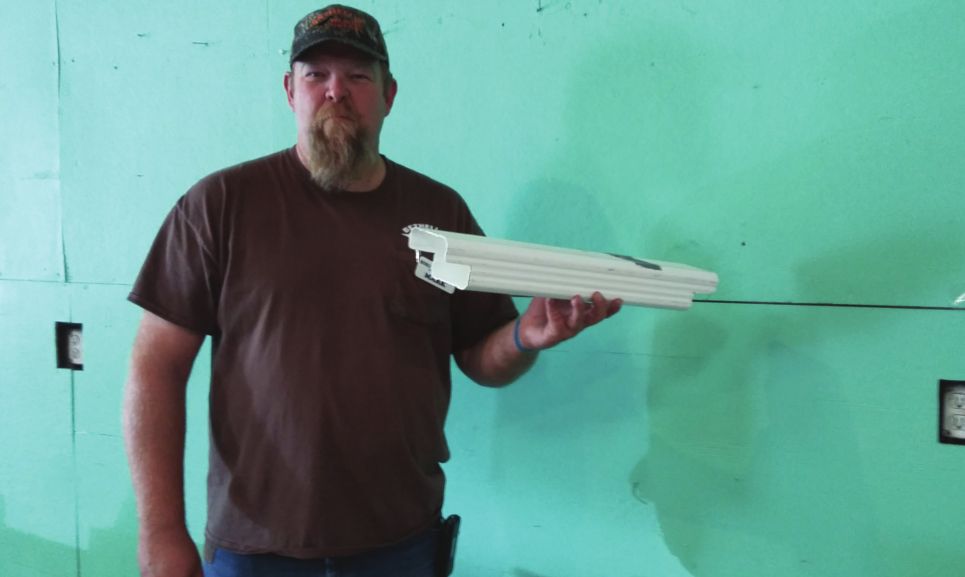
To a neophyte, some rules seem arcane.
For
instance, it is illegal to hunt beavers and most other furbearers with a
firearm, but it is OK to trap them. Bob Bluett, a DNR biologist who
started trapping in grade school, says that regulating a hunting, as
opposed to trapping, season for furbearers was an enforcement headache,
and the department was concerned that animals wounded by a gun might
suffer. It is illegal to destroy a beaver dam while trying to trap its
builder, but not if no traps have been set. That’s to ensure a fair
chase, says Bluett. For an animal that many consider a pest because it
destroys trees and floods farmland.
There
are beavers where you least suspect them, trappers say. In Springfield,
Bluett has trapped beavers near the intersection of West Jefferson
Street and Veterans Parkway, and he’s seen signs of beavers near Wabash
Avenue. There are beavers, he says, at DNR headquarters at the state
fairgrounds.
Bluett says that trapping opponents are entitled to their opinions.
“Probably,
the things I’m going to tell them aren’t going to change their minds,”
Bluett says. “Furbearers are abundant, and trapping helps regulate their
numbers.”
The
department keeps track of furbearer populations by counting road kill,
requiring trappers to say how many animals they’ve killed and driving
roads at night and tallying racoon eyeballs reflecting in headlights.
Love
’em or hate ’em, the number of trappers in Illinois has surged. Last
season, the state issued 8,369 trapping licenses, nearly 500 more than
the previous season and the largest number issued in 26 years. Bluett
attributes the increase to a promising market for fur that didn’t
materialize.
No matter
the species, Illinois pelt prices were down last season from the
previous year, according to the DNR. Otter pelts, the most valuable,
averaged $29, down from $57 the year before, and the average pelt when
all species are considered brought just $6.90, down from $12 during the
2013-14 season. The number of pelts sold plummeted from 230,020 to
163,159. Collectively, trappers were paid slightly more than $1.1
million for pelts last season, a decrease of more than $1.6 million from
the previous year. It works out to barely more than $134 per trapper
for what looks like hard work.
Trappers
carry trowels for digging holes in which to set traps and hatchets to
drive stakes that anchor traps so captured critters can’t wander off.
Under the law, traps must be checked every day, regardless of weather or
whether the trapper has the flu. Conditions can be brutal, which
explains the popularity of wool clothing and gloves with insulated
armpit-length gauntlets made for reaching into icy waters to set and
retrieve muskrat and beaver traps.
Why do they do it? Almost invariably, a trapper will tell you that it’s a way to commune with nature.
“I
just enjoy being out in the fresh air and sunshine,” says McCall, who
gets a charge out of studying tracks – he can tell the point at which an
animal that had been hunting becomes would-be prey for another animal.
“All of these animals are God’s creatures, and he’s provided them for me.”
Possums,
racoons and beaver also make good eating, McCall and other trappers
insist. There is a market for racoon meat, according to the DNR. Bluett
says a coon carcass stripped of fur can be worth as much as $2, and
beaver stroganoff is delicious.
And trapping, according to Tom Olson, is not a particularly difficult thing to learn.
“Beaver,
muskrat – what are they related to?” Olson asks a convention audience
that has gathered to learn the finer points of catching both species.
“Rodents. If you can’t trap Mickey Mouse, you shouldn’t be trapping.”
Contact Bruce Rushton at [email protected].