
State prison reform plan held captive
It’s called RANA and its impact could be significant. But only if Illinois’ Dept. of Corrections unshackles the program, a Rescuing Illinois report reveals.
PRISONS | Kari Lydersen
Illinois’ devastated finances and well-known government dysfunction is claiming another victim – the legally mandated launch of a promising prison reform program designed to significantly reduce the number of inmates returning to state prisons, according to a Better Government Association Rescuing Illinois investigation.
The Illinois Crime Reduction Act of 2009 ordered the state’s Department of Corrections to start a program dubbed “Risk, Assets and Needs Assessment” (RANA), which was to be implemented statewide by 2013.
So far, neither the full program nor a small proposed pilot program have started, despite a class action lawsuit demanding it get underway and the ongoing pleas of prisoner advocates, including the John Howard Association. The Illinois Department of Corrections (DOC), which has said the plan was tabled for budgetary reasons, notes that litigation is underway and declines to say when or if the RANA pilot program will proceed.
“This is not just an idea, this is law, but it’s not being adopted and implemented,” said Bob Kreisman, an attorney and member of the Union League Club of Chicago, which adopted a resolution in February calling for RANA’s implementation. “RANA is just a small piece but maybe this is part of the impetus to make changes in a criminal justice system in utter disarray and in great need of reform.”
RANA seeks to predict if newly released prisoners will return to prison by determining, and evaluating, the risks they pose along with their personal “assets” and “needs.” Assets would include a prisoner’s education level and family support, while needs can include mental health care and substance abuse treatment.
Advocates say that understanding and quantifying many of these factors will aid the state’s effort to reduce recidivism, a term used to describe the widespread and expensive problem of released prisoners quickly reentering correctional facilities.
One way to cut down on recidivism is by providing outgoing inmates with access to government-backed social services and support programs that can improve their transition to society, and RANA data can help make that connection, backers say. The data can also be used to match prisoners with the right programs and services while in prison, which could also benefit them once they are released.
And RANA results would also help the state parole board determine if longincarcerated elderly prisoners should be released, they add.
Attempting reform
The Crime Reduction Act notes that, “the Illinois correctional system overwhelmingly incarcerates people whose time in prison does not result in improved behavior.”
It
calls for changing this situation through evidence-based programs,
including RANA, to collect data and then use that information to make
better determinations about how to help prisoners succeed when they
reenter society.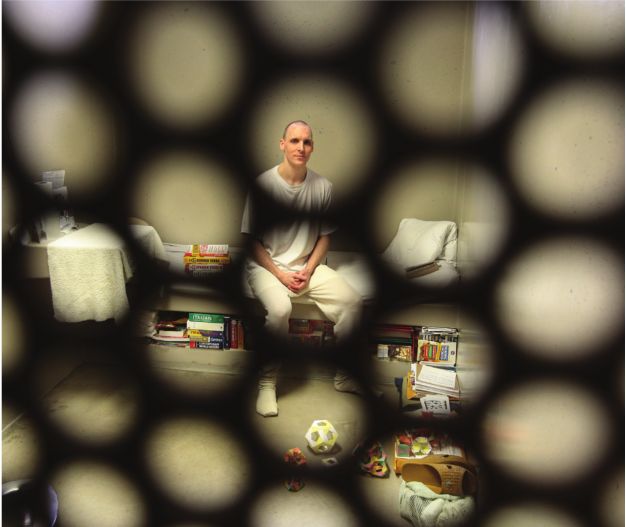
In
2010, as the law demanded, a RANA task force was convened with the
assistance of the New York-based Vera Institute of Justice. Among other
things, the task force examined specific tools, or metric systems, that
were being used in other states. Illinois decided to use a tool known as
SPIn, for Service Planning Instrument.
Former
DOC acting director Gladyse Taylor tried to implement RANA with
existing staff, but the time demands were too great and her staff was
also concerned about not having the specialized skills necessary to
carry it out, she explained in a July legal deposition related to the
class action lawsuit filed against DOC.
About
400 new staff would need to be hired to implement RANA statewide,
Taylor said in the deposition. With the state’s severe financial crisis
and growing deficit, that has not happened.
Advocates
said they were told this summer that all DOC programming decisions were
on hold until Gov. Bruce Rauner named a new acting head of the
department. He did that on Aug. 14 by naming John Baldwin, former head
of the Iowa corrections department, who must still be confirmed by the
state Senate.
Advocates waiting and unhappy
Nonetheless,
prison reform advocates have grown increasingly frustrated with the
delay and with what they say has been a lack of information from DOC
about the program’s status.
Jennifer
Vollen-Katz, executive director of prison watchdog John Howard
Association, said that the group had not been able to get information
from DOC about the status of RANA, though she is hopeful that things
could change with the department’s new leadership.
“Our
understanding is it’s just not happening,” said Vollen-Katz before
Baldwin was named director. “There’s a vacuum at the top in terms of
getting information.”
Moreover,
attorneys for a group of elderly prisoners known as “C-numbers” are
especially eager for RANA to be implemented, because they think it would
mean many of these estimated 170 prisoners being released after serving
what advocates say are disproportionately long sentences.
In
January, the Roderick and Solange MacArthur Justice Center based at
Northwestern University School of Law’s Bluhm Legal Clinic and the
Uptown People’s Law Center filed a class action lawsuit on behalf of the
“C-number” prisoners, demanding that RANA be implemented and that the
prisoners get new parole hearings using the data compiled under it.
The
“C-number” inmates were sentenced before 1978, before major changes in
Illinois’ sentencing structure and a system of defined sentences was
adopted.
They were
given “indeterminate” sentences of a wide range of years, with the idea
that a parole board would eventually decide when they were ready to be
released. As a result, C-number inmates continue to go before the
state’s Prisoner Review Board periodically, and the board votes on
whether to release them.
“When it was indeterminate you got a sentence of life or 200 years but the expectation was that a parole board would determine when you’re rehabilitated and let you out,” said David Shapiro, staff attorney of the MacArthur Justice Center.
However, the board typically votes not to release the prisoners, advocates say.
They
contend the board is not making its parole decisions based on objective
criteria, and that the prisoners have served significantly more time
than people sentenced today for similar offenses.
And
as the prisoners are aging and in many cases sick, their advocates also
say they pose little risk to society and their health care, and related
costs, places a significant burden on the corrections system.
There
is no guarantee that RANA would do anything to speed the release or
change the situations of these prisoners, experts say. But the C-number
prisoners’ attorneys think that objective data would make such a strong
case for their release, in many cases, that the review board would have
trouble saying no.
Pilot program grounded 
Gladyse
Taylor, who became senior advisor to Acting Director Baldwin after his
appointment, has long been seen as an advocate of RANA. Last winter, she
spoke to the Union League Club of Chicago about the program’s merits.
As
state funding seemed unlikely, Taylor secured a $3 million, three-year
federal grant that should enable the department to run a pilot RANA
program, hiring seven new specialists.
With
no funding from the state necessary, that program was scheduled to
start in October, Taylor said in the July deposition. She said she
planned to post positions for seven new hires in August. The DOC
declined to respond to a question about whether the pilot program is
still scheduled for October.
Taylor said in her deposition that the pilot RANA program would include assessments for all C-number prisoners.
The
pilot would also target prisoners scheduled for release to seven
Chicago communities that are responsible for 40 percent of the people
ending up in the Department of Corrections, according to the deposition.
Some
are hopeful that under Baldwin, the corrections department will finally
institute the RANA pilot. With 35 years of corrections experience,
Baldwin is known as something of a reformer with a dedication to data
and evidence-based practices.
State Corrections tumult
However, DOC has had its share of management upheaval over the years and various inmate programs have come and gone.
Baldwin
is the second acting director named by freshman Gov. Bruce Rauner,
whose first acting director, Donald Stolworthy, left after only a couple
of months on the job.
The
corrections system is rife with operational and budgetary challenges.
The prisons, designed to hold 32,000 inmates, actually incarcerates
about 48,000 inmates.
In
February, a BGA Rescuing Illinois report found that the corrections
agency racked up a whopping $320 million in staff overtime and other
compensation over a fiveyear span, a finding that sparked Rauner to propose adding 450 new guards in his initial state budget.
More money needed 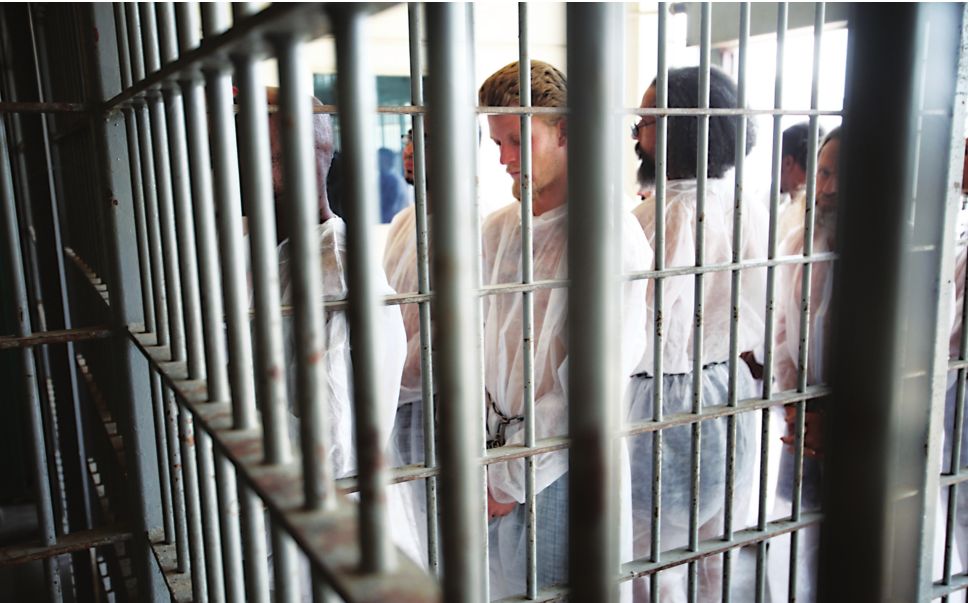
While
the pilot program is already funded, the legislature would need to
approve funds to expand RANA statewide. That would mean millions of
dollars the state does not have on hand.
In
fact, Illinois doesn’t even have a budget, although its fiscal year
ended June 30, and it is locked in a partisan fight to pass a spending
plan.
Still, advocates are holding out hope that the funds for bringing RANA statewide will be found.
Alan
Mills, executive director of the Uptown People’s Law Center, says if
the pilot program is implemented, the road will be paved for full
implementation.
Should
the court decide in the plaintiffs’ favor in the class action lawsuit,
which deals only with C-numbers inmates, the same legal arguments could
be made to demand statewide application, he said.
Kari
Lydersen is a Chicago-based author and freelance writer who writes
about government, criminal justice and public policy issues for the
Better Government Association and other media outlets. She can be
reached at info@ bettergov.org.


