Taking a walk in cool, crisp weather, attending football games, picking apples and choosing the perfect pumpkin are some quintessential activities for the fall, said University of Illinois horticulture educator Ron Wolford.
“Planting bulbs is probably the number one garden activity that takes place in the fall, but there are a number of other gardening and fallrelated activities to do,” Wolford said.
Some tips for fall gardening tasks include:
Get ready for frost
“On average, the first fall frost occurs around Oct. 15, but we have had frost in September,” Wolford noted. “First frosts usually occur when cool weather arrives with clear nights and light winds.”
Open grassy areas are most likely to have frost versus areas under trees that are protected because the trees keep heat from escaping. “Plantings close to the foundation of your home often survive a first frost because of the heat given off from the house,” he said. “To protect plants, cover them with blankets, newspaper, straw, sheets, tarps, boxes or plastic sheeting. Apply the covers later in the afternoon and remove them in the morning.”
Floating row covers can also protect plants.
This spun polyester material will raise the temperature 2 to 5 degrees around the plants, Wolford said.
Plant a green manure crop
Green manure crops include clover, annual ryegrass, winter wheat, winter rye and buckwheat. Green manure crops turned into the soil in the spring will
improve soil structure and add organic matter and nutrients to the
soil. “Sow the seed thickly. Keep moist until germination occurs. Cut
back plants’ flowers to prevent self-seeding,” Wolford said.
Transplant perennials
“Transplant and divide perennials now,” Wolford
recommended. “If you are planning to transplant established plants, cut
them back by half and move them to a prepared spot. Keep them watered
until the plant is established.”
Divide
perennials when flowers get smaller, when the center of the plant dies
out, or when the plant gets too big. “All transplanting and dividing
should be completed by Oct. 1 to allow good root development before cold
weather sets in,” he noted.
Repair lawn
Autumn is the best time to repair lawns, Wolford
said. Seeding bare spots in the lawn from late August to mid-September
will allow the new growth to have enough time to germinate, grow and
harden off before cold temperatures arrive. “There is less competition
from weeds in the fall because most of the annual weeds are dying out.
Plus we are usually blessed with cool temperatures in the fall, which is
great for growing grass. Ideally dig the soil to at least six to eight
inches deep, spread grass seed over the area, and tamp down. Keep the
soil moist until germination. Cover with weed-free straw to conserve
moisture.
“If you are
laying down sod, water the new sod several times a day for one to two
weeks until it begins to knit or take hold. Be sure that water goes down
through the thick sod and moistens the soil underneath for good root
development. Do not let seed or sod dry out,” he cautioned.
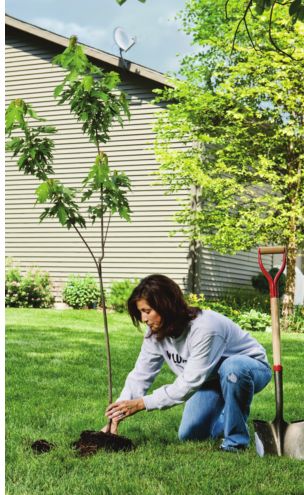
Plant trees and shrubs
Plant trees and shrubs from September through
early October. “Planting during this time period will allow the plants
to become established before winter sets in. Water plants every 7 to 10
days during dry weather until the ground freezes,” he said.
Garden cleanup
Remove dead plants from the vegetable garden after
frost. If plants were not diseased, they can be turned into the soil or
placed in a compost pile. “Leaving dead plants in the garden will
provide a home for overwintering insects. Spread a two- to
three-inch-layer of organic matter over the garden and dig in. The
garden will be ready for planting in the spring,” he said.
For more gardening information, visit the University of Illinois Extension Hort Corner.


