“I know you’re not an elitist,” my husband, Peter, said. “But do you ever worry that you come across that way to readers?” Peter’s question arose from a conversation he’d had with one of his dental patients. This working mother of young children said she read my columns every week and enjoyed them. But then she sighed and said, “I’d like to cook more. But when I get home at night, I’m just so tired. I should be more organized, I guess.” This woman liked my articles, but they were also making her feel guilty.
I realize that eating nutritious, real food involves more than just turning away from fast food (including processed and pre-prepared supermarket foods). It also requires more time, thought and planning for buying and preparation. I’d never thought of it as being elitist, but understood Peter’s point.
Providing people with access to affordable, healthy, sustainably-grown food is critical to moving America’s food system towards one that’s not dependent on industrial agriculture, inhumane and potentially disease-ridden factory farms and slaughterhouses, and that doesn’t revolve around the production of highly processed, nutritionally inadequate foodstuffs.
Equally important is that folks can find the time and have the ability to prepare affordable, nutritious, sustainably-grown food. That’s not always easy in today’s harried and hurried world. It’s a worthy goal, easy for me to write about because I believe it passionately. It was integral to my family’s identity and something Peter and I had in common when we first met. But I also remember coming home after working all day in Peter’s office, dead tired, half my mind still whirling over an office problem, the other half attempting to “be there” for the kids, with only enough energy for nuking something in the microwave or ordering out for pizza.
My parents had it easy. Mom worked part time at the phone company (back when there was just one) when I was younger, then full time when I was in high school, but she never had to cook when she got home. My grandparents lived next door. Nana always had dinner on the table minutes after my parents got home. I had a babysitter only once in my life.
I worked part or full time during the early years of Peter’s practice, and my parents and grandparents took care of our children. In the beginning, we ate dinner there frequently, too, but as the kids got older and after-school activities increased, more often than not we were on our own for supper.
Yes, there were pizza nights. But my family’s organic farm provided us with wonderful ingredients, fresh in season and frozen or canned during cold weather. I’d learned good cooking skills from Nana and my mom, and had begun increasing my knowledge on my own. As important, I enjoyed cooking and so did Peter, so time in the kitchen was time shared. We drafted the kids to help, too, as soon as possible, who joked
(accurately) that whenever I’d call upstairs, “Hey, guys, come help
make supper” they didn’t need to ask what to do: they just started
peeling garlic.
Not
everyone likes to cook, but everyone eats. And there’s a generation of
young adults who never learned from their parents to cook with fresh,
unprocessed ingredients, often because the parents didn’t themselves
learn.
Eating
nutritious, home-cooked meals that require minimal preparation and
cleanup during the week doesn’t have to be difficult, but it does take
some planning and advance preparation. Slow cookers (aka Crock-Pots)
have long been a wonderful mainstay for coming home at day’s end and
having dinner ready, but they’re far from the only possibility.
Aside
from slow cookers or prepping the night before, there are two basic
ways to make meals ahead. The first is to make large batches of dishes
that can be refrigerated or frozen for multiple repeat meals. That’s
easiest of all: just reheat and add a salad or some carrot and celery
sticks and possibly a loaf of good bread for a complete meal. Soups and
stews are ideal for long-term freezing.
The
second way is to make more of something than you’ll need for one meal,
and then turn the leftovers into a completely different dish. Sometimes
last-minute preparation is necessary, but it can often be minimal. Here
are a few suggestions:
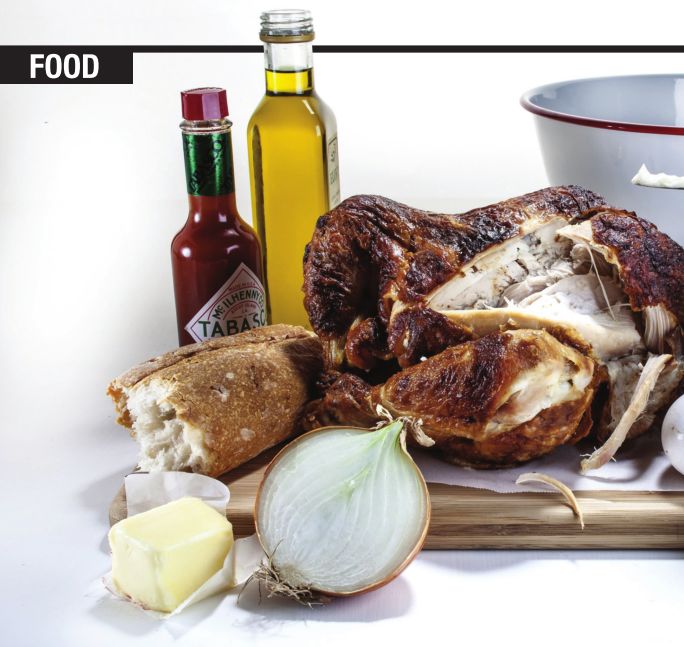
Roast
or grilled chicken – One of the most popular cooking classes I taught
was “One Chicken, Two People, Three Meals.” Just recently, someone told
me it was the class he’d found most useful. But if your family is
larger, it’s as easy to roast or grill two chickens as one. Leftovers
can be used for two or more additional meals. Pull the meat from the
bones and use the bones to make stock in the slow cooker. Although just
the bones themselves will make good stock, it will be even better with
some aromatics.
Nothing fancy: carrots, celery, onions (even just the trimmings), a bay
leaf and fresh or dried thyme. When making chicken stock for my family, I
even use bones left from chicken we’ve eaten: the stock simmers for
hours so it’s perfectly safe. The stock can be strained and then used
with some of the meat to make soup during the week, or can be frozen.
Additional chicken can be used for sandwiches, salads, in quesadillas or
tacos and more.
Meatloaf
– A mixture of many uses. Make enough for two or more, then shape and
freeze extra loaves. Or, make it into meatballs, freeze in a single
layer, then put them in resealable bags so you can take out as many as
you need. Leftover baked meatloaf is good for things other than
sandwiches, so consider baking more than one meal’s worth. Heat crumbled
meatloaf with a good-quality tomato pasta sauce (check to make sure it
doesn’t contain added sugar or high-fructose corn syrup) to make a quick
meat sauce for pasta. Crumble meatloaf into a baking dish, add
vegetables such as peas and/or carrots, moisten with a little stock or
water, season with Worcestershire sauce, top with leftover mashed
potatoes and bake for a shepherd’s pie.
Mashed
potatoes – Leftovers can be turned into a variety of soups. Thin the
mashed potatoes with milk to a soup consistency and heat gently without
boiling. For simple potato soup, garnish with sliced scallions and
parsley. Or, add other items: leftover or fresh vegetables such as
broccoli, peppers, onions, asparagus, mushrooms, or diced ham or bacon.
Transform it into cheese soup by adding grated cheese, 1/2 - 1 cup
grated cheese per 2 cups of soup. Don’t use pre-grated cheese because
it’s coated with something that keeps the shreds separate; it also
prevents the cheese from incorporating into the liquid. Add the cheese
gradually to the hot but not simmering soup before adding any vegetables
or meat.
Turn ’em
into soup – This is where having stock in your pantry or freezer comes
in handy. Not everything can be turned into soup, but a little
imagination can result in surprising and delicious concoctions. Cabbage
rolls could similarly be turned into soup. How about thinly sliced
leftover steak and smashed baked potatoes? Or leftover grilled
vegetables such as onions, peppers, zucchini and eggplant combined with
canned beans and canned tomatoes, both undrained and topped with grated
Parmesan or Asiago cheese for a riff on minestrone?
Please,
don’t feel guilty if you don’t have the time or ability to cook more –
that’s never, ever been my purpose. But I do hope that some folks might
start looking more closely at what they’re eating and where it comes
from, and begin seeing new ways to make what they eat better for
themselves and the environment, and more pleasurably delicious. Oh, and
not least, to have fun in the process.
Contact Julianne Glatz at [email protected].


