 LETTERS We welcome letters. Please include your full name, address and telephone number. We edit all letters. Send them to [email protected].
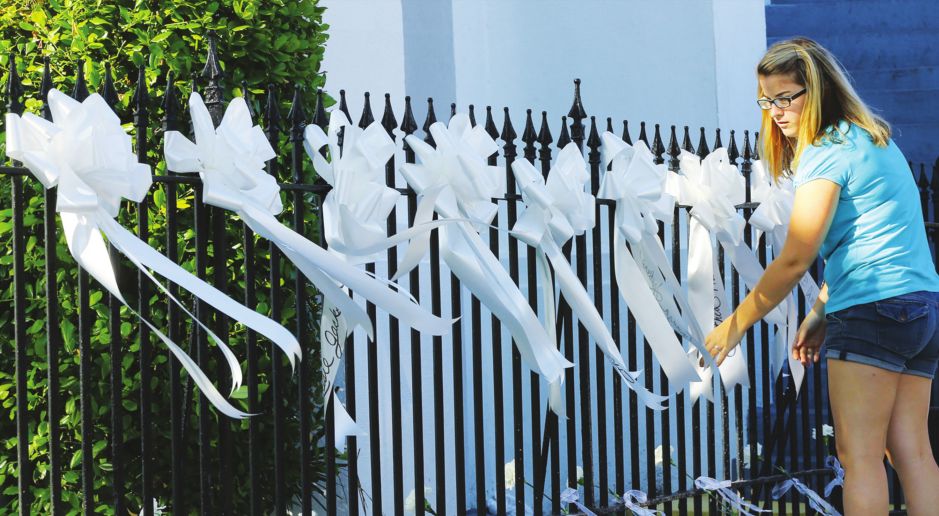
RACISM. THINK ABOUT IT. In the aftermath of the recent murders of nine citizens at Emanuel AME Church in Charleston, S.C., various national leaders described the actions of Dylann Roof as “unthinkable.” We’ve been considering that word and believe it does a disservice to all of us and is disrespectful to those closest to the victims. As despicable as the act was, we compound the tragedy by characterizing it as unthinkable and thus beyond our ability (willingness?) to understand the many faces of racism in America. More importantly, such characterizations keep us from considering necessary change.
Locally, the Springfield Coalition on Dismantling Racism (SCoDR) was organized to provide our community with a resource for understanding, analyzing and acting on systemic and institutional racism. We host workshops that provide participants a safe place to confront one of our most imbedded, destructive issues. So the next time you hear or read someone say that acts such as those that have recently occurred in Charleston or Baltimore or Cleveland or New York City or Ferguson are unthinkable, think about the implications of such a
characterization. Racism, whether expressed in violence or with everyday words and acts, needs to be thoughtfully considered. On behalf of the SCoDR leadership team, we invite you to join the conversation. John Record Sr. Marcelline Koch Kenley Wade Members of the SCoDR Leadership Team
BLACK WALL STREET Anyone capable of compassion was appalled at the massacre that took place in Charleston, S.C., on June 17. There was another massacre which took place in Tulsa, Oklahoma, in the 20 th century whose story was never properly reported or chronicled.
My son-in-law informed me recently that he has a co-worker who is a proponent of the belief that the earth is flat. This is a good example of the fact that lack of knowledge can be due to the choice not to pursue it as much as it can be due to the lack of an opportunity to pursue it.
There is another factor that contributes to the lack of knowledge: The decision of those who have information to not release or report the information. For example: The choices that the media (or the government, for that matter) make in not only how information is released, but how it is slanted or whether it is released at all. Almost everyone knows about and/or remembers Sept. 11, 2001, a day on which terrorists destroyed the World
Trade Center, taking the lives of nearly 3,000 people. Ironically, almost no one knows about or cares to remember June 1, 1921, a day in which a black community in Tulsa, Oklahoma, (known as The Black Wall Street) was systematically destroyed by “fellow” U.S. white citizens, taking the lives of hundreds of African- American citizens and displacing thousands… simply because of the incredible and unprecedented economic growth and success of that black community in predepression America.
To most Americans, the term Black Wall Street means absolutely nothing. As an African-American male having grown up in this country and with a graduate degree, I had no knowledge of the Black Wall Street until I was in my 50s. The decimation of the Black Wall Street was the ugliest, most egregious crime ever perpetuated on black enterprise in the history of America. It is speculated that the Ku Klux Klan was behind the organized firebombing (with bombs being dropped even from airplanes on Tulsa, Oklahoma’s Black Wall Street).
For those who care enough to gain a little more insight into why the Confederate flag repulses most African-Americans, I encourage you to Google “The Black Wall Street” and add to your knowledge of history a portion that was conveniently left out of your American history lessons. Bill McGee Springfield


