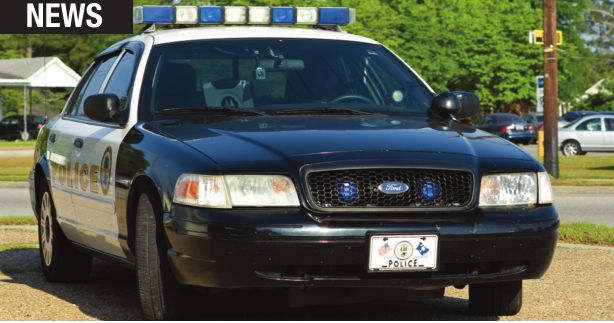
Car trouble
Government vehicles would have to be made in U.S. or Canada
PROCUREMENT | Alan Kozeluh
Business and labor groups are at odds over a bill that would restrict which vehicles state and local governments could buy.
Illinois State Rep. Mike Smiddy, D-Hillsdale, sponsors House Bill 3438, which would restrict the state of Illinois and local governments to buying vehicles assembled in the U.S. or Canada, but not Mexico.
The actual language of the bill says that vehicles purchased by the state or local governments must have a Vehicle Identification Number (VIN) that starts with 1, 2, 4 or 5. The first digit in a car’s VIN identifies its country of manufacture. The U.S. is identified with a 1, 4 or 5. Canada’s number is 2 and Mexico’s is 3.
“In our opinion, Mexico is the water’s edge for outsourcing,” said Tony Garcia, legislative director for the United Auto Workers (UAW), indicating the companies look to Mexico first when looking for workers who will accept less in pay and benefits.
Garcia said that Canada is more in line with the U.S. when it comes to wages, benefits and environmental protections. A different version of this bill that excluded both Canadian and Mexican cars was put forward during the last Illinois General Assembly, but it failed after Canadian auto workers started to complain.
Mexican Consul General Carlos Jimenez- Macias raised some concerns of his own in a letter sent to House Labor and Commerce Committee leaders.
“I sincerely hope there will be further reflection on the impact this proposed legislation will have on Illinois suppliers and what has been, to date, the very strong economic and trade ties between Illinois and Mexico,” Jimenez-Macias wrote.
Mark Denzler, vice president and chief operating officer with the Illinois Manufacturers’ Association, said that an unintended consequence of the bill would be some Illinois businesses taking a hit.
“There are more than 100 manufacturing companies (in Illinois) that provide products and parts for these vehicles that are assembled outside the United States,” Denzler said. “Those companies are all going to be negatively impacted.”
Denzler said that although having more products manufactured in the United States would be ideal, passing this kind of legislation would be like cutting off the nose to spite the face.
“There’s no guarantee that the new vehicle is going to come from Illinois,” he said. “In most likelihood, it probably won’t. It very likely could result in a net job loss in Illinois.”
Denzler also pointed out that the bill would prevent police departments from buying the Chevrolet Caprice, one of the only rear-wheeldrive police cruisers on the market, which is assembled in Australia.
Garcia couldn’t name an alternative rearwheel-drive cruiser, but did point to the Ford Taurus as an all-wheel-drive alternative.
“I’m a little biased, but I think it’s a far superior vehicle,” Garcia said of the Taurus.
Garcia characterized the effort as a first step in addressing a large trade deficit that the U.S. has with other countries around the world. According to the U.S. Census Bureau, the U.S. trade deficit was $505 billion in 2014.
“We’ve really got to stop the bleed,” Garcia said. “What better place to start than here in Illinois?” The UAW represents workers at three auto manufacturing plants in Illinois: a Ford facility in Chicago, a Chrysler plant in Belvidere, and a Mitsubishi factory in Bloomington. Although Mitsubishi is a Japanese company, the cars produced in Bloomington still have a VIN number indicating they are assembled in the U.S.
Opponents of the bill also pointed out that passing a measure specifically leaving out Mexico could run afoul of the North American Free Trade Agreement (NAFTA).
Garcia said that didn’t sound right to him, but he noted that he is not a trade expert. He simply said that he could see what happens when American-assembled cars don’t sell well enough: people get laid off and lose their homes.
“I’ve got a ground-level view of this.” Garcia said. “I’m not looking at it from 30,000 feet.”
Contact Alan Kozeluh at [email protected].


