Springfield’s oldest house reopens after restoration 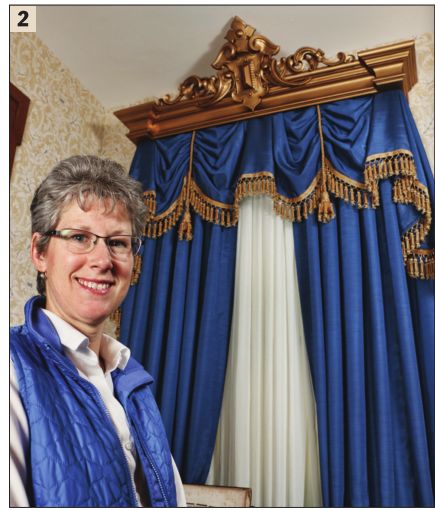
In 1857, Benjamin and Helen Edwards of Springfield remodeled their home on what is now north Fourth Street, hanging ornate floral wallpaper in their formal parlor and their new children’s parlor. That wallpaper was in place during Abraham Lincoln’s frequent visits to the mansion, and although it was later hidden and even removed in places, pieces of the wallpaper were rediscovered intact last year – more than 150 years after it was first hung.
That fascinating historical find is one of many uncovered during the renovation of Edwards Place in Springfield. Undertaken by the Springfield Art Association, which owns the historic mansion, the project’s first phase is complete, and the group is ready to reveal the beauty of Springfield’s oldest home, painstakingly restored to its former glory.
Besides its age and the fact that Abraham Lincoln visited often, Edwards Place’s significance is derived in part from having been owned by Benjamin Edwards, son of Ninian Edwards, who served as Illinois’ only governor when the state was a U.S. territory and again as the third governor after statehood. The Edwards family was hugely influential in early Springfield, where Benjamin’s brother, Ninian W. Edwards, was a politician and where Benjamin himself, a lawyer, often met Lincoln in court and was involved in local and state politics.
Erika Holst is curator of collections for the Springfield Art Association, which received Edwards Place as a gift from Alice Edwards Ferguson, Benjamin’s daughter, in 1913. At that time, the Art Association was known as the Amateur Arts Study Club. Holst joined the Art Association staff shortly after the group first started seeking bids for the restoration project in 2010, and it quickly became her life. At times, she found herself poking holes in plaster to discover hidden secrets or crawling into tight spaces which likely hadn’t been seen by humans in more than a century.
Holst holds a bachelor’s degree in history from Illinois Wesleyan University and a master’s degree in early American culture from the University of Delaware. Before she joined the Springfield Art Association staff, she interned at the David Davis Mansion State Historic Site in Bloomington, where she fell in love with the idea of restoring an old house. Completed in 1872, the Davis home has a full document record detailing its history and leaving very little to speculation. By comparison, the historical record on Edwards Place was significantly less complete before the restoration began, leaving Holst and her team to solve the mansion’s mysteries through careful research as they partially deconstructed the interior of the house.
Edwards Place was built in pieces over the course of several years, but before the restoration began, it was unclear when each piece was built. The recent restoration uncovered
several clues about the house’s separate phases of construction,
including seams between different wood flooring, handhewn floor beams
and a limestone foundation under only part of the house and expensive
walnut trim right next to cheaper pine trim.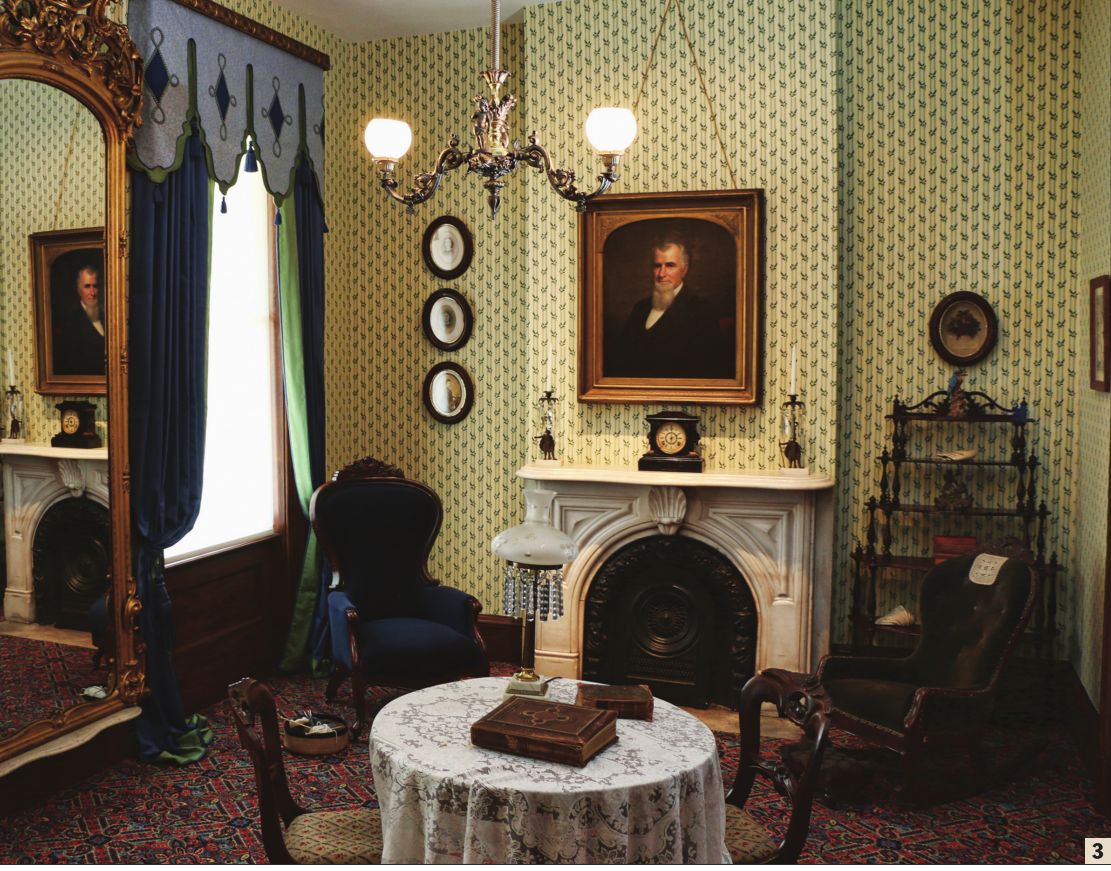
Holst
coupled that evidence with land sale records and even a newspaper ad
featuring a testimonial by the house’s original owner, Dr. Thomas
Houghan, to discover that the first part of the house was built in 1833
in the Greek Revival style. [See “Unraveling the mystery of Edwards
Place,” Sept. 11, 2014.] That makes it the oldest house in Springfield.
Additions
to the house in 1836 and 1843 changed the layout significantly, and a
remodel in 1857 brought the house to its current configuration, turning
it into a square Italianate mansion.
Holst
says after all her research, she feels as though she knows the Edwards
family. She says Benjamin was an “uptight” southern gentleman prone to
criticizing his family, while his wife, Helen, seems to have been kind
and loving.
“I feel like I spend more time with dead people than living people sometimes,” Holst said with a laugh.
The restoration project at
Edwards Place began with a grant from the Jeffris Foundation, a
Wisconsin-based nonprofit focused on historical preservation in the
Midwest. The grant offered $150,000 to the Springfield Art Association,
provided the arts group could raise $300,000 elsewhere. Including the
grant, they raised about $489,000, allowing work to begin in spring
2014.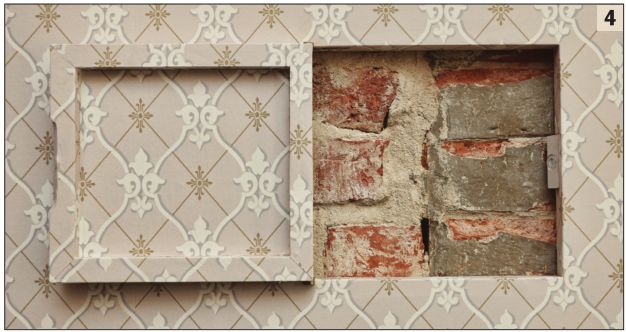
 The first phase
of the Edwards Place makeover involved restoring the first floor to be
historically accurate to the original design. In past decades, the Art
Association altered the house to suit its needs and made repairs that
weren’t historically accurate. The restoration rectified many of those
past changes, including tearing out a china display cabinet that was
originally a doorway, removing false walls in the children’s parlor and
removing a closet built beneath the front stairway in 1930.
The first phase
of the Edwards Place makeover involved restoring the first floor to be
historically accurate to the original design. In past decades, the Art
Association altered the house to suit its needs and made repairs that
weren’t historically accurate. The restoration rectified many of those
past changes, including tearing out a china display cabinet that was
originally a doorway, removing false walls in the children’s parlor and
removing a closet built beneath the front stairway in 1930.
At
some points during the restoration, the house looked like a disaster,
with holes in the plaster and wood trim removed or stripped bare, but
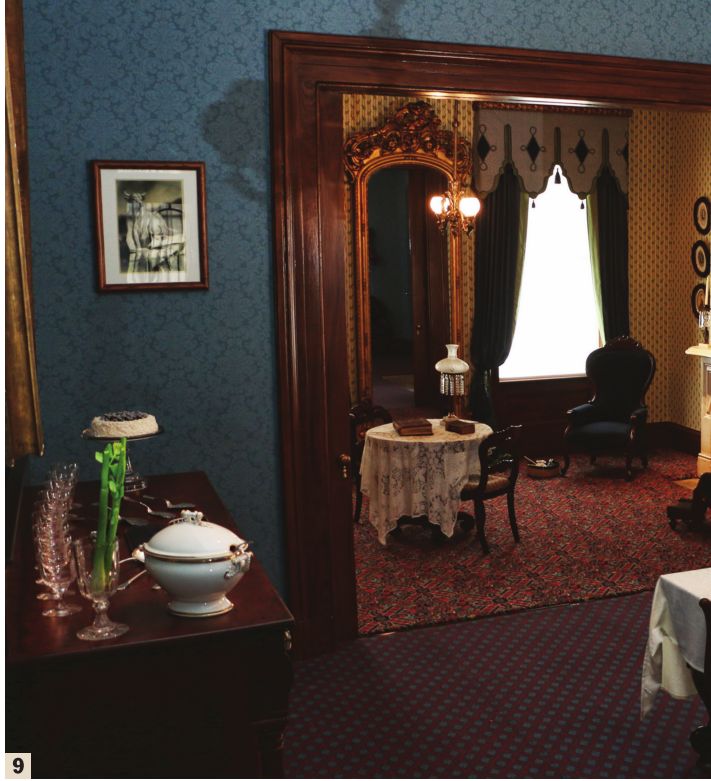
the mess represented a total makeover. Workers installed new,
period-appropriate carpet, refinished all of the wood trim and doors,
hung new drapes, reinforced the sagging front stairway and modernized
several light fixtures. A piece of the original wallpaper Holst
uncovered now hangs in the formal parlor, where a modern reproduction of
the same design covers the walls. In some places, small doors built
into the plaster can be opened to reveal the whitewashed brick that
formed the outside wall of the mansion before the 1857 remodel.
Ed Gonet, who owns
Gonet Designs Corporation in Springfield, is a master refinisher
practicing the art of faux wood graining. While refinishing a pair of
pine sliding doors to match the grain of the nearby walnut trim, Gonet
discovered a series of notations scrawled into the doors. He and Holst
concluded that the marks were likely made by a previous contractor to
help him remember the orientation of the custom-made doors during the
1857 remodel.
“This
was a project where I felt like my work was going to be sustained for a
long time,” Gonet said. “The previous work was done 150 years ago, and
it lasted that long. Wouldn’t it be cool if this lasted another 100
years?” The restoration was truly a community effort, enlisting the help
of several other local experts. Wen Fritsch, who owns Fritsch Custom
Finishes in Springfield, did extensive work on the plaster walls and
ceilings, which had cracked and crumbled in places. His crew also
stripped and refinished wood trim throughout the house. They previously
worked on the renovations at the Illinois State Capitol and the Illinois
Supreme Court.
“I’m
just proud of the fact that we can provide good stewardship,” he said.
“Those artisans created this way back in the day, and we don’t want to
botch that up.”
Before
the restoration began, the eight chandeliers lighting Edwards Place
were so tarnished and dirty that they appeared black. Fritsch’s team
carefully disassembled the chandeliers and cleaned them, before passing
them off to Edward Midden’s team at Mansfield Electric in Springfield.

Midden
says the chandeliers were originally lit with gas, but they had been
haphazardly wired decades ago to accept modern light bulbs. Midden’s
crew rewired the chandeliers and added dimmable accent lighting
throughout the parlors. Travis Savage, project foreman for Mansfield,
said the hardest part of modernizing the electrical system at Edwards
Place was concealing it. In many places, they hid the accent lights and
even cut channels in the brick to run new wiring.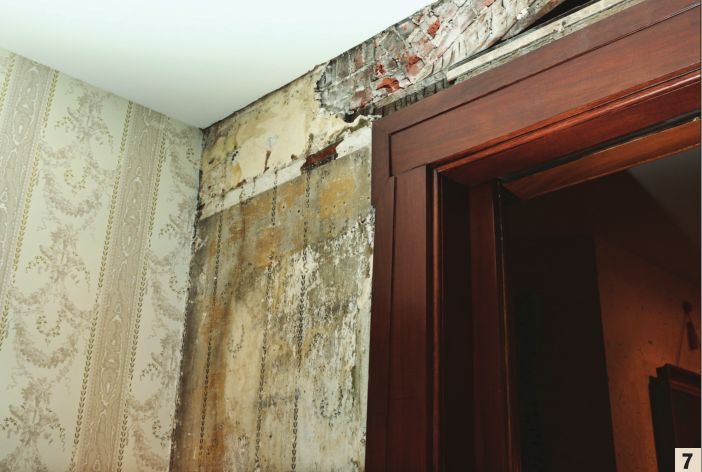
“When
you do historic restoration work, you need to be sensitive to the
building and what you are doing to it,” Midden said. “We try to be
sensitive to the needs of the building, with an eye towards the future.
People are going to see that work for a long time.”
Although
no definite record of the original window treatments exists, Susan Day
of Springfield, who owns Exciting Windows by Susan Day, took some
educated guesses when designing new drapes and shades. She previously
helped choose the window treatments at Clayville Historical Site west of
Springfield. In the formal parlor at Edwards Place, Day chose heavy,
royal blue drapes with golden tassels, based on historical research of
popular styles from the period and the strong wooden window cornices –
the kind used to hold thick drapes. She chose the colors to match the
reproduced wallpaper that covers the room.
Throughout
the restored part of the house, the windows have automated sun shades
that look like the roller shades that the Edwards family would have
used. Day says the shades protect the antique furniture from getting too
much sunlight, and the hidden motors eliminate the need for someone to
disturb the drapes every time the shades need to be pulled.
Day says working on historical projects is like being “a 21 st century designer working with a 19 th century client.”
“It’s an incredible privilege and so much fun,” she said. “It was the highlight of my year to work on this.”
Chuck
Pell, who owns CJP Architects in Springfield, served as project manager
for the restoration, fulfilling a requirement of the grant awarded by
the Jeffris Family Foundation. In addition to coordinating the various
contractors involved, Pell also devised a way to shore up the sagging
front stairway and oversaw the removal of the false walls in the
children’s parlor, which revealed that an oddly tall doorway leading to
the outside had been a window prior to the 1857 remodel.
“It’s
very exciting,” Pell said. “I’m not an archaeologist, but I certainly
appreciate what they do, sort of peeling back layers of history. You get
to do that in a place like this. People need to come here and see this.
It really is a jewel in our city.”
The
second phase of the restoration, which still requires about $320,000 in
donations, will involve restoring the mansion’s second floor. If the
Springfield Art Association can raise $212,000, it will receive a second
grant from the Jeffris Family Foundation. The restoration is part of a
larger effort to expand the Art Association’s footprint, which will
involve demolishing a small house north of the mansion and building new
work space in its place. Previous excavations have uncovered several
artifacts from the 1840s buried in a filled-in privy in the back yard.
Those artifacts, including several pieces of pottery, will eventually be
displayed at Edwards Place.
Public tours of Edwards Place were suspended during the first phase of the renovation, but the tours will resume on April 21.
For
an in-depth look at the restoration of Edwards Place and the historical
clues it uncovered, visit Holst’s restoration blog online at
restoreedwardsplace.blogspot.com. More information on Edwards Place is
available at edwardsplace.org.
Contact Patrick Yeagle at [email protected].
Events at Edwards Place:
April 9, 7 p.m. - Dan Cooper, expert on antiquities and historic interiors, talks about 19th-century interior design.
April 18, 1-5 p.m. - Edwards Place open house, followed by hog roast and clay pot fi ring from 3-9 p.m.
April 21 - Tours of Edwards Place resume, with public discussion about the mansion’s future at 7 p.m.