
Ocean acidification tops the annual list of important stories ignored by the mainstream media
Our oceans are acidifying – even if the nightly news hasn’t told you yet.
As humanity continues to fill the atmosphere with harmful gases, the planet is becoming less hospitable to life as we know it. The vast oceans absorb much of the carbon dioxide we have produced, from the industrial revolution through the rise of global capitalism. Earth’s self-sacrifice spared the atmosphere nearly 25 percent of humanity’s CO2 emissions, slowing the onslaught of many severe weather consequences.
Although the news media have increasingly covered the climate weirding of global warming – hurricane superstorms, fierce tornado clusters, overwhelming snowstorms and record-setting global high temperatures – our oceans’ peril has largely stayed submerged below the biggest news stories.
The rising carbon dioxide in our oceans burns up and deforms the smallest, most abundant food at the bottom of the deep blue food chain. One vulnerable population is the tiny shelled swimmer known as the sea butterfly. In only a few short decades, the death and deformation of this fragile and translucent species could endanger predators all along the oceanic food web, scientists warn.
This “butterfly effect,” once unleashed, potentially threatens fisheries that feed more than 1 billion people worldwide.
Since ancient times, humans fished the oceans for food. Now, we’re frying ocean life before we even catch it, starving future generations in the process. Largely left out of national news coverage, this dire report was brought to light by a handful of independent-minded journalists: Craig Welch from the Seattle Times, Julia Whitty of Mother Jones and Eli Kintisch of ScienceNOW.
About the project It is also the top story of Project Censored, an annual book and reporting project that features the year’s most underreported news stories, striving to unmask censorship, self-censorship and propaganda in corporate-controlled media outlets. The book is set for release in late October.
“Information is the currency of democracy,” Ralph Nader, the prominent consumer advocate and many-time presidential candidate, wrote in his foreword to this year’s Project Cen sored 2015. But with most mass media owned by narrow corporate interests, “the general public remains uninformed.”
Whereas the mainstream media poke and peck at noteworthy events at single points in time, often devoid of historical context or analysis, Project Censored seeks to clarify understanding of real world issues and focus on what’s important. Context is key, and many of its “top censored” stories highlight deeply entrenched policy issues that require more explanation than a simple sound bite can provide.
Campus and faculty from more than two dozen colleges and universities join in this ongoing effort, headquartered at Sonoma State University. Some 260 students and 49 faculty vet thousands of news stories on select criteria: importance, timeliness, quality of sources and the level of corporate news coverage. The top 25 finalists are sent to Project Censored’s panel of judges, who then rank the entries, with ocean acidification topping this year’s list.
“There are outlets, regular daily papers, who are independent and they’re out there,” Andy Lee Roth, associate director of Project Censored, told us. Too many news outlets are beholden to corporate interests, but Welch of the Seattle Times bucked the trend, Roth said, by writing some of the deepest coverage yet on ocean acidification.
“There are reporters doing the highest quality of work, as evidenced by being included in our list,” Roth said. “But the challenge is reaching as big an audience as [the story] should.”
1. Ocean acidification threatens fisheries Indeed, though Welch’s story was reported in the Seattle Times, a mid-sized daily newspaper, this warning is relevant to the entire world. To understand the impact of ocean acidification, Welch asks readers to “imagine every person on earth tossing a hunk of CO2 as heavy as a bowling ball into the sea. That’s what we do to the oceans every day.”
Computer modeler Isaac Kaplan, at the National Oceanic and Atmospheric Administration office in Seattle, told Welch that his early work predicts significant declines in sharks, skates and rays, some types of flounder and sole, and Pacific whiting, the most frequently caught commercial fish off the coast of Washington,
Oregon and California.
Acidification
may also harm fisheries in the farthest corners of the earth: A study
by the Arctic Monitoring and Assessment Programme outlines
acidification’s threat to the arctic food chain.
“Decreases
in seawater pH of about 0.02 per decade have been observed since the
late 1960s in the Iceland and Barents Seas,” the study’s authors wrote
in the executive summary. And destroying fisheries means wiping out the
livelihoods of the native peoples of the Antarctic.
Acidification
can even rewire the brains of fish, Welch’s story demonstrated. Studies
found rising CO2 levels cause clown fish to gain athleticism, but have
their sense of smell redirected.
This
transforms them into “dumb jocks,” scientists said, swimming faster and
more vigorously straight into the mouths of their predators.
These
Frankenstein fish were found to be five times more likely to die in the
natural world. What a fitting metaphor for humanity, as our outsized
consumption propels us towards an equally dangerous fate.
“It’s
not as dramatic as, say, an asteroid is hitting us from outer space,”
Roth said of this slowly unfolding disaster, which is likely why such a
looming threat to our food chain escapes much mainstream news coverage.
Journalism
tends to be more “action focused,” Roth said, looking to define
conflict in everything it sees. A recently top-featured story on CNN
focused on President Barack Obama’s “awkward coffee cup salute” to a
Marine, which ranks only slightly below around-the-clock coverage of the
president’s ugly tan suit as a low point in mainstream media’s focus on
the trivial.
As Nader
noted, “‘important stories’ are often viewed as dull by reporters and
therefore unworthy of coverage.” But mainstream media do cover some
serious topics with weight, as it did in the wake of the police officer
shooting of Michael Brown in Ferguson, Missouri. So what’s the deciding
factor?
As Roth tells it, corporate news focuses on “drama, and the most dramatic action is of course violence.”
But
the changes caused by ocean acidification are gradual. Sea butterflies
are among the most abundant creatures in our oceans, and are
increasingly born with shells that look like cauliflower or sandpaper,
making this and similar species more susceptible to infection and
predators.
“Ocean
acidification is changing the chemistry of the world’s water faster than
ever before, and faster than the world’s leading scientists predicted,”
Welch said, but it’s not getting the attention it deserves. Combined
nationwide spending on acidification research for eight federal
agencies, including grants to university scientists by the National
Science Foundation, totals about $30 million a year.
Our
oceans may slowly cook our food chain into new forms with potentially
catastrophic consequences. Certainly 20 years from now, when communities
around the world lose their main source of sustenance, the news will
catch on. But will the problem make the front page tomorrow, while
there’s still time to act?
Probably not, and that’s why we have Project Censored and its annual list:
2.
Top 10 US AID recipients practice torture Sexual abuse, children kept
in cages, extra-judicial murder. While these sound like horrors the
United States would stand against, the reverse is true: This country is
funding these practices.
The
U.S. is a signatory of the United Nations Convention against Torture
and Other Cruel, Inhuman or Degrading Treatment or Punishment, but the
top 10 international recipients of U.S. foreign assistance in 2014 all
practice torture, according to human rights groups, as reported by
Daniel Wickham of online outlet Left Foot Forward.
Israel
received more than $3 billion in U.S. aid for fiscal year 2013-14,
according to a Congressional Research Service report. Israel was
criticized by the country’s own Public Defender’s Office for torturing
children suspected of minor crimes.
“During
our visit, held during a fierce storm that hit the state, attorneys met
detainees who described to them a shocking picture: in the middle of
the night dozens of detainees were transferred to the external iron
cages built outside the IPS transition facility in Ramala,” the PDO
wrote, according to The Independent.
The
next top recipients of US foreign aid were Afghanistan, Egypt,
Pakistan, Nigeria, Jordan, Iraq, Kenya, Tanzania and Uganda. All these
countries were accused of torture by human rights groups such as Amnesty
International and Human Rights Watch.
Kenyan
police in Nairobi tortured, raped or otherwise abused more than 1,000
refugees from 2012 to 2013, Human Rights Watch found. The Kenyan
government received $564 million from the United States in 2013-14.
When
the U.S. funds a highway or other project that it’s proud of, it plants
a huge sign proclaiming “your tax dollars at work.” When the U.S. funds
torturers, the corporate media bury the story, or worse, don’t report
it at all.
3.
Trans-Pacific Partnership, a secret deal to help corporations The
Trans-Pacific Partnership is like the Stop Online Piracy Act on
steroids, yet few have heard of it, let alone enough people to start an
Internet campaign to topple it. Despite details revealed by Wikileaks,
the nascent agreement has been largely ignored by the corporate media.
Even the world’s elite are out of the loop:
Only
three officials in each of the 12 signatory countries have access to
this developing trade agreement that potentially impacts more than 800
million people.
The
agreement touches on intellectual property rights and the regulation of
private enterprise between nations, and is open to negotiation and
viewing by 600 “corporate advisors” from big oil, pharmaceutical, to
entertainment companies.
Meanwhile,
more than 150 House Democrats signed a letter urging President Obama to
halt his efforts to fast-track negotiations, and to allow Congress the
ability to weigh in now on an agreement only the White House has seen.
Many
criticized the secrecy surrounding the TPP, arguing the real-world
consequences may be grave. Doctors Without Borders wrote, “If harmful
provisions in the U.S. proposals for the Trans-Pacific Partnership (TPP)
agreement are not removed before it is finalized, this trade deal will
have a real cost in human lives.”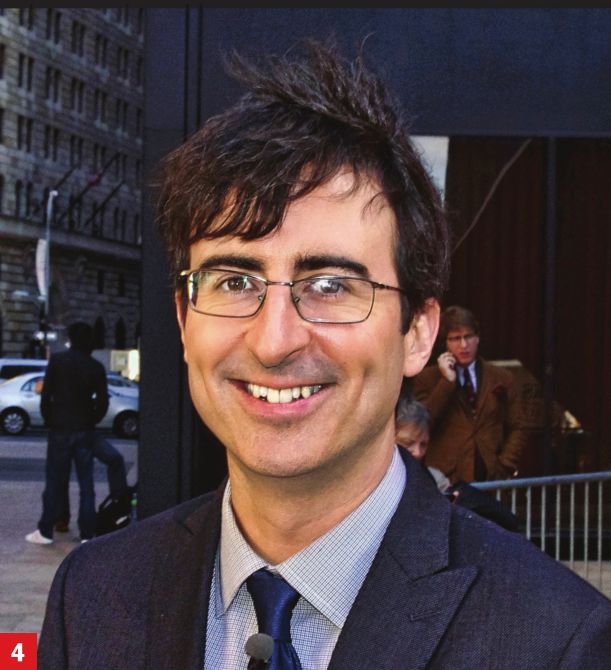
4.
Corporate Internet providers threaten net neutrality This entry
demonstrates the nuance in Project Censored’s media critique. Verizon v.
FCC may weaken Internet regulation, which Electronic Frontier
Foundation and other digital freedom advocates allege would create a
two-tiered Internet system. Under the FCC’s proposed new rules,
corporate behemoths such as Comcast or Verizon could charge entities to
use faster bandwidth, which advocates say would create financial
barriers to free speech and encourage censorship.
Project Censored alleges corporate outlets such as the New York Times and Forbes “tend
to highlight the business aspects of the case, skimming over vital
particulars affecting the public and the Internet’s future.”
Yet this is a case where corporate media were circumvented by power of the viral web. John Oliver, comedian and host of Last Week Tonight on
HBO, recently gave a stirring 13-minute treatise on the importance of
stopping the FCC’s new rules, resulting in a flood of comments to the
FCC defending a more open Internet. The particulars of net neutrality
have since been thoroughly reported in the corporate media.
But,
as Project Censored notes, mass media coverage only came after the
FCC’s rule change was proposed, giving activists little time to right
any wrongs. It’s a subtle but important distinction.
5.
Bankers remain on Wall Street despite major crimes Bankers responsible
for rigging municipal bonds and bilking billions of dollars from
American cities have largely escaped criminal charges. Every day in the
U.S., low-level drug dealers get more prison time than these scheming
bankers who, while working for GE Capital, allegedly skimmed money from
public schools, hospitals, libraries and nursing homes, according to Rolling Stone.
Dominick
Carollo, Steven Goldberg and Peter Grimm were dubbed a part of the
“modern American mafia,” by the magazine’s Matt Taibbi, one of the few
journalists to consistently cover their trial. Meanwhile, disturbingly
uninformed cable media “journalists” defended the bankers, saying they
shouldn’t be prosecuted for “failure,” as if cheating vulnerable
Americans were a bad business deal.
“Had
the U.S. authorities decided to press criminal charges,” Assistant U.S.
Attorney General Lanny Breuer told Taibbi, “HSBC (a British bank) would
almost certainly have lost its banking license in the U.S., the future
of the institution would have been under threat and the entire banking
system would have been destabilized.”
Over
the course of decades, the nation’s bankers transformed into the modern
mafioso. Unfortunately, our modern media changed as well, and are no
longer equipped to tackle systemic, complex stories.
6. The “Deep State” of
plutocratic control What’s frightening about the puppeteers who pull the
strings of our national government is not how hidden they are, but how
hidden they are not.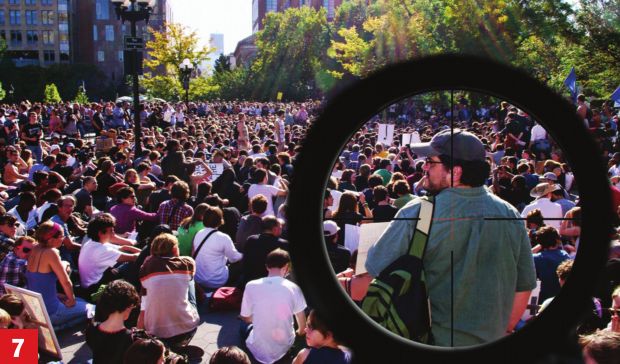
From
defense contractors to multinational corporations, a wealthy elite
using an estimated $32 trillion in tax-exempt offshore havens are the
masters of our publicly elected officials. In an essay written for Moyer and Company by
Mike Lofgren, a congressional staffer of 28 years focused on national
security, this cabal of wealthy interests comprise our nation’s “Deep
State.”
As Lofgren writes for Moyers, “The
Deep State is the big story of our time. It is the red thread that runs
through the war on terrorism, the financialization and
deindustrialization of the American economy, the rise of a plutocratic
social structure and political dysfunction.”
This
is a story that truly challenges the mass media, which do report on the
power of wealth, in bits and pieces. But although the cabal’s disparate
threads are occasionally pulled, the spider’s web of corruption largely
escapes corporate media’s larger narrative.
The myopic view censors the full story as surely as outright silence would. The problem deepens every year.
“There
are now 854,000 contract personnel with top-secret clearances – a
number greater than that of top-secret-cleared civilian employees of the
government,” Lofgren wrote, of a group that together would “occupy the
floor space of almost three Pentagons – about 17 million square feet.”
7.
FBI dismisses plot against Occupy as NSA cracks down on dissent
Nationally, law enforcement worked in the background to monitor and
suppress the Occupy Wall Street movement, a story the mainstream press
has shown little interest in covering.
A
document obtained in FOIA request by David Lindorff of Who, What WHY,
from the FBI office in Houston, Texas, revealed an alleged assassination
plot targeting an Occupy group, which the FBI allegedly did not warn
the movement about.
From
the redacted document: “An identified [DELETED] as of October planned
to engage in sniper attacks against protestors (sic) in Houston, Texas,
if deemed necessary. An identified [DELETED] had received intelligence
that indicated the protesters in New York and Seattle planned similar
protests in Houston, Dallas, San Antonio and Austin, Texas.
[DELETED]
planned to gather intelligence against the leaders of the protest
groups and obtain photographs, then formulate a plan to kill the
leadership via suppressed sniper rifles.”
Lindorff
confirmed the document’s veracity with the FBI. When contacted by
Lindorff, Houston Police were uninterested, and seemingly (according to
Lindorff) uninformed.
In
Arizona, law enforcement exchanged information of possible Occupy
efforts with JP Morgan Chase CEO Jamie Dimon, according to a report by
the Center for Media and Democracy titled “Dissent on Terror.” The CEO
meant to evade possible protests, and local law enforcement was happy to
help.
Law
enforcement’s all-seeing eyes broadened through the national rise of
“fusion centers” over the past decade, hubs through which state agencies
exchange tracking data on groups exercising free speech. And as we
share, “like” and “check-in” online with ever-more frequency, that data
becomes more robust by the day.
8.
Ignoring extreme weather connection to global warming In what can only
be responded to with a resounding “duh,” news analyses have found
mainstream media frequently report on severe weather changes without
referring to global warming as the context or cause, even as a question.
As
Project Censored notes, a study by Fairness and Accuracy in Reporting
found extreme weather events in 2013 spurred 450 broadcast news
segments, only 16 of which even mentioned climate change. National news
outlets have fallen on the job as well, as the New York Times recently shuttered its environmental
desk and its Green blog, reducing the number of reporters exclusively
chasing down climate change stories.
Unlike many journalists, ordinary people often recognize the threat of our warming planet.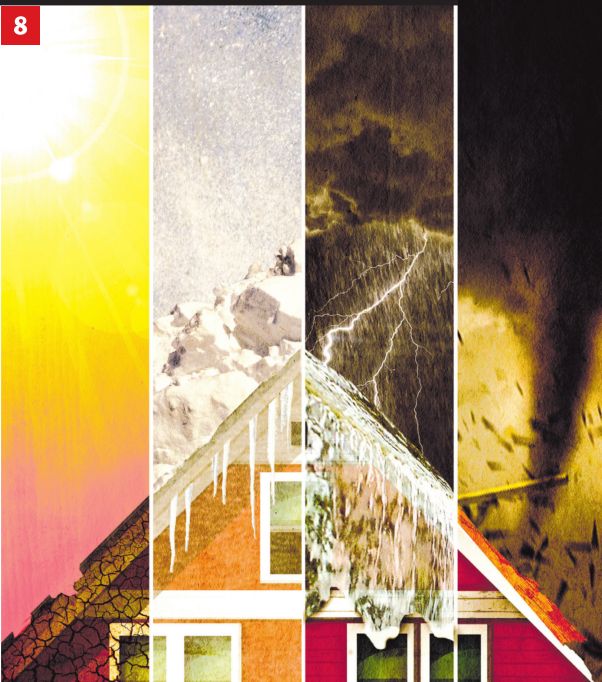
Just
as this story on Project Censored went to press, more than 400,000
protested in the People’s Climate March in New York City alone, while
simultaneous protests erupted across the globe, calling for government,
corporate and media leaders to address the problem.
“There
is a huge mismatch between the magnitude of the challenge and the
response we heard here today,” Graca Machel, the widow of former South
African President Nelson Mandela, told the United Nations conference on
climate change. “The scale is much more than we have achieved.”
9.
US media hypocrisy in covering Ukraine crisis The U.S. battle with
Russia over Ukraine’s independence is actually an energy pipeline
squabble, a narrative lost by mainstream media coverage, Project
Censored alleges.
Russian
President Vladimir Putin has drawn fire from the media as a tyrant,
without complex analyses of his country’s socio-economic interests,
according to Project Censored. As the media often do, they have turned
the conflict into a cult of personality, talking up Putin’s shirtless
horseback riding and his hard-line style with deftness missing from
their political analysis.
As The Guardian UK’s Nafeez
Ahmed reported, a recent U.S. State Department-sponsored report noted
“Ukraine’s strategic location between the main energy producers (Russia
and the Caspian Sea area) and consumers in the Eurasian region, its
large transit network, and its available underground gas storage
capacities,” highlight its economic importance to the U.S. and its
allies.
10. World
health organization suppresses report on iraq impacts The United States’
legacy in Iraq possibly goes beyond death to a living nightmare of
cancer and birth defects, due to the military’s use of depleted uranium
weapons, a World Health Organization study found. Iraq is poisoned.
Much
of the report’s contents were leaked to the BBC during its creation.
But the release of the report, completed in 2012 by WHO, has stalled.
Critics allege the U.S. is deliberately blocking its release, masking a
damning Middle East legacy rivaling the horrors of Agent Orange in
Vietnam.
But Iraq will
never forget the U.S. intervention, as mothers cradle babies bearing
scars obtained in the womb, the continuing gifts of our invasion.
Joe Fitzgerald Rodriguez is a staff writer for the San Francisco Weekly and the San Francisco Examiner. A native San Franciscan, he raises hell covering education and politics in his beloved, foggy city.


