The charms of St. Charles and Batavia
EXCURSIONS | Cindy Ladage
When thinking of heading north, often we think of Chicago. The suburbs get lost in the plans. A recent trip reminded me that there is a lot of beauty and history outside the urban sprawl. This fall, when the leaves are turning, take a chance and head north.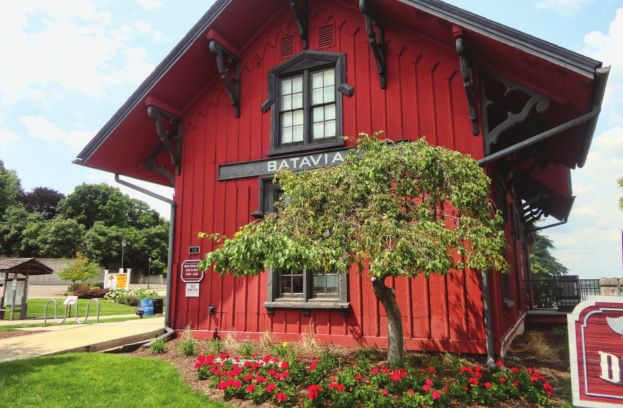
Our trip began with going to see Swing Sisters, a play about the Andrews Sisters put on by the Fox Valley Repertory. Theater is a love I share with my mom, Lori Disque, so we made a plan to go. The play was at the Pheasant Run Resort in St. Charles, Illinois, (http://www.pheasantrun.com/activities/ theater.php) a neat place set on 250 acres, offering 473 guest rooms, an 18-hole golf course, a spa and three pools.
After booking the play and the hotel, Mom and I drove north to the Chicago suburbs. We planned to tour the Fabyan Villa Museum and Japanese Gardens, but fate had other plans. This home and garden looks to be a great place to see, but somehow I missed the date they were open and we stopped instead at the nearby Batavia Depot Museum (www. bataviahistoricalsociety.org/depot_museum) where we found ourselves delving into a chapter of Lincoln history.
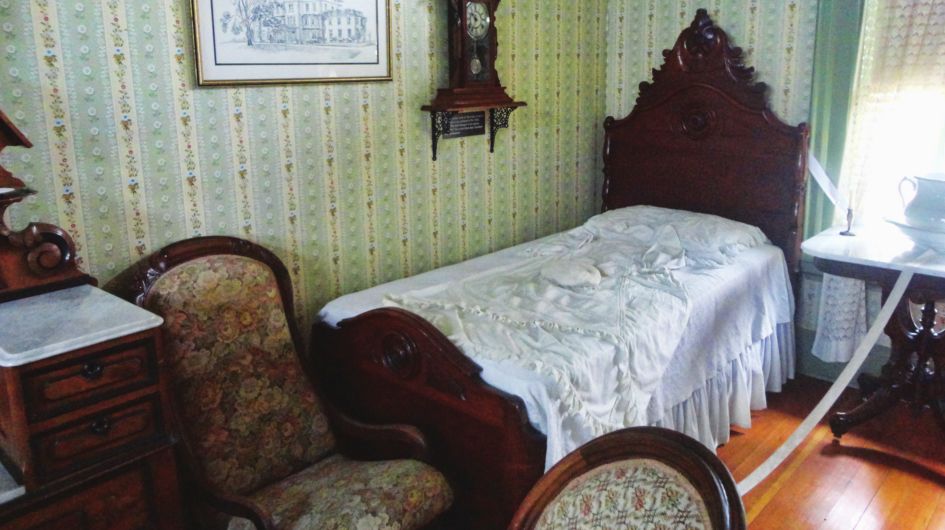
One of the first exhibits we spied in the depot covered Mary Todd Lincoln’s tenure at Bellevue Place after a Chicago jury pronounced her insane in 1875. The Depot has Mary’s bed and dresser from the room where she stayed in Bellevue after her son, Robert Todd Lincoln, accompanied her there on May 20, 1875.
While Bellevue was an impressive place and she had a horse and carriage at her disposal, Mary Todd Lincoln was not at all happy about her stay. The brochure I picked up on Bellevue said that Mary received many visitors and the staff sent many letters to protest Mary’s confinement. The brochure says, “Dr. Patterson and Robert did not think she was well enough, but in the end, they gave in to public pressure and on Sept. 11, 1875, Mary went by train to Chicago and Robert escorted her to Springfield to her sister.”
Today Bellevue is comprised of townhouses but is listed on the National Register of Historic Places.
Batavia was once known as Windmill City because of the windmill manufacturers that settled in town. At one time, Batavia had six windmill companies that produced hundreds of windmills each year. As part of bringing windmills back to Batavia, sponsored by the Batavia Historical Society, today visitors can view 18 windmills,
including 15 that were built in Batavia. These include a rare Pearl
Steel model that was produced by the Batavia Wind Mill company. At the
Batavia Riverwalk you can see several windmills at one time. For more
information about the windmills, log onto the website http://www.
bataviahistoricalsociety.org/wmills.htm.
 While
in Batavia we enjoyed a visit to Bee Attitudes antique shop
(http://www. beeattitudesantiques.com/about.php) where I indulged in one
of my favorite pastimes, perusing antique jewelry. Set in a lovely 1886
mansion, with original architectural features such as stained glass
windows and hand-carved fireplaces, the shopping experience felt quite
luxurious. The home is filled with what they term “an impressive array
of antique and vintage treasures in styles ranging from Victorian to
Hollywood Regency to Cottage Chic.” Yes, I did succumb and purchased
jewelry!
While
in Batavia we enjoyed a visit to Bee Attitudes antique shop
(http://www. beeattitudesantiques.com/about.php) where I indulged in one
of my favorite pastimes, perusing antique jewelry. Set in a lovely 1886
mansion, with original architectural features such as stained glass
windows and hand-carved fireplaces, the shopping experience felt quite
luxurious. The home is filled with what they term “an impressive array
of antique and vintage treasures in styles ranging from Victorian to
Hollywood Regency to Cottage Chic.” Yes, I did succumb and purchased
jewelry!
That evening we enjoyed Swing Sisters and
learned about the highs and lows of the Andrews Sisters during their
heyday in the Big Band Era. At one time the highest paid entertainers in
the United States, the sisters came alive in the small theater. We
dined onsite in Jambalaya
(http://www.pheasantrun.com/activities/dining/jambalaya.php), walked to
the show and enjoyed the cozy comfort of the lovely resort.
The
next day, after stopping at an estate sale, we were directed to
Geneva’s unique shopping district off Third Street where we enjoyed the
little shops, wide avenues and off streets. The Geneva History Center
(http://www. genevahistorycenter.org/) offered a cool candy-making
history exhibit.
Next
we headed for the Little Traveler (http://littletraveler.com) for lunch.
This had been touted by our new friend at the estate sale. My cousin,
Pam, who had lived in the area before she recently moved to Arizona,
also had rave reviews about the Little Traveler, originally a house
owned by the Raftery family. The home was a two-story affair with four
rooms on each level, fireplaces, gardens and a lovely start to what
later became the Little Traveler.
The
shop began through the travel of a friend sending items from China to
Kate Raftery. “Around 1922, Mrs. Raftery’s close friend, Lucy Calhoun,
moved with her husband to Peking, China. Mr. Calhoun was an important
emissary of the United States to the Court of the Last Dowager of China.
Lucy began sending her good friend Kate bolts of Imperial Tribute
silks, fur robes, pewter deers and ducks, jade ornaments and festival
lanterns. Mrs. Raftery was delighted with her friend’s finds and knew
others would be too. She asked her to send more of these unusual items,
and her collection grew. She displayed these Oriental treasures on the
grand piano in the living room and sent invitations for an afternoon tea
and sale. The tea was a success and more were held.”
The
collection grew and visits to the home became visits to a shop and tea
room. Much of the shopping district in this area is attributed to Kate
Raftery. We shopped and dined in the Atrium restaurant. What we enjoyed
as much as the food was the fashion show. Women dressed up in the shop’s
finery stopped by tables and explained what they had on. We were amazed
at how expansive the shop was and all there was to see and do at one
place. It is a little like Josephine’s in Godfrey.
After
lunch, our last stop was at nearby Graham’s Fine Chocolates and Ice
Cream (http://www.grahamschocolate.com ), a coffee house. We had a
delectable ice cream, then headed home.
Cindy Ladage, an author of children’s books, lives on a farm near Virden.