Family fair memories
FOOD | Julianne Glatz
It was the lodestone of my childhood summers. The Illinois State Fair was something I looked forward to almost as soon as the previous year’s fair ended. But after our annual Fourth of July picnic, I could think of little else, planning for it carefully as the fair inched closer on the calendar. Even excitements and worries about the approaching school year took a back seat; I’d think about those after the fair.
These days, for me the Illinois State Fair is as much about memories of those times as what’s happening at the current fair. And they are not just my memories; I also think about the remembrances of my parents and grandparents.
The first Illinois State Fair took place in 1853 on 20 acres in the area around what is now DuBois School and Sacred Heart- Griffin. Town leaders wanted Springfield to put its best face on for the visitors who would flock to the fair: Citizens were exhorted to pick up old hats, boots, rags, bones and manure on the streets.
As well, citizens were asked to fill hog holes in the streets. Apparently the hog holes were numerous; A New York Tribune reporter wrote that there were more pigs in Springfield’s streets than at the fair!
Despite efforts to spruce up Springfield, it was a mess. It rained for the first four fair days. Springfield’s streets – including those created for the fair – were all unpaved; it was a sea of mud. Still, the fair was successful enough it was repeated in Springfield the next year.
But over the next three decades, the Illinois State Fair was held in different cities – 12 in all, including Springfield. Cities competed to hold the fair, offering thousands of dollars of incentives. In some of the cities, housing visitors was a problem. Hotels sold sleeping spaces in their halls. In 1858, when the fair was in Centralia, the Illinois Central Railroad put two and a half miles of boxcars on sidetracks for visitors to sleep in, as well as offering free commuter trains that travelled 100 miles away so fairgoers could find lodging. Lodging state fair visitors was
such an issue that a 1910 Springfield Chamber of Commerce newsletter
says that the Leland Hotel (now defunct, but in its heyday a bastion of
elegance) was integral to thwarting other cities’ attempts to “steal”
the fair. Apparently Peoria was especially dastardly.
Eventually
the Illinois State Fair grew big enough to need a permanent location.
Six cities, including Bloomington, Chicago and Decatur, placed bids.
Springfield’s winning bid included 156 acres of land, $50,000 cash,
fencing and sewage systems, free water, free electricity for two years,
and – thankfully – paved streets.
1894
marked the first Illinois State Fair in its permanent and present
location. The Exposition Building, still a fair landmark, was
constructed in time for that first season.
Other
once-iconic structures have come and gone. But one is only half-gone
and mostly forgotten. In 1910, the Sears and Roebuck Company built a
pavilion to showcase machinery in their catalogue. The pavilion was
crowned with a five-room house; it and all its contents were available
in Sears’ catalogue. The pavilion is gone, but in the 1930s the house
was moved to the east of the Dairy Building, where it stands today.
None
of the above is a familial memory. Those reminiscences began with my
grandmother, aka Nana, the family’s undisputed storyteller, although my
mother masterly assumed that mantle after Nana died.
“It
was our first date, going to the fair,” Nana would say. She didn’t
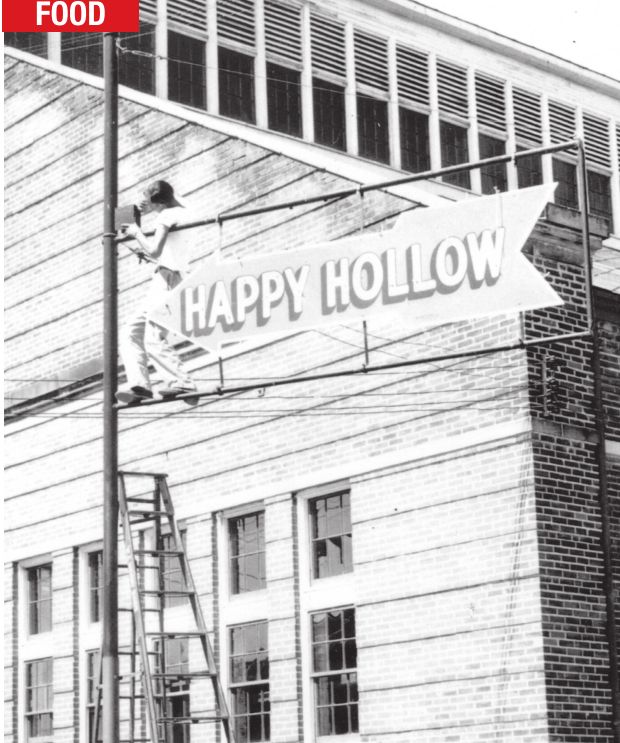
provide details, but my mom remembers a large wooden structure in Happy
Hollow, longtime site of the fair’s carnival rides, that was a “Tunnel
of Love.” “It might have had another name,” my mom, (aka Joann’e
Glatfelter) says. “But it had boats for two people to ride through water
lanes, and it was dark and romantic.” Thinking of them there, cruising
through the dusk and falling in love makes me smile, not least because
in the daylight their romance was a major Catholic/ Protestant crisis,
outdated today, but a serious matter in the 1920s.
The
pinnacle of my family’s fair memories is unquestionably the years from
1932-1940, when Henry Horner was Illinois’ governor. Nana’s sister,
Eileen, was married to Horner’s patronage chief, Bill Walsh. Though
today it seems corrupt (and often was), back then virtually every state
job was granted by patronage, making my great-uncle Bill a powerhouse.
For my grandparents, that meant “golden passes” that gave them access to
everything, including the carnival rides, and use of the Governor’s
Grandstand box, not just for themselves, but also 20 of their closest
friends. My mom also got special treatment: Horner, a lifelong bachelor
who nonetheless loved children, not only allowed her the run of his box,
but sat her on his lap during the shows.
In
the 1950s, my grandfather’s sister and her husband bought a house on
Eighth Street directly across from the fair’s Eighth Street gate. The
fair was an economic boon for all of Springfield, but especially
lucrative for north-enders. Numerous small strip motels sprang up on the
North End’s main streets, but still couldn’t meet the demand for vendor
and visitor housing. Many residents rented rooms; Aunt Elsie, Uncle Jim
and their three daughters rented their entire upstairs and moved into
the basement. How I envied my older cousins as they waved a cane and
shouted “Park it! Park it!” to fill up their yard with cars who paid top
dollar for a space directly across from the fairgrounds.
Traffic was horrific, sometimes backed up as far as today’s State Journal-Register building.
But it was worth it to see top entertainers at the Grandstand, such as
comedians Red Skelton (I was old enough to see his show) and Bob Hope
and the spectacular fireworks that ended each night’s performance after
the show.
By the time I
became a teenager, the Grandstand’s roster included top rock ’n’ roll
bands, such as the Beach Boys and The Association (main hit, “Windy”).
My grandparents had had their first date at the fair; I had my first
kiss while walking around the Grandstand’s deserted track from a boy
with whom I’d worked at the Chatham Methodist Church’s food stand.
I’ve
written in this column before about the civic organizations and
churches that were a major part of the food offerings at the fair,
especially the Chatham Methodist Church’s stand, which served just three
things: beef and homemade noodles (the men’s club made the noodles, the
women’s club braised the beef); pork barbecue sandwiches that, while
succulent, never saw a whiff of smoke, and homemade pies. Fair-goers
would stand threefour deep behind an occupied stool, waiting to be
seated.
But in earlier
times, many folks brought food with them. Though they might indulge in a
lemon shake-up or some saltwater taffy, eating an entire meal out was a
rare luxury. My mom remembers Nana getting up before dawn to fry
chicken and make deviled eggs for a picnic that the family would eat on
the “hill” opposite the Illinois Building.
Over
the years, different aspects of the fair have dominated my family’s
fair-going. The horse events were central in my daughter Ashley’s youth.
This year, her daughter, twoyear-old Maddie, will be able to enjoy what
the fair has to offer. I can’t wait to see what captures her fancy!
Contact Julianne Glatz at [email protected].


