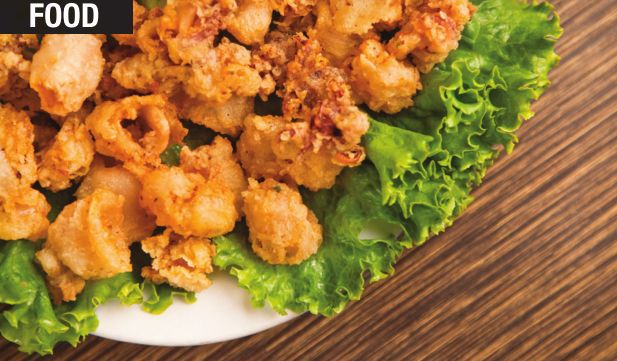
A squid by any other name
What’s in a name?
FOOD | Julianne Glatz
They’re cheap. They’re ecologically sustainable. They’re über-nutritious: low in calories, but high in protein, antioxidant minerals and several B vitamins. They take only minutes – sometimes just seconds – to cook. They lend themselves extraordinarily well to freezing and are available, cleaned, in most local groceries. And, not least, their flavor is delicately delicious, flavorful yet mild enough to please the fussiest eater.
They’re … squid. Most Americans know them by their Italian name, calamari. As a chef friend told me years ago, “If I call them squid on my menu, no one orders them. If I say calamari, people can’t order them fast enough.”
While most Americans know them only by the Italian word for squid, they’ve also only encountered them in a specific restaurant preparation: breaded or battered and fried. It’s no wonder. Fried calamari are fantastic: crunchy, with just the right amount of chew, amenable to all sorts of dipping sauces. I prefer frying calamari that’s simply been dredged in seasoned flour; even the lightest batter tends to overwhelm their delicate flavor. That said, I’ll use a variety of seasoned flours, depending on what else I’m serving.
For Italian, French or all American iterations I toss them with white or whole wheat flour and serve them with marinara, aioli (garlic mayonnaise) or good ol’ seafood cocktail sauce. If Indian is on the menu, I’ll dredge the rings and tentacles in chickpea flour (usually labeled Besan) and serve them with a cilantro sambal/chutney and yogurt cucumber raita. A Mexican meal calls for corn flour and salsa or pico de gallo. And if I’m thinking Asian, I’ll dredge them in rice flour, or a combination of rice and wheat flours, and make dipping sauces that range from teriyaki-style soy-based sauces for Japanese and Chinese menus to sweet chili garlic sauce enlivened with peanuts for a Southeast Asian dinner.
But mostly at home, I don’t fry them at all.
In America, the word “calamari” has become synonymous with its fried restaurant iteration. Good as that is, calamari are much more versatile, lending themselves to quick braises for seafood stews and pasta sauces, to grilling. Braising calamari is an anomaly: if they’re fried or grilled they must be cooked quickly or they’ll be as chewy as rubber bands. But they achieve that same tenderness when gently simmered for half an hour or so.
Below are two of my favorite nonfried calamari preparations, recipes I break out as soon as the grilling season is upon us.
Southeast Asian grilled calamari salad
• 1 lb. calamari, cleaned and thawed if frozen
• 3 T. vegetable oil, such as canola, divided
• 1 T. nam pla – Vietnamese or Thai fish sauce
• 1 T. light brown sugar
• 2 T. lime juice
• 1 tsp. minced fresh ginger
• 1 tsp. minced fresh garlic
• 1 tsp. Sriracha, or to taste
• 1/2 c. roasted unsalted or lightly salted cashews
• 1 c. total fresh mint, cilantro and/or Thai basil leaves, either singly or a combination
• 6 c. mixed baby lettuces or whole soft lettuce leaves such as Boston, bibb or leaf
• 1 large or 2 small grapefruit, cut into sections, optional Prepare a charcoal/grill fire. Remove the tentacles from the squid bodies if necessary, checking to see if there are any bits of plasticlike cartilage (it’s common for pieces of the hard beak to be left in the tentacles). Snip out any cartilage with scissors.
In a bowl or resealable plastic bag, toss the calamari with 2 tablespoons of the oil. In a large resealable plastic bag, combine the fish sauce, sugar, lime juice, ginger, garlic and chili paste. Seal the bag, squish until the sugar is dissolved and reserve.
When the fire is hot, place
a grate with small enough openings that the calamari tentacles will not
fall through over the fire and let the grate get very hot. Place the
calamari bodies on the grill, reserving the tentacles. Cook the bodies
until browned on the outside, about a minute per side. Do not overcook
or they will be very tough. Remove the bodies to a plate and put the
tentacles on the grill, preferably in a stir-fry basket or other mesh
grilling pan so that the tentacles don’t fall into the fire. Stir the
tentacles constantly as they grill. They are more delicate than the
bodies and will cook even more quickly. Cooking time shouldn’t be more
than 3 minutes total, depending on the size of the calamari and the heat
of the grill. Again, they should be nicely browned, but not overcooked,
although it’s fine – even preferable – for the tentacle tips to become
crispy. Remove to the plate with the bodies. When the bodies are cool
enough to handle, cut into slices about 1/2-inch thick. With the
tentacles, add to the plastic bag containing the fish sauce mixture,
seal the bag and toss to coat. Let stand for 15 minutes before serving.
Serves 4-6.
Two ways to serve this salad 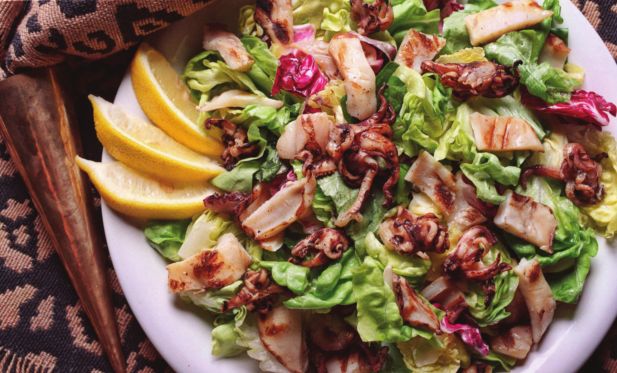
•
Southeast Asian style: Put the calamari, cashews, fresh herb and
grapefruit sections in separate bowls or plates. (Put the fresh herbs in
individual bowls if using more than one type of herb.) Pile whole soft
lettuce leaves on a plate. Each diner takes a lettuce leaf and puts a
few pieces of calamari, a few herb leaves of their choice and a
grapefruit section or two on a lettuce leaf, sprinkles on a few cashews,
and eats it out of hand, soft taco style
•
American style: Drain the marinade from the squid into a small bowl and
whisk in the remaining tablespoon of oil. Combine the herb leaves with
the baby lettuces and toss with the marinade as a dressing. Place the
lettuce on a platter, scatter the calamari and grapefruit sections
evenly over the lettuce and sprinkle with the cashews.
The following preparation utilizes both braising and grilling techniques.
Grilled stuffed calamari
• 1 lb. calamari, cleaned
• 1/4 c. (4 T.) extra-virgin olive oil plus additional for brushing
• 1/2 c. minced onion, not super-sweet
• 4 cloves garlic, minced
• 1/4 c. dry white wine or vermouth
• 1 c. toasted breadcrumbs from homemadetype bread (i.e. not Wonder bread)
• 2 scallions, minced
• 1 T. minced fresh herbs such as thyme, rosemary, marjoram or winter savory, singly or in combination
• 2 T. minced flat-leaf parsley, plus additional for garnish
• Cherry tomatoes, quartered, or diced whole tomatoes, dressed with a little extra- virgin olive
• Oil and balsamic vinegar, for garnish Remove the tentacles from the
squid bodies if necessary, checking to see if there are any bits of
plastic-like cartilage; if there are, snip them out with scissors. Mince
the tentacles and set aside. In a saucepan, cover the calamari bodies
with water, bring to a boil, lower the heat to the lowest possible
simmer, and cook about 30 minutes, or until completely tender. Drain the
calamari bodies, cool and wrap in a towel to absorb as much excess
moisture as possible.
In
a medium skillet over medium-high heat, heat the 4 tablespoons of olive
oil until hot but not smoking. Add the onion and garlic, and sauté
until softened. Add the chopped tentacles and cook until they turn
opaque. Add the wine and cook until almost completely evaporated, 3-5
minutes. Remove form the heat and cool completely. Stir in the bread
crumbs, scallions, herbs and parsley. Using a small narrow spoon, fill
the calamari bodies with the stuffing, being very careful not to
overstuff – there needs to be adequate room for the stuffing to expand.
Skewer the ends closed with a toothpick. Brush the calamari bodies
lightly with olive oil and grill over hot coals, or sauté until lightly
browned, about 5 minutes. Serve on a bed of quartered cherry tomatoes or
diced tomatoes dressed with olive oil and balsamic vinegar and
sprinkled with additional parsley. Serves 4-6.
Contact Julianne Glatz at [email protected].


