The church lady
Anita Bedell fights gambling and keeps the faith
ACTIVIST | Bruce Rushton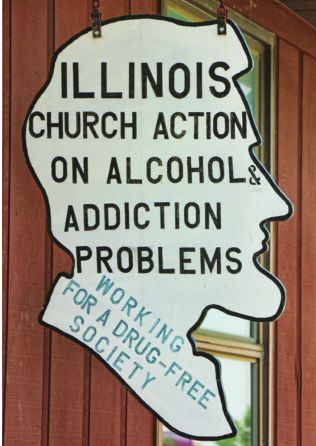
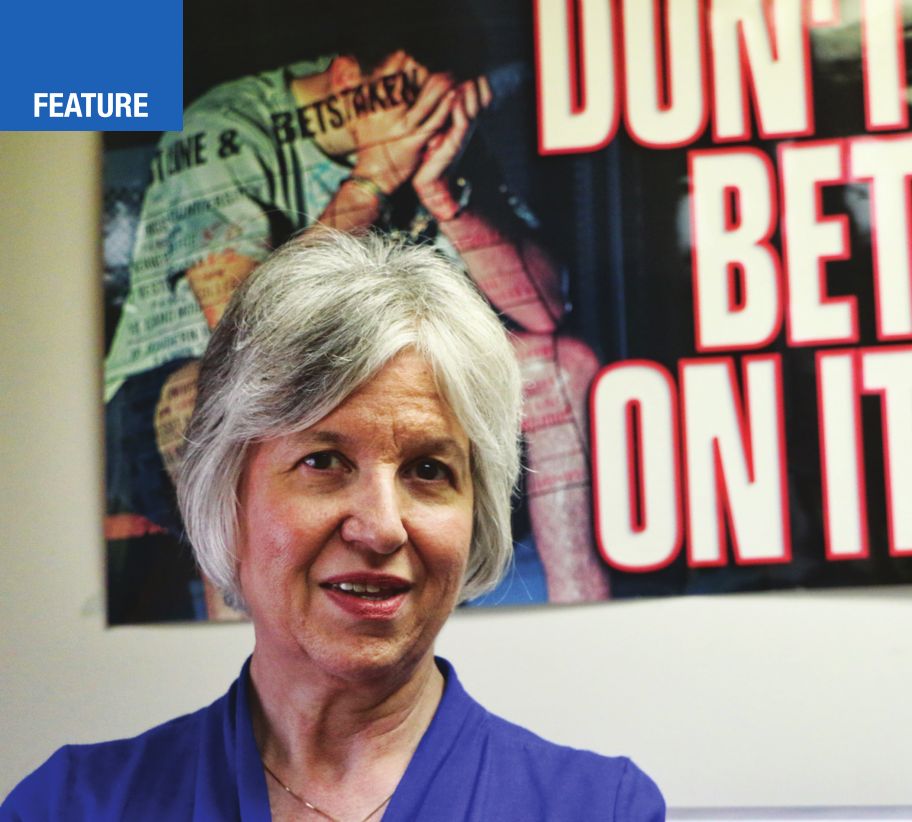
She’s almost always outgunned, outfinanced and outvoted, but it’s hard to imagine Anita Bedell getting outworked.
As executive director of Illinois Church Action on Alcohol and Addiction Problems since 1994, Bedell has been fighting the good fight for two decades, imploring governors and legislators to lower the blood-alcohol limit for motorists, curb gambling and resist a national trend toward legalizing marijuana. She has had her successes, but they are outnumbered by defeats, and hers has become a lonely battle. You don’t have to look any further than ILLCAAP headquarters on Jefferson Street to see that.
A gas station across the street sells beer and wine, thanks to a zoning change and liquor license granted by the city in 2008 over the protests of a dozen or so kids that Bedell brought to a city council meeting. A windowless adult video store less than two blocks away on Jefferson closed only recently.
“God has called you to faithfulness, not results,” reads a wall placard in the barebones ILLCAAP office. “Don’t measure the size of the mountain, talk to the one who can move it,” reads a desk ornament inscribed with the words of Max Lucado, a preacher and author of Christian-oriented inspirational books.
Carrie Nation she is not. While America’s most famous prohibitionist used a hatchet to get her point across, Bedell has relied on statistics and a calm, even voice during her career as the state’s best-known lobbyist against drugs, gambling and alcohol. From her sensible looks-like-Penney’s clothing to her to her aging Buick LeSabre sedan, she is straight from central casting. But books have more than covers.
“I think she’s dismissed as being, quote, the church lady at times,” says the Rev. Thomas Grey, who once lived in Illinois and is now a senior advisor for Stop Predatory Gambling, a nonprofit organization based in Washington, D.C. “Anita is not the cartoon character that they want to make her out to be. You cannot
find her speaking an untruth in any testimony she’s ever made – everything is footnoted, everything is researched. To do that for over 20 years is a real credit to who she is. She does it because it’s the right thing to do.
“There aren’t many people like that.”
Commitments and changing times Bedell is loath to talk about herself.
She confesses that she has gambled herself, but only once, and the game she played, bingo, comes as no surprise. She is a teetotaler who drinks no coffee but plenty of tea. She plays piano and attends St. Joseph The Worker Catholic Church in Chatham, where she lives. When she isn’t testifying against bills to allow slot machines at the state fairgrounds or the state lottery on the Internet or new casinos, she says she likes to garden, read, cook and listen to music.
What kind of music? All kinds, she answers, without providing examples. She wasn’t always involved in politics. Before becoming an activist, Bedell, who is from Illinois, taught school in South Carolina when her husband was stationed there while serving in the military. She says she taught eighth grade and high school, but won’t say what subjects.
“I taught something,” she says. “I’d rather it (the story) be about the organization than me personally.”
In a that-was-then-this-is-now world where elected officials too often break vows on everything from tax hikes to limiting themselves to just a few terms in office, Bedell is both persistent and consistent. She remembers which lawmakers pledged not to expand gambling without a vote of the people in the 1990s, then voted for gambling bills that include legislation that has allowed video gambling machines in virtually any business that has a liquor license.
State Rep. Raymond Poe, R-Springfield, for example, posed for a photograph in 1994 along with Bedell and other backers of a referendum in which 90 percent of voters said they wanted an
election before any expansion of gambling in Sangamon County. At the
time, gambling proponents were talking about building a casino along the
Sangamon River.
By
the mid 2000s, however, Poe’s position had changed. He supported bills
to expand harness racing at the state fairgrounds while allowing more
off-track betting. He also favored slot machines at the fairgrounds, and
he made no apologies when Bedell called him out in the press, with the
legislator saying that economics had changed since county voters said
that they wanted to vote on any proposals that would expand gambling.
Constituents didn’t want gas, income or sales taxes raised, he said in
2008, and taxes on gambling promised a way to ease the state’s fiscal
woes. Since 2009, Poe has voted in favor of at least 10 pro-gambling
bills, by ILLCAAP’s count, and hasn’t opposed a single one.
“Was
it a lifetime commitment or was it a 1994 commitment for that year?”
Poe says today. “I didn’t vote for gaming for about 10 years – I think
that 10 years ought to be pretty good on a commitment.”
Poe
wasn’t the only local legislator who flipped on the gambling question.
During his first campaign for state Senate back in 1995, now-retired
Sen. Larry Bomke, R-Springfield, said that he was personally opposed to
gambling, but that voters should have a say in any proposal to expand
gambling. By 2012, Bomke was supporting a massive expansion of gambling
in Illinois, including slot machines at the fairgrounds, slots at
horse-racing tracks elsewhere in the state, five new casinos throughout
the state and expansions of existing casinos, all without a vote of the
people.
Bedell gives a sad smile while recalling the 1994 referendum that ended up making no difference.
“When
you get 90 percent of the people, that’s huge,” Bedell said. “They
(lawmakers) just ignored it. It’s disheartening, to tell you the truth.”
An
evolving mission Bedell, who had held a clerical position at St. Joseph
The Worker Church, took a job at ILLCAAP in 1990, the same year that
legislators approved the establishment of 10 casinos outside Chicago,
which remains offlimits to both full-blown casinos and video gambling
machines in bars and restaurants that now pepper the rest of the state.
ILLCAAP
considers itself a harmprevention organization and has a related
agency, Churches In Action, that is headquartered in the same building
and distributes anti-drug and alcohol literature to church and youth
groups. Unlike Churches in Action, ILLCAAP operates as a “social
welfare” organization under the federal tax code for nonprofits and has
more latitude to get involved in politics than its sister agency.
“I
had my degree in teaching,” Bedell says of her decision to apply for a
clerical position at ILLCAAP. “I thought I could use my background. It
was a good fit.”
Four
years later, she became executive director of an agency that celebrated
its 100 th anniversary in 1998. She has headed the organization longer
than any other person.
If nothing else, ILLCAAP has stamina.
It
got its start as the Anti-Saloon League of Illinois, back when William
McKinley was in the White House and “Remember the Maine, down with
Spain” was the catchphrase that helped light the Spanish-American War.
Meanwhile, movements for women’s suffrage and temperance were growing in
strength.
There was
big money and political influence in the no-booze movement as
Prohibition approached. William H. Anderson, a lawyer from Carlinville,
parlayed his position as head of the Illinois Anti-Saloon League at the
turn of the last century into a larger role on the East Coast, where he
became head of the New York Anti-Saloon League and railed as much
against Catholics as he did against demon rum. He was convicted of
forgery in 1924 for altering the league’s financial records. The amount
of money at stake, $24,700, was the equivalent of more than $341,000 in
today’s dollars.
Fifteen
years after Prohibition ended, the Anti-Saloon League of Illinois in
1948 became the Temperance League of Illinois. The organization, which
had been headquartered in Chicago, moved to Springfield in 1954, one
year after Gov. William Stratton banned beer at the state fair. The
group boasted 160 board members that represented 44 religious
denominations and had an annual budget of $120,000, the equivalent of
more than $1 million today. ILLCAAP had $53,000 in revenue in 2012,
according to the most recent financial statements provided to the
Internal Revenue Service, and Churches in Action, its sister agency,
took in $154,200 that same year.
The
organization’s mission has evolved over the years to include fights
against drugs and gambling in addition to pro-temperance stances.
ILLCAAP adopted its present name in 1963, and gambling landed on the
agenda in 1992, when the group’s board voted to fight the expansion of
gambling two years after state lawmakers approved 10 casinos. While
casino companies eyed potential locations, a wave of grassroots
politicking broke out statewide as voters in more than a dozen counties
and municipalities approved referendums demanding a public vote before
casinos could be built in their communities.
In
Sangamon County, Bedell and a handful of allies collected more than
12,000 signatures in less than six weeks during the summer of 1994 to
get the referendum on the fall ballot, setting up camp at summer
festivals, visiting church congregations and going door to door. God did
his part, keeping the weather comfortable – there was appreciable rain
just three days, the temperature rose above 90 only twice and the
average high was a moderate 84 degrees. No one was paid to gather
signatures.
“We had 12 people,” Bedell recalls. “We met every week. It’s a tough thing to do.”
The anti-gambling campaign
turned in signatures three days early, and the 66,380 to 7,123 final
vote was one of the most lopsided margins in county electoral history.
The vote was advisory – the Illinois Constitution strictly limits the
powers of voters to make decisions, and elected representatives in the
Land of Lincoln are notoriously reluctant to give up power. Still, few
politicians welcome being labeled as out of touch with their
constituencies.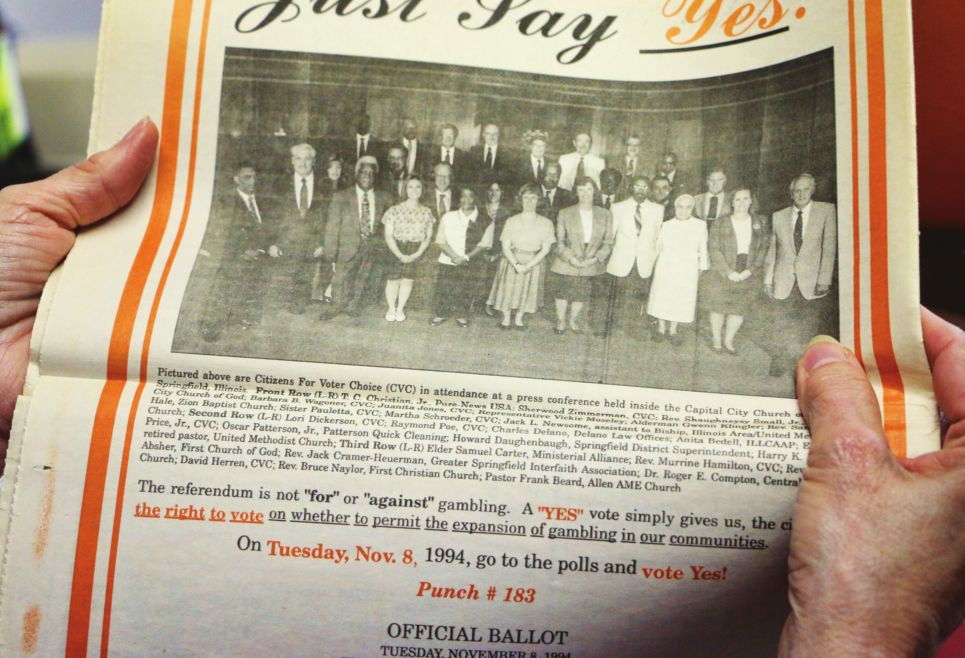
“With
90 percent of the people saying they want to have a right to vote,
that’s a pretty strong statement, and it cannot be ignored,” Joe Aiello,
Sangamon County clerk, told the State Journal-Register after results were tabulated.
Politicians paid attention, but only for awhile.
Bedell
and her allies failed in their push for a statewide referendum that
would have required an advisory vote before gambling was expanded
anywhere in the state, with the measure passing the Senate in 1995 but
stalling in the House. Only 49 candidates in 158 races for legislative
seats in 1996 signed pledges promising to support a moratorium on
gambling expansion until voters had a chance to cast ballots in a
statewide advisory referendum. Just 14, including Sen. Bomke, were
incumbents.
In 1999, Bedell lost a fight to maintain a requirement
that riverboats embark on cruises rather than remain permanently
moored, and gambling revenue, with accompanying losses, surged with the
ability of gamblers to enter and leave casinos whenever they pleased.
The biggest blow, she says, came in 2009, when the state legalized video
gambling at bars, restaurants and anyplace else with a liquor license,
essentially establishing mini-casinos in thousands of businesses
throughout the state. Like Poe, Bomke, who retired from the senate last
year, voted for video gambling despite previously taking a stance that
more gambling shouldn’t be allowed without a vote of the people.
Powered
by experience, prayer Bedell had never lobbied a public official before
becoming an ILLCAAP lobbyist in 1994, the same year she became head of
the organization.
“It was hard,” she recalls. “It was what you call on-the-job training. … I knew nothing.”
She
learned quickly. Bedell recalls that her first time testifying before
state lawmakers came at a committee hearing when she and three or four
other opponents of a proposed Springfield casino traveled to the Capitol
to speak their piece. As was customary, the committee chair told
opponents to pick a representative to speak for the entire group. Rep.
Lou Lang, D-Skokie, spoke up, urging the chair to allow everyone to
testify.
“He said,
‘No, I want to know why the rest of you don’t want a casino in
Springfield,’” Bedell recalls. “I was not prepared. I got up and said
something and they put it on television.”
Bedell
says she doesn’t know much about Lang, one of the General Assembly’s
biggest supporters of gambling legislation, but he has always been
courteous. Lang says that some of the information Bedell provides isn’t
detailed or deep, but he doesn’t blame her – that, he says, is the fault
of others who are providing information for talking points.
“She
can’t do everything,” Lang says. “I’m not sure she knows that I admire
her, but I do. … There are a lot of people around here in this building
where I’ve worked for 26 years who end up on the losing side and take it
personally. Anita never does. When Anita comes to the building, she has
a level of gravitas. She has something important to say. She works very
hard to make her points, oftentimes in front of groups of people who
aren’t listening. She doesn’t come with a big political action
committee. She has to do this virtually on her own, and she’s pretty
darn good at it, given all those things.”
No one has to tell Bedell that she’s facing long odds.
“We don’t think that the vote’s going to go our way, but we need to get the message out,” Bedell says. “Silence is consent.”
Bedell
says her passion is powered by personal experience. She recalls
babysitting as an eighth grader for a family with parents who played the
ponies.
“They had
hardly any furniture,” Bedell says. “They had no toys for the kids. At
the end of the week, I didn’t get paid. They’d gambled it all away. … At
the end of the summer, the house was foreclosed on and their car was
taken away.”
Bedell
says she prays before and during legislative hearings when she’s due to
testify, but there is never a spiritual component to her public
comments. Rather, she talks about the social harm and addictive powers
of gambling, alcohol, drugs or whatever else is on the agenda.
“I
don’t think she’s ever used the word ‘smite’ in her life,” says Vickie
Moseley, a former ILLCAAP lobbyist who served one term in the state
House. “She’s just a very down-to-earth Midwestern girl. What you see
when she’s in committee is really Anita.”
A badge of honor Bedell doesn’t have perfect answers for everything. Medical marijuana is one example.
ILLCAAP
opposes medical pot that legislators legalized in 2013, five years
after Lang first introduced a bill. Bedell cites research that shows
negative effects of marijuana on the brain and says the drug kills
motivation in young people. She doesn’t mention the fact that tens of
millions of Americans have used the drug with no ill effects or that pot
smokers have gone on to become presidents or that most any cop would
rather deal with a stoner than a drunk.
“It
(medical marijuana) opens the door for legalization (of recreational
pot) – they’ve said that all along,” she says. “There’s an increase in
use by young people.”
And
what would she say to the cancer patient whose use of marijuana sparks
appetite and eliminates nausea caused by chemotherapy? Or the multiple
sclerosis sufferer whose pain and tremors are eased by a few puffs?
“I don’t know if it works,” Bedell answers.
“It’s not prescribed by a doctor.”
So
far as Bedell is concerned, the sick can start smoking pot when the
U.S. Food and Drug Administration conducts clinical trials, benefits are
proven to outweigh risks and the drug is removed from the list of
substances that the feds say have no legitimate medical use. It’s
typical of the strong stances Bedell takes, and it’s her commitment that
wins admiration.
“She’s
one of those people who don’t rely on the kindness of strangers,” says
Moseley, who now works in the securities division of the secretary of
state’s office. “She feels very strongly about this issue, not just the
gambling issue, but the addiction issue and how it impacts lives. This
is her niche. This is where she wants to make her mark on the world.”
Bedell
says she considers Moseley a mentor who taught her the ropes at the
Capitol. Moseley says that’s too much credit. While Grey, the reverend
who moved from Illinois to combat gambling on the national level, was
focused on public relations and the media, Moseley says that she concentrated on armtwisting legislative staff while working for ILLCAAP. Bedell, she says, did both.
“Anita
was bouncing back and forth between the two of us,” Moseley recalls.
“She would come and testify before committees and then be at the press
conference the next day. She was doing all of it, plus running the
(ILLCAAP) office.”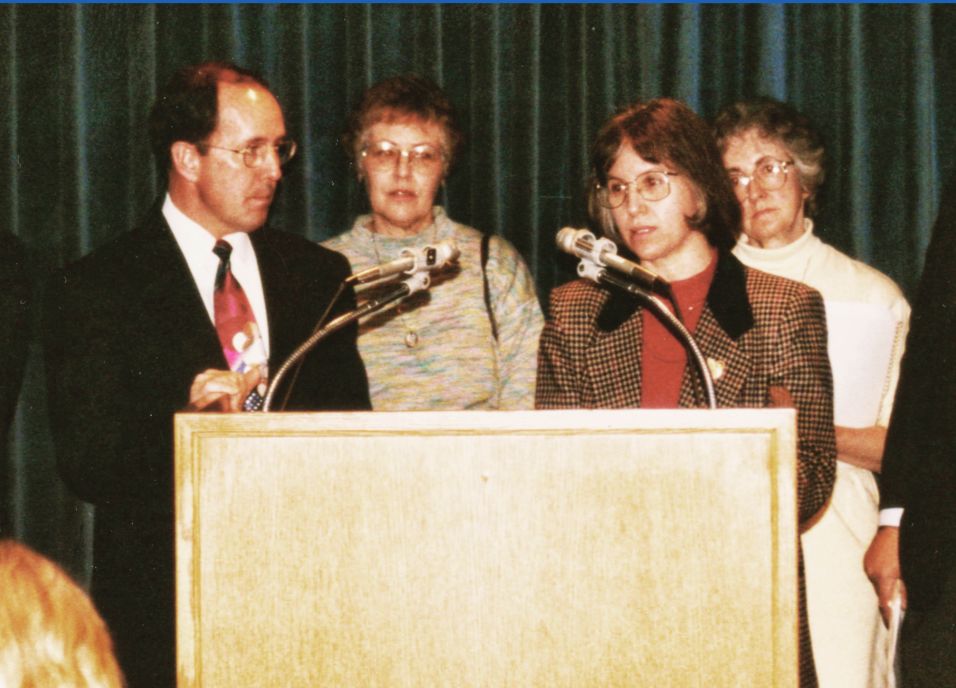
Moseley recalls Bedell enlisting nuns to write letters to lawmakers.
“When you get a letter with O.P. below the name, you take a moment to think about it,” Moseley says.
While
the common wisdom holds that Bedell is tilting at windmills, Moseley
points out that there are no casinos or statesanctioned video gambling
machines in Chicago. She recalls driving to the West Coast in the late
1990s and seeing widespread legal gambling in one state after the next.
“We didn’t get it until now,” Moseley says.
“If you’re looking to point to something that she did, we could have had it a lot sooner.”
Church lady. Moseley has heard the label.
It should not, she says, be considered an insult.
“I
would call it a badge of honor,” she says. “If that’s the voice you
would pin on Anita, that’s a good voice. I’ve been called a heckuva lot
worse.”
Contact Bruce Rushton at [email protected].


