Getting it right
Freeing the wrongly convicted with the Illinois Innocence Project
CRIME | Patrick Yeagle
Brian Banks had the world at his feet.
A promising high school football star with serious NFL prospects, Banks got his first college recruiting letter as a sophomore. Before he even started his senior year of high school, he was recruited to play football at a prestigious university, where he wanted to study journalism.
But Banks’ favorable trajectory was violently thrown off course in the summer of 2002 when he was accused of rape. He would spend five years behind bars and another five years wearing an electronic monitoring anklet before new evidence would clear his name.
Banks is one of more than 1,340 people across the nation who were freed from prison between 1989 and 2014 after being imprisoned for crimes they didn’t commit. Now Banks is a crusader for the group that helped free him, and he is coming to Springfield next month to spread his message of hope for the wrongly convicted.
Brian Banks grew up in Long Beach, Calif., just south of Los Angeles. He stood out on the football field at Long Beach Polytechnic High School, where he played linebacker because of his size and agility. Banks’ athletic prowess got him scouted to play football for the powerhouse University of Southern California.
In the summer of 2002, a couple of weeks before his 17th birthday, a young woman at his school claimed Banks dragged her into a stairwell and raped her. Although the only evidence against Banks was his accuser’s words, prosecutors offered Banks a deal: plead guilty in exchange for a sevenyear prison sentence and a lifetime of registering as a sex offender. The alternative was fighting the charge and risking a 41-year prison sentence.
“My attorney told me ‘When you walk into that courtroom, you will be automatically assumed guilty because you are a big, black teenager, and you will more than likely have an all-white jury,’ ” Banks said.
He had 10 minutes to make his decision and wasn’t allowed to talk to his mother about it. He chose to take the plea deal and served five years and two months in prison. Meanwhile, Banks’ accuser sued the Long Beach school district, saying the school wasn’t safe. Her family won a $1.5 million settlement.
Banks was released Aug. 29, 2007, and had to wear an electronic monitoring anklet as a term of his parole. He couldn’t find a job because of his criminal record, and California’s laws regarding sex offenders meant he couldn’t live within 2,000 feet of a school or park, so he lived at home with his mother. But Banks’ nightmare was almost over.
After Banks was released, he received a Facebook friend request from his accuser. She also sent Banks a message saying she was more mature now and wanted to “let bygones be bygones.” Banks immediately saw an opportunity to clear his name.
He convinced his accuser to meet him at the office of a private investigator, who had wired his office with hidden cameras and microphones.
Banks’ accuser was recorded admitting that Banks didn’t rape her, but
she was reluctant to do anything that might mean her family would have
to pay back the $1.5 million settlement from the school district.
Banks
took the recording to the California Innocence Project, which helped
him gain a new hearing in front of a judge. The evidence was enough to
clear Banks of the made-up crime, and he walked out of the Long Beach
courthouse smiling on May 24, 2012.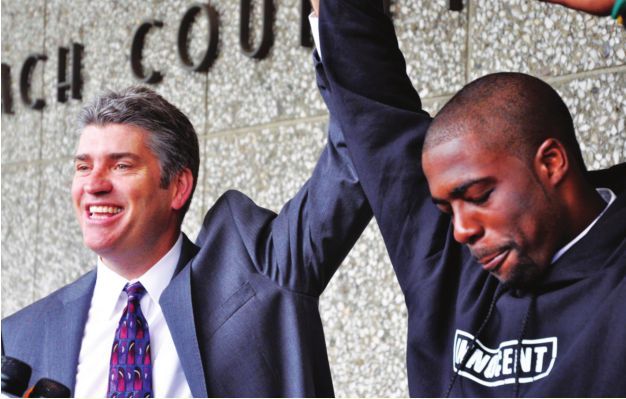
“I
was thinking ‘Finally, the truth is out and I’m free,’” Banks recalls.
“Here I am now with a window of opportunity to do something with my life
that I wasn’t able to do before. There were a bunch of emotions, but it
was definitely bittersweet because of the 10 years I lost.”
After
Banks’ conviction was overturned, the Long Beach school district sued
the accuser and her family to reclaim the earlier settlement. A Facebook
page dedicated to advocating for the prosecution of the accuser has
nearly 1,300 followers, but authorities have been reluctant to pursue
the case.
Banks
finally got to play in the NFL after being drafted by the Atlanta
Falcons in April 2013, and he made his debut in August of that year,
making two tackles. However, the team cut him later that month while
downsizing from 75 players to 53. Banks is currently an unsigned free
agent, but he is focusing on more meaningful pursuits now. He’s
attending college to become a life coach, and he’s currently shooting a
documentary. He also recently signed a deal to make a movie about his
life.
“We may not be
in control of the things that are happening in our lives, but we are in
control of how we carry ourselves through a situation, and how we allow
those situations to affect us,” Banks said. “While you’re dealing with
things that are out of your control, just work on what you do have
control over: bettering yourself as a person.”
Justin
Brooks, the director and co-founder of the California Innocence
Project, helped Banks clear his name. Besides his work with the
California Innocence Project, Brooks created RedInocente, an
organization dedicated to establishing innocence projects across Latin
America. Brooks will visit Springfield with Banks to speak at the
Illinois Innocence Project’s annual Defenders of the Innocent banquet on
May 3.
Fighting to get it right
The
Illinois Innocence Project is one of about 60 groups around the U.S.
dedicated to reversing wrongful convictions. Started in 2001 at the
University of Illinois Springfield as the Downstate Innocence Project,
the Illinois Innocence Project has expanded to cover the entire state
with the help of Illinois’ three largest public universities: the
University of Illinois at Urbana-Champaign, Northern Illinois University
in DeKalb and Southern Illinois University in Carbondale. So far, IIP
has secured the release of six people, with several other cases in
progress.
Larry
Golden, founding director of IIP, says the organization is constantly
inundated with requests to take cases, so a set of rules helps determine
which cases get taken. IIP accepts only cases in which the accused is
likely to be actually innocent and has four years or more left on his or
her prison sentence. The crime in question must be a felony, and there
must be a significant chance of finding new evidence to overturn the
conviction.
The
Illinois Innocence Project is unique among its fellow projects because
it uses undergraduate students to review the requests to find which
cases have potential. That helps the project’s staff attorneys focus on
current cases, and it gives the students handson experience with legal
work. Many of the students plan to attend law school after graduation
from UIS. The students pore over evidence, interviews and court
documents, then write up a synopsis of each case, which gets reviewed by
a committee of lawyers, staff members and other students.
Once
a case is accepted, it goes to students at one of the other
universities’ law schools, who work with the IIP staff attorneys at UIS
to look for new evidence and navigate the legal process. IIP only has three
full-time attorneys and one part-time attorney who split their time
among about 10 students at each university.
Golden
says innocence projects are primarily concerned with “getting it right”
– putting the right people behind bars and keeping the wrong people out
of prison. He cites research showing that one out of every 10 people on
death row is innocent. While Illinois no longer has a death penalty,
the statistics on wrongful convictions paint a frightening picture of a
flawed justice system.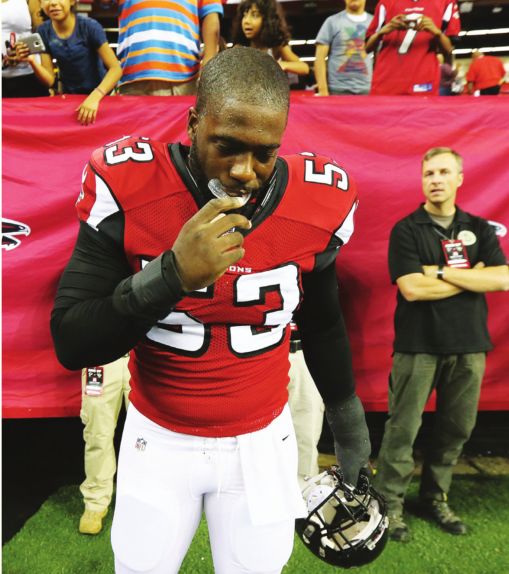
“If
one out of every 10 planes crashed or one out of every 10 surgeries
went wrong, wouldn’t we as a society want to do something about it?”
Golden said. “It’s time for us to think about what we should do to make
our system better. Ultimately, we want the same thing as prosecutors and
judges: we want to see the system work the way it’s intended to work.”
Recent victories
In
the 12 months between spring 2012 and spring 2013, IIP helped get three
wrongfully convicted people out of prison. The 2012 exoneration of
Jonathan Grayson of Aurora was especially noteworthy because it involved
the cooperation of police and prosecutors.
Previously
known as Jonathan Moore, Grayson was convicted of murder and two counts
of attempted murder in 2002, which resulted in a 60-year prison
sentence. Grayson’s case originated in August 2000 thanks to a pair of
shootings in Aurora. One of the victims survived and chose Grayson, then
age 20, out of a police lineup. Although the victim’s testimony in
court conflicted with that of another eyewitness, Grayson was found
guilty.
In January
2011, while Grayson was still serving his sentence, another shooting led
police to new suspects who possessed the gun used in one of the
previous shootings. A new eyewitness also came forward, and the Aurora
police and the Kane County state’s attorney reopened their
investigation. The investigation turned up new evidence and testimony
that discredited the original eyewitnesses, and Grayson’s conviction was
vacated.
Also in
2012, the Illinois Innocence Project saw the release of Anthony Murray
of Chicago, though that release was bittersweet. Murray was accused and
convicted of a June 1998 murder in Centralia and given a 45-year prison
sentence, despite inconsistent testimony from the key witness. The
evidence in Murray’s case has been contaminated by years of sitting
unsorted and commingled in shopping bags, so the chances of finding a
new means of proving his innocence were slim. After fighting to get a
new trial for 14 years, Murray, in consultation with the Illinois
Innocence Project, decided to take what’s known as an “Alford Plea,” in
which the defendant must admit to one criminal charge in order to avoid a
more serious charge. By pleading guilty to a second-degree murder
charge, Murray got credit for the 14 years he spent in prison and was
released on Oct. 31, 2012. He maintains he is innocent.
The
Illinois Innocence Project secured the release of a third person in
2013, this time through a clemency petition approved by Gov. Pat Quinn.
Peggy Jo Jackson, who now goes by her maiden name, Harshbarger, spent 26
years in prison for the murder of her former husband, William Jackson. The pair
lived in Mt. Vernon, and William was allegedly abusive to Peggy Jo and
their children. After William’s murder, Peggy Jo’s brother, Richard
Harshbarger, told police he shot William during a scuffle.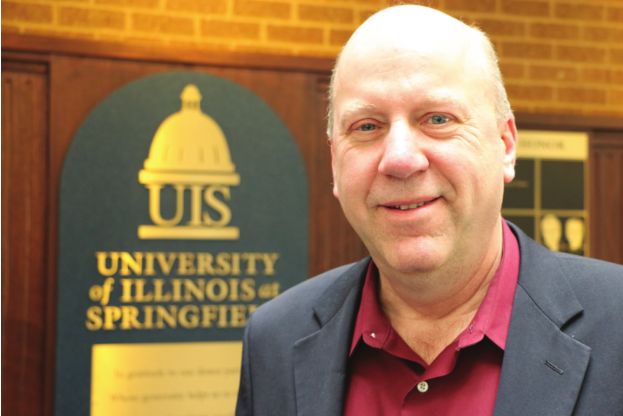
Along
with Richard, Peggy Jo was tried and convicted of William’s murder
because prosecutors said she asked Richard to kill her husband. The
prosecutor’s theory hinged on Peggy Jo not being upset enough about her
husband’s death, but medical records show Peggy Jo had been placed on
strong drugs to calm her trauma and treat her intense depression. The
drugs are credited with dulling Peggy Jo’s reaction to the murder. Peggy
Jo was also believed to have lied to police about not knowing William
was dead because Richard threatened to kill her if she spoke about it.
Richard died in prison in 2006.
The
Illinois Innocence Project helped Peggy Jo assemble a clemency
petition, gathering letters of recommendation from family, therapists,
prison officials and even her original public defender, who said the
case continues to haunt him because he was not experienced enough to
handle the case by himself. Gov. Pat Quinn approved Peggy Jo’s petition
in March 2013, freeing her from prison after 26 years.
A possible future exoneration
IIP
staff attorney Lauren Kaeseberg is working on a case that she hopes
will see a major advancement in the coming months. Details that would
identify the case have been withheld to avoid endangering an agreement
between IIP and the state’s attorney prosecuting the case.
In
the summer of 1993, an Illinois woman was found dead in her home,
stabbed 30 times in the bathroom. The police found the murder weapon,
along with several bathroom items which had blood on them. At the time,
DNA testing was still rudimentary, so blood samples and other samples
taken from under the victim’s fingernails were never tested.
The
police initially had no leads in the case, so they looked at the
victim’s phone records and found calls from a relative’s workplace to
the victim’s home around the time of the murder. The relative, a man who
was related by marriage to the victim, was a Mexican immigrant who,
along with his wife and children, spoke very little English at the time.
He quickly became the only suspect in the case.
Kaeseberg
says the detective who investigated the case was the only
Spanishspeaking officer in the area at the time. The detective
interrogated the victim’s relative, telling him that the police had
evidence linking him to the murder weapon and that his family would be
arrested if he didn’t confess. Kaeseberg says the detective also beat
the relative during the interrogation. In order to protect his family,
the relative agreed to sign a confession – written in English – on the
assumption that he could later take it back when he was no longer in the
detective’s presence.
The
detective served as an interpreter between the relative and the state’s
attorney who was prosecuting the case at the time. That means the
suspect’s words were filtered through the detective before they reached
the state’s attorney. Kaeseberg says the detective in the case is
suspected of producing false confessions and evidence in other cases.
The
relative was convicted and sentenced to life in prison, but Kaeseberg
and IIP believe he was innocent. The current state’s attorney has agreed
to allow DNA testing of the samples taken from the crime scene, which
could rule out the relative as a suspect.
Kaeseberg
says suspects in criminal cases are rarely seen sympathetically by the
public, so revealing problems – like the lack of an impartial
interpreter and untested DNA evidence – helps bring reforms.
“I’m
really passionate about this work,” Kaeseberg said. “Part of the reason
I find it so important is not only are we working on individual cases
of clients, working to clear their names, but if you look at the current
state of the criminal justice system, really the only thing that’s
causing systemic change is exonerations.
We apply what we learn from
these cases to the system, and it helps enable reform and legislative
change where it’s incredibly necessary. No one can deny the horrors of
an innocent person being convicted of a crime they didn’t commit, so the
visceral reaction to that problem actually forces change to happen.”
Addressing systemic problems 
In
order to prevent future wrongful convictions, the Illinois Innocence
Project also works with state lawmakers on legislation to correct
problems in the criminal justice system. IIP previously pushed
successfully for videotaping of interrogations, and the group currently
supports a bill that would allow criminal defendants who plead guilty to
obtain DNA testing of evidence in their case.
John
Hanlon, executive director and legal director for IIP, says most people
who plead guilty to crimes do so because they are guilty, but in cases
like the one Kaeseberg is handling, the suspect pleaded guilty out of
fear. Hanlon says the legislation would give people like Kaeseberg’s
client a chance to prove their innocence even if they already gave a
false confession.
The
Illinois Innocence Project opposes a separate bill that would codify a
controversial condition known as “shaken baby syndrome” into state law.
Shaken baby syndrome is often cited by doctors and prosecutors to
explain infant deaths when the child has a “triad” of symptoms: brain
bleeding, brain swelling and retinal bleeding. In those cases, the last
person to care for the child is typically charged with murder on the
theory that they shook or even hit the baby. However, many of the cases
labeled as shaken baby syndrome involve other medical conditions that
predated the triad of symptoms, and new research shows that old
assumptions about shaking infants may be misguided.
IIP
is working on at least one case involving shaken baby syndrome. Pamela
Jacobazzi is currently in prison at Logan Correctional Center in Lincoln
for the 1994 death of 10-month-old Matthew Czapski of Bartlett, Ill.
The Illinois Innocence Project believes Jacobazzi is innocent because
Matthew Czapski had pre-existing medical problems that may explain his
death.
An uphill battle
Larry
Golden, IIP’s founding director, says obtaining an exoneration is an
arduous task, from unearthing new evidence to simply getting a judge to
grant a rehearing.
“Every
step, from allocating resources for help to viewing their claim of
innocence in a favorable light, is actually resisted,” Golden says. “The
system is just set up that way, so it’s a struggle. What that means is
that the simplest of motions is likely to be denied. The work that goes
into a given case is going to span years.”
That
means the Illinois Innocence Project must rely heavily on grants and
long-term community support; the organization receives no money from
UIS. Golden sees a contributions to IIP as an investment that saves
money by reversing wrongful convictions. IIP estimates that taxpayers
paid more than $1.5 million to keep Jonathan Grayson, Peggy Jo
Harshbarger and Anthony Murray behind bars until they were freed.
Statewide, the Chicagobased Better Government Association says it cost
taxpayers more than $214 million to keep 85 wrongfully convicted people
behind bars for a collective 900 years of prison time.
“We
become very intertwined with these people,” Golden said. “The work we
do ultimately involves personal investment that creates a bond between
the students, the staff and our clients. It’s a very unusual situation.
They are not just clients; they become almost part of our family. There
is nothing more gratifying than walking a person out of prison who you
know is innocent and giving them a piece of their life chances back.
It’s a feeling that cannot be described in words.”
Contact Patrick Yeagle at [email protected].
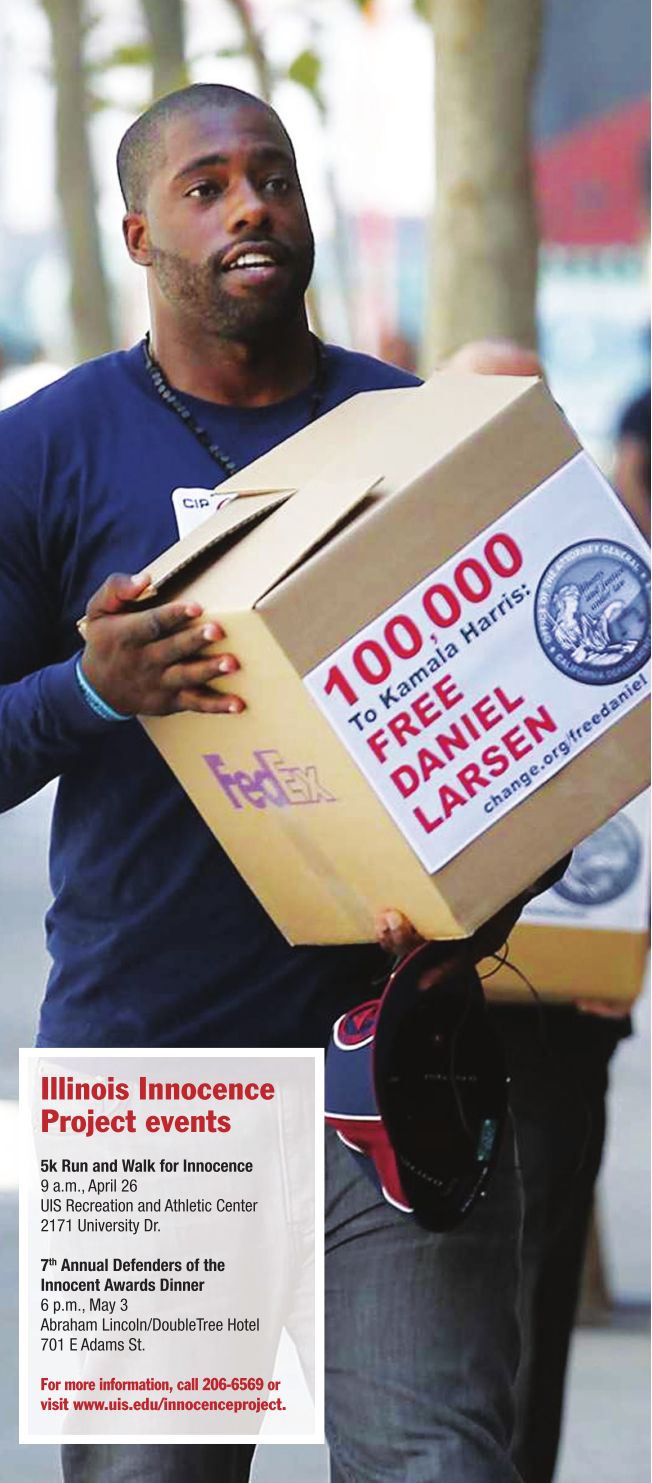
Brian Banks spent five years in prison for a rape that never occurred, but he was freed with help from the California Innocence Project. Banks is shown here carrying petitions calling for the release of another prisoner in California whom some believe to be innocent. PHOTO BY BRIAN VAN DER BRUG/MCT


