
Eat real. Move more.
The genHkids campaign to get children healthy
HEALTH | Tom Irwin
As a response to what was being called an epidemic of obesity in America, Dr. Kemia Sarraf felt it was time to take action in Sangamon County. It was 2008. With Illinois near the bottom of average state rankings for overweight kids and as national child obesity rates approached 30 percent, the danger was obviously real and ominously present in our community. Concerned folks around the nation, from the White House down to the local schoolhouse, rallied to increase awareness of the issue and began implementing programs to educate people in healthy lifestyles.
In Springfield, Dr. Sarraf, backed by a lifetime of dedication to social health issues, determined that a coming together of area businesses, organizations and individuals could implement life-healthy concepts to improve the situation locally. She conceived the idea of helping to create and encourage a healthy generation she called “Generation Healthy.” So “genHkids” became a reality.
“GenHkids was born out of what I felt was lacking in Sangamon County. I discovered others who felt the same way – that we needed a partnership coalition approach to combat childhood obesity and other related problems,” Dr. Sarraf explained. “I am a true believer that collaboration will bring us much closer to a solution. Every one of us holds a piece of the puzzle that will ultimately create a healthy community.”
The program continues to grow from concept to reality as the original group of Dr. Sarraf and several mostly young mothers as core volunteers, transforms into a mature nonprofit organization. Now with full-time staff members, a governing board and several community business members, all working together for a healthier, more active world, the genHkids Coalition moves forward in Sangamon County. The results of decreased disease rates and other outcomes may not be fully appreciated for lifetimes to come, but some immediate improvements are obvious.
The year 2013 was a successful and expansive year for the organization. From inaugurating fundraisers and raising community awareness, they were able to hire full-time staff members for the first time. For the first three years there was only one part-time staffer and several volunteers – including Dr. Sarraf, who has always worked on a volunteer-only basis – keeping the ideas afloat. Last year they launched two major initiatives, a K-8 school lunch makeover in the Ball-Chatham district and a permanent community garden area off of East Cook Street. The organization headquarters, located in a second story
office near Chatham Road and Wabash Avenue, is a bubbling hub of
activity with committed staffers and volunteers on the go. Dr. Sarraf
leads the way with her unstoppable enthusiasm and unwavering dedication
to the goal of healthy kids and healthy families everywhere.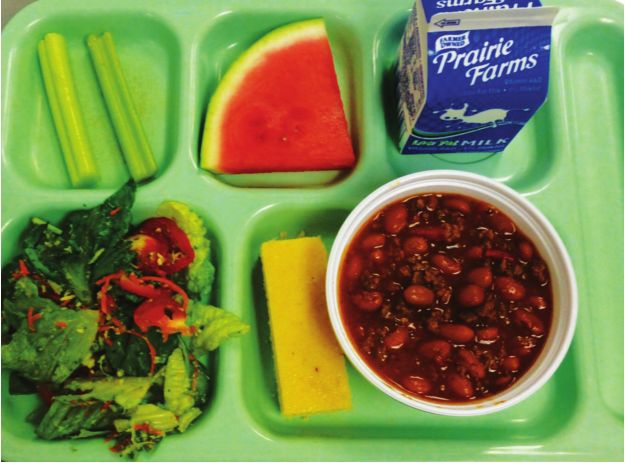
“When
it comes to our children, I haven’t met anyone who threw their hands up
in the air and said they don’t care or don’t want to do anything to
help out,” she said. “Everyone cares about children, and through that we
can reach out to consider how to build healthier communities to benefit
us all.”
The list of
organizations working together under the umbrella of genHkids is
amazing, powerful and diverse, including groups from national, state and
local levels. No place shows more of what can happened when concerned
individuals from all walks of life and levels of society converge to
work on a problem than in the Ball-Chatham school lunchrooms. The school
district gave genH Coalition a generous opportunity to implement a
program directly in the school kitchens. There the food, before mostly
prepackaged, highly processed and reheated, now comes fresh, cooked from
scratch by trained school chefs. The results are stunning and prove
that, if given the choice, kids will eat quality, healthy foods. As a
bonus, the working adults enjoy learning and using the skills necessary
to prepare the meals as well.
“I
can’t say enough about the administration that allowed us to come in
there and the women in the kitchens who worked tirelessly to come up
with workable menus,” Dr. Sarraf said. “They’re seeing results in
academic performance, with more responsive and alert students. The chefs
and kitchen staff members trade menus and ideas, making the workplace
more enjoyable. We are now feeding nearly 3,200 kids under this
program.”
Economics is
an important factor in the success of a program like this. GenHkids
makes sure the schools do not incur extra expense through mandating
programs and leaving the school alone to complete the task. The
coalition of organizations working together to implement the program,
along with genHkids staffers to help in the transition, is essential in
accomplishing the mission, according to Dr. Sarraf. With budget crunches
becoming more like budget demolitions, any extra cost or extra work can
be seen by some as unnecessary steps in a system that is already
complicated and expensive.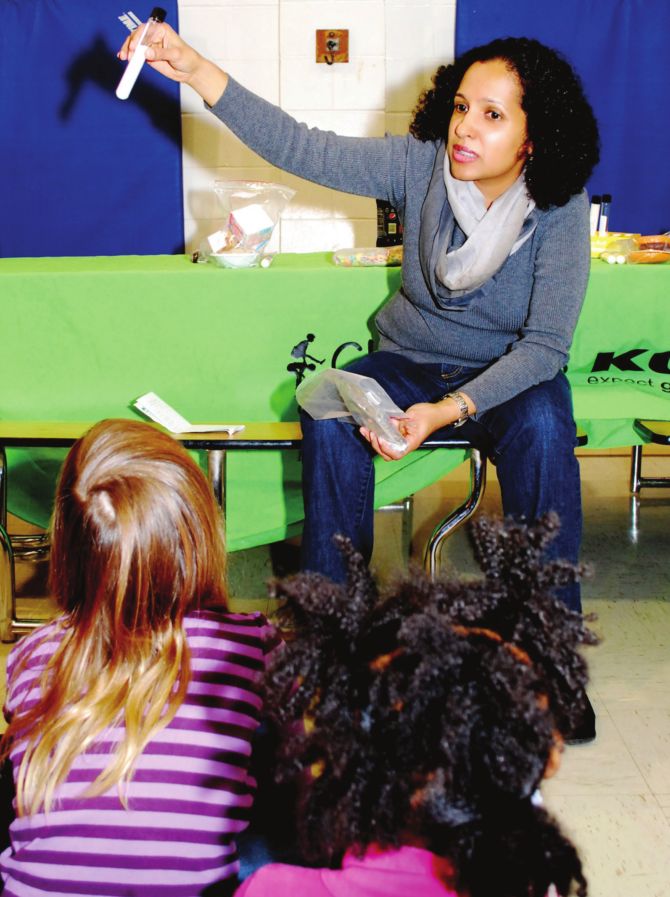
When
outsiders come in to “improve” a situation, care must be taken to
explain the desperate nature of the childhood obesity problem. When
school menus are changed, everything from getting kids to try new things
on the menu (taste buds get used to lots of sugar and salt in processed
foods) to getting food vendors to understand the changes (it’s easier
to ship and sell a huge can of green beans than to get them fresh) come
into play. But nothing succeeds like success. The school district is
behind the genHkids project all the way as improvements in student
actions are obvious.
Recently
Springfield’s School District 186 allowed the genHkids Coalition to
implement a similar program at Matheny Elementary School. The hope is
that it can spread from there once it becomes established and
successful.
In 2011,
U.S. government guidelines on types of food served in school lunches
were altered for the first time in 15 years. In a period of budget cuts,
school districts were required to increase whole grains, green leafy
vegetables, fruits and other healthy alternatives and decrease students’ of sodium and sugar. With
some 60 percent of District 186 students receiving some type of reduced
fee lunch, and assuming students whose families can’t pay for school
lunches may also be having trouble affording nutritious meals at home,
the need for healthy, appetizing food at schools becomes more important
than ever. Dr. Sarraf doesn’t feel the guidelines go far enough in
caloric restrictions and using “real” food. She approaches the subject
with an attitude of caring, community responsibility, saying we should
put our money where our children’s mouths are.
“GenHkids
is a child-based initiative and children are in our schools nearly
every day. Districts are utilizing our tax dollars to make food
purchases to feed these children, so I believe we as a society have a
moral and ethical obligation to make sure the calories we feed these
children are healthy, nutritious calories,” she stated. “At-risk and
lowincome children that are in our care, who sometimes do not get meals
at home, are even more vulnerable to poor nutrition. They deserve the
right to be fed real food whenever they eat at school.”
The
genHkids Coalition concentrates on nutrition in schools simply because
more kids are reached there than elsewhere and children are the focus of
the organization. But there’s more going on in this kitchen than just
cooking. Plenty of studies show our students sit too much and aren’t
allowed or expected to move around. “Eat Real/Move More” is the official
slogan and mantra of genHkids. Along with the concept of healthy meals,
the group works to bring helpful ideas into the classroom, encouraging
more physical activity. Kids act up less when they simply have recess
before lunch. As obvious as it may sound, the kids run off energy, get
an appetite for healthy foods and then behave better in the lunchroom.
Other programs such as Brain Breaks (getting out of the desk chair and
moving around several times a day helps the kids be active and
concentrate on school work) and Jump Start! (12 minutes of vigorous
exercise first thing in the morning) are included in the “Move More”
side of the genHkids concept.
 From
the “Eat Real” list comes Destination Dinner Table, a program that
helps families relearn lost skills such as shopping for fresh food and
cooking kid-friendly meals in about 20 minutes. Part of the success
comes from the clever and witty names of the programs offered. The
school meal program like the one used in Ball-Chatham is officially
titled “C4” (Chefs Creating Cafeteria Classrooms). “My Choice Challenge”
brings a “schoolwide health education fair” into school to teach
precepts of a healthy lifestyle. The Coalition is also implementing food
growing programs with “Healthy Seeds” and “Grow Your Own Grub” Clubs
offered in the schools to get kids digging in the dirt and raising crops
on school ground. “Seeds of Possibility,” a community garden on
Springfield’s East Side where local union workers are contributing time
to aid in tilling the ground, installing irrigation and building raised
beds, allows for genHkids and community members to create and tend
private garden plots. All this is done without cost to the schools or
the participants. Donations from businesses and individuals and
volunteer workers make it happen.
From
the “Eat Real” list comes Destination Dinner Table, a program that
helps families relearn lost skills such as shopping for fresh food and
cooking kid-friendly meals in about 20 minutes. Part of the success
comes from the clever and witty names of the programs offered. The
school meal program like the one used in Ball-Chatham is officially
titled “C4” (Chefs Creating Cafeteria Classrooms). “My Choice Challenge”
brings a “schoolwide health education fair” into school to teach
precepts of a healthy lifestyle. The Coalition is also implementing food
growing programs with “Healthy Seeds” and “Grow Your Own Grub” Clubs
offered in the schools to get kids digging in the dirt and raising crops
on school ground. “Seeds of Possibility,” a community garden on
Springfield’s East Side where local union workers are contributing time
to aid in tilling the ground, installing irrigation and building raised
beds, allows for genHkids and community members to create and tend
private garden plots. All this is done without cost to the schools or
the participants. Donations from businesses and individuals and
volunteer workers make it happen.
Supporting
businesses and organizations range from Lincoln Land Community College
and St. John’s Hospital to the Central Illinois Boys and Girls Club to
the Greater Springfield Chamber of Commerce, and many, many more. Along
with the generous donations and support already given, genHkids hosts a
couple of fun fundraisers annually. In the fall, there’s the Mad Mud
Dash with food, games, live
music and plenty of mud to play in for a donation. On Saturday, May 3,
the group sponsors its second annual “Savor” at the Longbridge Golf
Course with live music, a “CHOPPED” style chef’s competition and plenty
of donations from folks like you who need to support an organization of
this caliber and importance.
Here
are some important and staggering statistics as stated in genHkids
promotional material. Our current younger generation is on track to be
the first generation in modern history to have a life expectancy less
than their parents. Obesity in Americans has tripled in the last 30
years and will soon replace tobacco as the leading cause of preventable
death in the United States. Malnutrition and inactivity likely have more
to do with low test scores and learning disabilities in schools than
inadequate teaching skills or inferior academic materials. Obesity and
overweight issues continue to add to our burdened health care system and
even affect our military, as more than 30 percent of potential recruits
are turned down because of unhealthy weight status. As Dr. Sarraf sees
it, the bigger problem of a country killing itself through poor eating
habits and lowered physical movements can best be helped, and hopefully
cured, by local individuals working together.
“We
need to understand we can solve national problems best on a local
level. We as citizens here need to figure out what works for our
community and from that develop a toolkit for other places to use and
build their own system for problemsolving,” she stated. “How do you
began to build healthier people and encourage change toward a life of
nourishment? We can do it by teaching, by working together, by caring
and by educating and empowering. A whole generation of children is at
risk. I don’t want this to be my organization. I want this to be our
organization. That’s where the power comes from to accomplish our goals,
as a community working as one caring group.”
Contact Tom Irwin at [email protected].


