Cash helps Rauner climb
It wouldn’t be Illinois politics without money and drama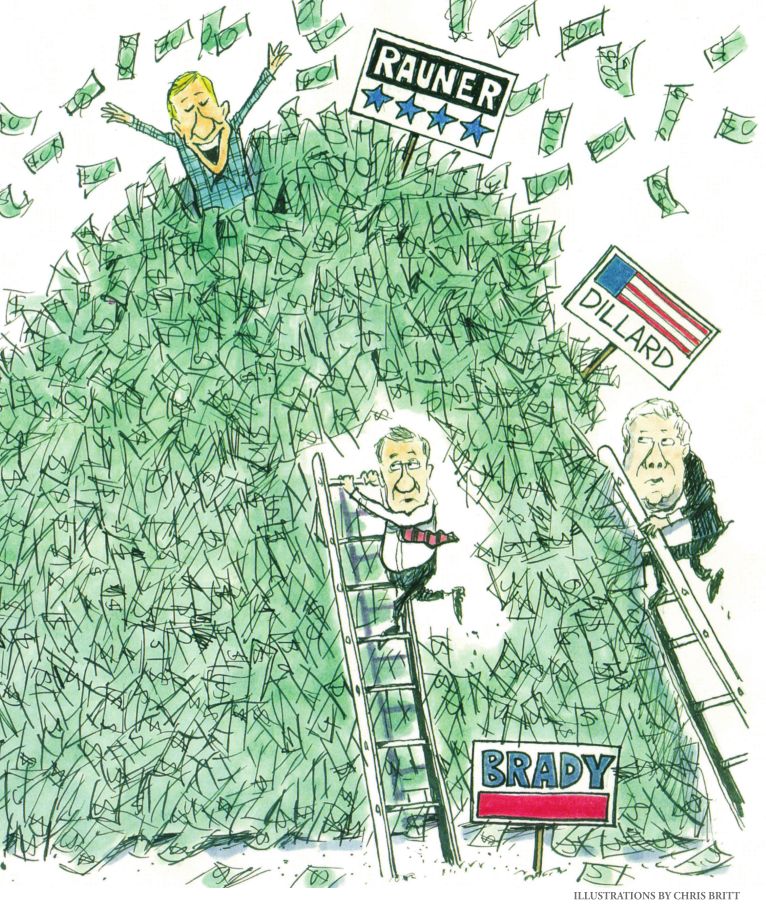
PRIMARY | Lauren P. Duncan
On the day Gov. Pat Quinn gave his annual State of the State address, which was preceded by all of its usual pomp and circumstance, Republican gubernatorial primary candidate Bruce Rauner stepped into the Illinois House of Representatives gallery to take one of the few open seats on the Republican side. Heads across the room turned and reporters’ Twitter feeds of the event proclaimed Rauner was in the House.
This year’s gubernatorial candidates have several distinguishing attributes. But if there’s one candidate who stands out from the others for a particular reason, it’s Rauner. The reason? He has money, and lots of it.
Money matters as much to a candidate as water to a fish. It often determines how many resources one can pour into attack ads or how much a candidate can travel. Ultimately, money means name recognition.
As the only candidate who has been able to afford a series of television advertisements, Rauner gets a bonus: face recognition.
While the candidate drew some attention at Quinn’s speech on Jan. 29, less than a year earlier, he had close to none.
A February 2013 Paul Simon Public Policy Institute poll asking citizens who they’d vote for placed Rauner in last place among eight possible candidates, including present contenders Sen. Bill Brady, Treasurer Dan Rutherford and Sen. Kirk Dillard. Zero percent of respondents said they would vote for him. One year later, a Chicago Tribune/WGN Poll taken Feb. 5-8 showed Rauner had a 20-point lead over the second place candidate, Brady.
Rauner holds a lead in fundraising as he does in the polls. His three opponents in the race as of mid-February have all been sorely beaten by Rauner’s fundraising.
Between June 1 and Feb.
24, Rutherford has taken in about $1 million and Dillard has brought in about $650,000. Brady reported he had about $211,000 in his accounts on Dec. 31 and his committees have reported only about $18,000 in contributions this year.
In total, the three candidates have had about $1.8 million to work with since last summer.
Meanwhile, Rauner has raised more than $12.7 million, including $5 million from himself. Additionally, he has launched a committee for term limits, which has raised more than $1 million.
Personal wealth
Between early 2013 and today there have been several ways for the public to get to know the once unknown candidate, the only one who doesn’t have experience in Springfield. Or, as Rauner has spun it, he’s the only candidate who isn’t an “insider.” There have been press reports, debates and ads, and he has traveled around the state touting his campaign theme, “Shake Up Springfield.”
Under “Shake Up Springfield,” the candidate is pushing for a number of reforms, including term limits. He’s proposed a constitutional amendment that legislators be allowed to serve no more than eight years. He’s stated he’ll cut down on pensions and Medicaid costs, but hasn’t specified how or how much. His stance on the minimum wage has changed after he once stated he would lower it. He told the Chicago Tribune editorial board that he supports an increase if there are “very significant pro-business reforms.”
Perhaps
the pro-business candidate’s biggest push has been to limit special
interest group involvement in government. Rauner seems to mean “labor
union” when he speaks of special interests, as he has accepted campaign
funds from private businesses. At the Springfield debate, Rauner said he
isn’t “against the existence of unions,” but rather, he wants to
restrict union power. He said he thinks government employees should have
a choice of whether to join a union. Throughout his campaign, he has
referred to “government union bosses” and their influence in
Springfield.
To
reinforce his commitment to reduce union power, he’s vowed to not take
money from special interest groups, which contrasts with one of his
leading competitors, Kirk Dillard, who has accepted union endorsements
and money for his campaign. Rauner has pointed to groups such as the
American Federation of State, County and Municipal Employees (AFSCME),
the Service Employees International Union, teachers’ unions
and even trial lawyers, as organizations that “own the Democratic
party.” Rauner’s website goes on to state: “I’m not interested in a
political career and don’t need money from special interests.”
He doesn’t need the money. He already has it.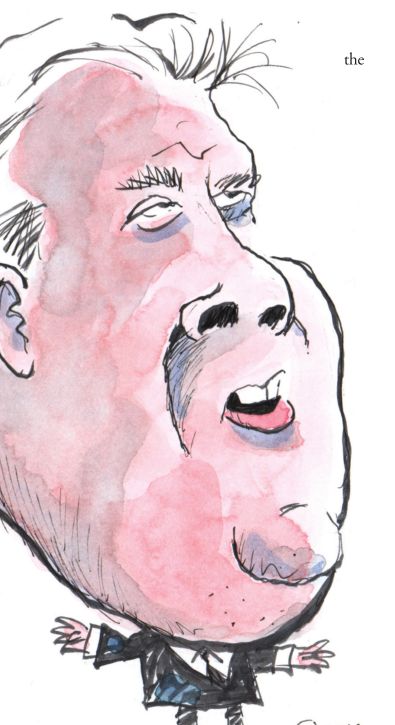
Rauner’s
personal wealth far exceeds that of any other of this election’s
candidates. Before retiring in 2012, he was chairman at private equity
firm Golder, Thoma, Cressey, Rauner (GTCR), which invests money in
startup companies. His investments go far beyond GTCR. His statement of
economic interests shows he has stock or partnership in more than 100
companies, including the Chicago Bulls. Rauner said he brought in more
than $53 million in personal wealth in 2012, more than $1 million a
week. With the average Illinois household income that year at about
$55,000, Rauner made more than 3.5 times more money in one day than the
average Illinois household brought in during the entire year.
Despite
the candidate’s frankness about his personal income, he’s been
campaigning on the image of a hardworking guy who pulled himself up from
his bootstraps. While on the road, he shares the story of how, while in
college, he flipped burgers and parked cars to get through school. He
went on to earn a master’s of business administration from Harvard
before moving back to Illinois and joining a startup investment company
called Golder, Thoma, Cressey, where he later became partner, renaming
it Golder, Thoma, Cressey, Rauner. The 57-year-old is now chairman of a
firm he formed, R8 Capital Partners. He and his family live in Winnetka,
a northern lakeshore suburb, where the median home value is close to $2
million. In addition to the Winnetka mansion, the Chicago Tribune reported
he owns a penthouse in downtown Chicago and one near New York’s Central
Park, a villa in the Florida Keys, a condo in Utah and ranches in
Montana and Wyoming.
The
Chicago multimillionaire has attempted to relate to rank and file
voters by presenting himself in a modest way. In one of his first
television ads, he touted his cheap $18 watch. In another commercial
shared online, while sporting his trademark Carhartt vest, he pulls out a
brown bag lunch. On his January trip around southern Illinois, he
stopped by diners and farm bureaus, where he emphasized his “Average
Joe” persona.
Regardless
of whether the businessman actually wore an $18 watch before the
campaign season began, there’s a flip side to the “Average Joe” image;
he’s a philanthropist. Rauner has used his wealth to pour money into
charitable pursuits such as education. For example, the Chicago Sun-Times reported he’s given about $2.5 million to the Noble
Network
of Charter Schools in Chicago, which translated into one school being
named the Rauner College Prep school. Wealth has both shaped his image
and benefited his campaign.
Rich connections
Throughout
the race, Rauner received negative attention he might not have if he
were not wealthy. He’s been labeled by some pundits as “Bruce Romney,”
because he and Mitt Romney are both rich venture capitalists. He has
continually faced allegations that he used his influence to get his
daughter into one of Chicago’s most expensive prep schools. The subject
might have been dropped if the candidate hadn’t crossed his lines and
mixed up his message.
Rauner
has reported that his daughter deserved to be admitted but a temporary
illness prevented her initial acceptance to Chicago’s prestigious Payton
Prep school. He’s been accused of making a call to his friend Arne
Duncan, the U.S. education secretary, to help his daughter be admitted
in 2008. A year after she began attending, he donated $250,000 to the
school.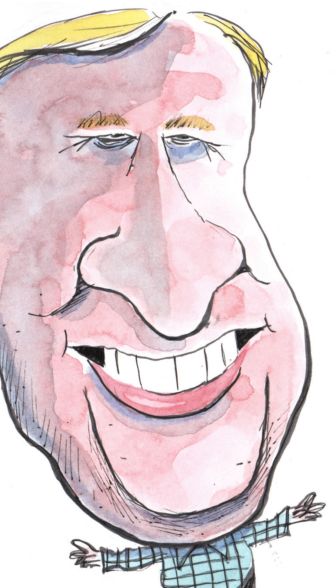
Last year he said he never talked to Duncan. But he told the Chicago Tribune editorial
board on Feb. 3: “I think at some point we definitely talked about
this, but at no time did I ask for any special treatment or special
favors.” At the Feb. 18 debate in Springfield, he said he couldn’t
remember whether it was him or his wife who talked to Duncan. “The fact
is it was a minor issue because we didn’t ask for any special favors,”
Rauner said.
The
attention the press has given to accusations of Rauner using his
connections for his daughter’s benefit has brought up concerns about the
candidate’s honesty. It also points to the fact that he’s “friends”
with one of the nation’s cabinet members. The situation shines light on a
truth that has become clearer as the campaign has unfolded: the man is
connected.
Fundraising
About
50 wealthy individuals have donated $25,000 or more to Rauner’s
campaign committee. Donors include Henry “Hank” Paulson, former U.S.
Treasury secretary under George W. Bush and former CEO of Goldman Sachs.
There’s Eric Lefkofsky, CEO of Groupon; Richard Dennis, Wall Street
trading legend; Illinois’ leading Republican donor Richard Uihlein;
Alexander Stuart, of the family that founded Quaker Oats Co.; and
Anthony Kerasotes of Kerasotes movie theaters. There’s also the Crown
family of Chicago, which holds ownership in Hilton Hotels, Rockefeller
Center, the Chicago Bulls and more.
Rauner
received donations from Joe Mansueto, founder and CEO of Morningstar,
Inc., who in 2011 made Forbes’ World’s Billionaires list, and Dmitry
Godin, a mortgage company CEO, who in August bought a $13 million home,
reportedly the highest-priced home sold in the Chicago area in 2013.
There is Jeffrey Hammes, partner of one of Chicago’s richest and most
influential law firms, Kirkland and Ellis, which once represented Mitt
Romney’s Bain Capital. This list goes on. If you look at Rauner’s top
contributors, you’re going to find some of Forbes’ wealthiest and a few
former Goldman Sachs executives.
There’s
also Ron Gidwitz, who ran for the GOP nomination for governor in 2006.
Gidwitz is now the finance chairman and cochair of Rauner’s campaign.
Wealth did not translate into a win for Gidwitz. Is Rauner’s
multimillion-dollar investment in himself likely to pay off, or will his
progress fall flat in the end like Gidwitz?
According
to campaign finance expert and University of Illinois Springfield
professor Dr. Kent Redfield, Rauner is doing something different than
many wealthy candidates: he’s using his money wisely and listening to
his experienced advisors.
“Money
allows you to make up for deficits in terms of having organizations and
structures and name recognition and a whole bunch of things,” Redfield
said. “Rauner has hired very good people and he’s listened.”
Whether
it has come from his staff’s advice or not, one thing Rauner has done
to avoid controversy is dodge the press. His campaign staff did not
respond to attempts by Illinois Times to get in touch with
Rauner. At the Springfield debate on Feb. 18 where Brady, Dillard and
even a pressured Rutherford took questions from the press, Rauner did
not stay.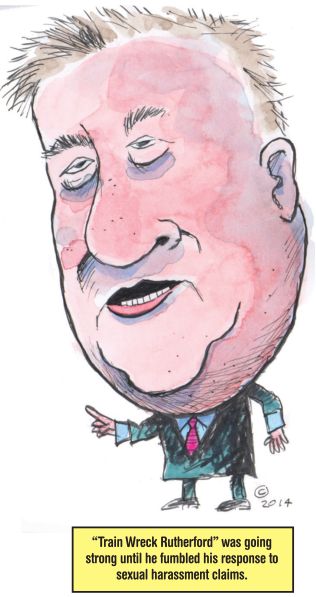
Additionally,
while the other candidates signed on to participate in most of the
debates, Rauner announced in January that he would commit to only five
debates for the primary, although he participated in an additional one
in Peoria that month. The next two debates he is set to take part in are
Feb. 27 and March 4, both in Chicago. The public will also get to learn
more from Rauner’s lieutenant governor running mate, Evelyn
Sanguinetti, an attorney of Hispanic descent, in a March 6 forum. Like
Rauner, Sanguinetti has limited experience in public office. Her only
elected position has been on the Wheaton City Council where she has
served since 2011.
Refraining
from close contact with the media is one way for a candidate new to the
campaigning field, especially one in the lead, to avoid risking any
negative attention. Redfield said because the other three opponents have
not been as organized and because Rauner has not had many negative
images portrayed, he’s on the right track to win the primary. That
doesn’t mean it’s in the bag.
“People with money always beat people without money, but the person with the most money doesn’t always win,” Redfield said.
Pay to play
Negative
attention is creeping up on the firsttime campaigner. The Illinois
Freedom Political Action Committee, a committee funded by unions against
which Rauner has voiced staunch opposition, put out an advertisement
Feb. 11 that portrays Rauner’s alleged ties to Blagojevich “crony” Stu
Levine who was sentenced for criminal scheming in 2012. The ad claims
“Levine voted to help Rauner’s firm get $50 million in state pension
funds.” According to a fact sheet from Rauner’s campaign, it wasn’t just
Levine who voted yes to invest Illinois Teacher Retirement System funds
in GTRC, it was a unanimous vote by the system’s board. Rauner’s
campaign has called the ad a “desperate attempt to smear Bruce Rauner.”
A
week later the union PAC put out another ad about Rauner’s alleged ties
to abuse and neglect of seniors in nursing homes the candidate’s former
company had helped finance. GTRC invested in Trans Healthcare, Inc.,
which owns nursing homes in Florida. The company has been accused of
causing death to residents due to neglect or abuse. Families of the
victims sued and won in court.
Rauner
says the attack comes as a result of the unionfunded committee’s fear
of his plans to reduce the involvement of special interest groups in
Springfield and his plan to have a referendum that would institute term
limits.
In addition to
the expected coming onslaught of attack ads between the Illinois
Freedom PAC and Rauner, candidate Rutherford, the only competitor who is
believed to have enough money to pay for TV ads, announced Feb. 19 that
he had canceled some of his reserved ad spots. The cancellation came after
a former state employee brought allegations of sexual harassment
against Rutherford. Rutherford’s refusal to release an investigation
into the allegations that he had previously announced would be made
public has shattered his campaign.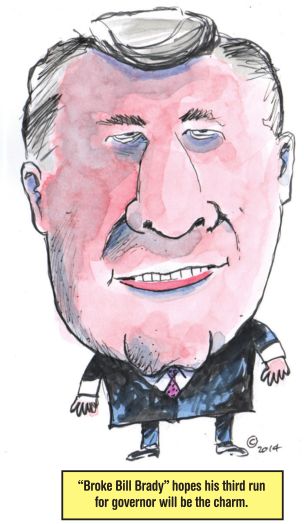
Because
the one candidate who could afford ads has at least temporarily
stopped, the job of slowing Rauner’s momentum has come down to the
union-backed Illinois Freedom PAC.
The race
Despite
Rauner’s recent lead in polls, a majority of Republican voters are
still undecided. As Paul Simon Public Policy Institute Director David
Yepsen said, there’s still time for a change before the March 18
primary.
“Despite all
of this money he’s spent, there are a lot of people who aren’t with
him,” Yepsen said. “And so he can’t let up yet. Those people could rally
behind somebody else and make this a race.”
Kirk
Dillard has union support, which Rauner says makes Dillard a
Springfield “insider.” Dillard has the support of the Illinois Education
Association in the primary, a boost for Dillard, considering teachers
are generally Democratic voters. Because many teachers weren’t pleased
with pension reform passed in December by the Democratic-majority
General Assembly and signed into law by Gov.
Pat Quinn, Dillard is hoping teachers will stick with him.
While Dillard had the least amount of support in the early February Tribune/WGN- TV
poll, an informal poll on Rich Miller’s Capitol Fax on Feb. 21 showed,
of readers who had taken the poll that day, about 28 percent thought
Dillard will win, and 59 percent thought Rauner will come out on top.
Brady had 9 percent and Rutherford came in at 4 percent.
Dillard
has confidence in himself. On Feb. 20 he called on Brady and Rutherford
to drop out in order to rally more support against Rauner.
“I
think all three of those candidates would like to see the other two
drop out,” Yepsen said. “The fact is, all three of those people, this is
their shot. It may be hard for them … you spend your whole lifetime
preparing to run for governor; you don’t just fold your tent very
quickly at the first sign of adverse headwinds.”
The
primary is March 18. Until then voters have the chance to make up their
minds. Their choice could prove how much the money really matters in
this election.
Lauren
P. Duncan is a graduate student enrolled in the University of Illinois
Springfield’s Public Affairs Reporting program. Since beginning an
internship at Illinois Times in January, her reporting has
focused on state legislative issues. She is a native of a small southern
Illinois town, Dix, and graduated with a journalism degree from SIU
Carbondale. Her previous reporting experience includes work at SIU’s
student paper, Daily Egyptian, and two years of reporting at the Mt. Vernon Morning Sentinel.
To see a breakdown of fundraising totals, visit www.illinoistimes.com


