
Alienation and loss dominate
FILM | Chuck Koplinski
The more things changed, the more they remained the same for American movies. Superhero fi lms and sequels still held sway at the box offi ce as the top fi ve grossing movies fell into one of these two categories, while more IMAX and other large screen venues were built than in any other year on record. Meanwhile, the 3-D format seemed to be losing its appeal among fi lmgoers (grosses for movies in 3-D fell by nearly a third) as many patrons got tired of paying the extra fee for those plastic glasses that you couldn’t reuse and determined that seeing movies in a standard 2-D presentation was good enough. Viewers were still enamored with IMAX screens, as more fi lms than ever were presented in these massive auditoriums, while attendance continued to rise. The jury’s still out on the latest innovation (read: money-grab) ponied out by the studios, the D-BOX. This automated chair, programmed to move, sway and shake in a way that matches the action on the screen, was hardly embraced by theater chains. Most multiplexes had these seats installed in only one of their auditoriums. Distributors have reason to doubt that this latest fad will catch on as it costs an extra $6 to have the D-Box experience.
There were fi lms that I liked but the moviegoing public didn’t (Admission, Jack the Giant Slayer, The Internship, Oldboy, Pacifi c Rim, Pain and Gain, Rush, Side Effects, Trance), those that the public liked but I didn’t (Fast and Furious 6, G.I. Joe: Retaliation, The Heat, Identity Thief, Insidious: Chapter 2, Now You See Me, The Purge, We’re the Millers) and others that no one liked (After Earth, Broken City, Bullet to the Head, The Counselor, The Host, The Last Stand, The Lone Ranger, R.I.P.D., Runner, Runner).
Animated fi lms remained popular as did superhero features; however entries in the science fi ction genre were the most innovative as Gravity broke new cinematic ground with its radical visual aesthetic, Her took an unfl inching look at how technology allows us to retreat from reality with devastating emotional results, while Pacifi c Rim, Star Trek into Darkness and World War Z proved that as long as a degree of intelligence is applied to wellworn narrative formats, fantastic results were still possible.
If there was a prevailing theme in American fi lms this year it was that technology has led to isolation and in our modern age we’ve never felt more alone. Gravity, All is Lost, Her and Spring Breakers all dealt with this in one fashion or another, while loneliness was the driving force behind 12 Years a Slave, Inside Llewyn Davis, Mud, Nebraska and The Secret Life of Walter Mitty. This idea is present in nearly every one of my choices on this list, with many of these fi lms being cautionary tales containing lessons we’d be foolish not to heed.
1. American Hustle
Director David O. Russell continues his hot hand as he follows up The Fighter and Silver Linings Playbook with this somewhat true account of the FBI’s Abscam Operation from the late 1970s, providing us with a modern, jaded view of the American Dream. Con artists Irving Rosenfeld (a never better Christian Bale) and Sydney Prosser (Amy Adams) are roped into helping FBI agent Richie DiMaso (Bradley Cooper) set up a sting in which unsuspecting politicians are caught accepting bribes in exchange for their influence. As the film unwinds, Russell throws curve after curve at us; we’re never certain whom to trust as the characters switch allegiances at the drop of a hat. Ultimately, this tale of modern greed and self-preservation is a portrait of damaged souls who end up fooling themselves in their pursuit of the almighty dollar with their consciences being treated as just so much collateral damage. Hustle is not only a wickedly funny film but also a breathless, smart exercise that examines the dark side of modern American life in which success is won by hook or by crook and only losers stop to think about the consequences of their actions.
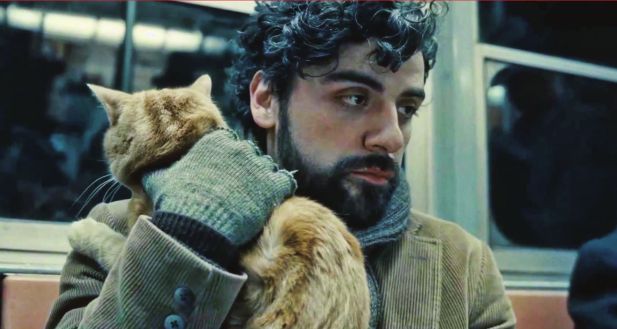
2. Inside Llewyn Davis
The
Coen brothers’ ironic look at a struggling artist’s efforts to make it
big in the folk music scene of the early 1960s bears the filmmakers’
trademark brand of cynicism yet also manages to be a tribute to those
who persist in the face of crushing adversity. Oscar Isaac in the title
role somehow manages to charm us despite the fact that his character is a
smug, self-serving lout who sports a condescending air as he goes
singing from one club to the next and sleeping on one friend’s couch
after another’s. Davis has talent to spare, but could it be that because
he’s a morally questionable person, the fates have conspired to thwart
his success? The filmmakers seem to be suggesting this, yet also tip
their hat to anyone like the musician who’s able to stay true to their
dreams, finding a bit of nobility in what others would call a fool’s
errand.

3. The Secret Life of Walter Mitty
Ben
Stiller’s modern update of the James Thurber classic is unabashedly
corny, optimistic and sentimental. As a result, it winds up being a
daring statement in these knowing cynical times. It embraces the notion,
with nary a bit of sarcasm, that life is only worth living if you’re
willing to take chances. The film uses the death of the print format of Life magazine
as an effective metaphor for change as Mitty, the publication’s picture
archivist, is seen as an anachronism in our modern age; his very job is
outdated as is his modest way of life. Circumstances force our hero out
of his comfort zone and he learns the hard lesson that only through
taking chances can we ever hope to achieve anything of worth. This is a
beautiful film, both thematically and visually. It is a life-affirming
exercise that’s the rare Hollywood product – firm in its convictions and
sincere in its intent.

4) Before Midnight
Director
Richard Linklater’s radical cinematic exercise, in which we follow the
development of a relationship between two characters over the course of
multiple films, enters a new phase as the couple in question – author
Jesse Wallace (Ethan Hawke) and his muse Celine (Julie Delpy) – are now a
married couple with kids and life’s day-to-day grind has taken the
bloom off the rose of their romance. The way the two performers – who
serve as cowriters as well – interact has a seamless quality to it that
suggests they are a couple that has grown tired of one another, know
each other’s faults and secrets and have reached a breaking point for
each other’s deceptions. There’s an organic feel to the film that
creates an uncomfortably realistic tone, as if we’re eavesdropping and
witnessing the potential end of a relationship. The Wallaces’ troubles
are universal, their story is ours and in holding nothing back,
Linklater and his two leads deliver the most poignant love story of the
year. They eschew romantic conventions, opting instead for an
unvarnished look at what helps a relationship survive as well as what
can kill it in its tracks.
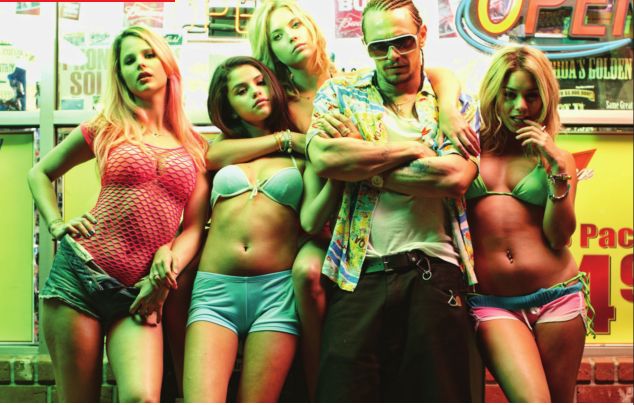
5. Spring Breakers
The
most surprising film of the year, Harmony Korine’s look at today’s
disenfranchised youth is an expose of a generation that’s never been
taught how to love or empathize for others; all they know is how to
satisfy their own needs. Vanessa Hudgens, Selena Gomez, Ashley Benson
and Rachel Korine are four college girls who take off to party in
Florida, funding their trip with loot they get from a daring robbery.
They fall under the sway of gangster wannabe Alien (James Franco, in the
year’s most daring performance) and before you know it, they’re living
the highlife with no regard for the moral or legal consequences of their
actions. Korine, who also wrote the script, does a masterful job
realistically showing the girl’s slow descent into their moral abyss, as
he indicts today’s manipulative and powerful forms of media as well as
absentee parents for being responsible for a dispassionate generation
that takes the notion of self-preservation to delusional and dangerous
levels. Misunderstood, underappreciated and daring, this is a prescient
film that in years to come will be regarded as having been ahead of its
time.

7. The Spectacular Now
As
far away from the John Hughes formula for teen movies as possible, this
unflinching look at young love and self-destruction focuses on Sutter
(Miles Teller), a hard-living senior in high school who has no plans for
the future and is already on the road to becoming an alcoholic. He
unwittingly falls for Aimee (Shailene Woodley), a naïve wallflower who
blossoms under his attention, unaware of the harm she’s doing to herself
by picking up his bad habits. As directed by newcomer James Ponsoldt,
the film is far from calculated and succeeds because it avoids the sort
of hackneyed plot devices that are part-and-parcel of films of this
sort. Honest and heartbreaking, this is the sort of movie you hope those
about to enter into the arena of love see and take to heart.
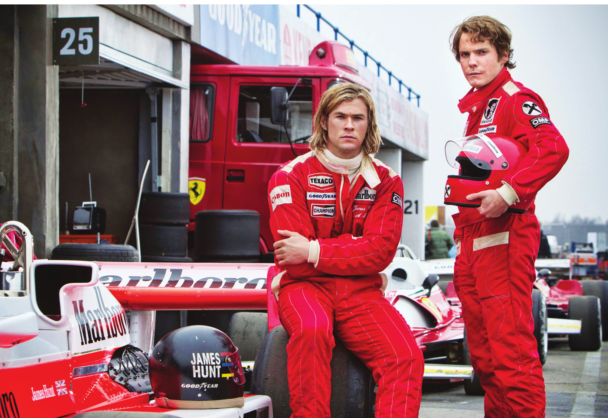
6. Rush
Director
Ron Howard delivers a compelling portrait of the competitive spirit
with his examination of the rivalry between Formula One drivers James
Hunt and Niki Lauda, whose head-to-head battle for the racing
championship of 1976 tested the mettle of both men and captivated an
international audience. Howard refused to use any computer-generated
images for the racing scenes, opting instead for innovative camera
placement to fully capture the thrill and danger of this competition. As
exciting as the action is on the track, it’s the human element that
elevates this exercise above most other sports films. Chris Hemsworth
and Daniel Bruhl, as Hunt and Lauda respectively, not only capture their
characters’ fierce drive but their fears as well, making us not only
cheer for but worry about them each time they get behind the wheel. A
testament to living life on the edge, Rush winds up being one of the most emotionally satisfying films of the year.
8. Dallas Buyer’s Club
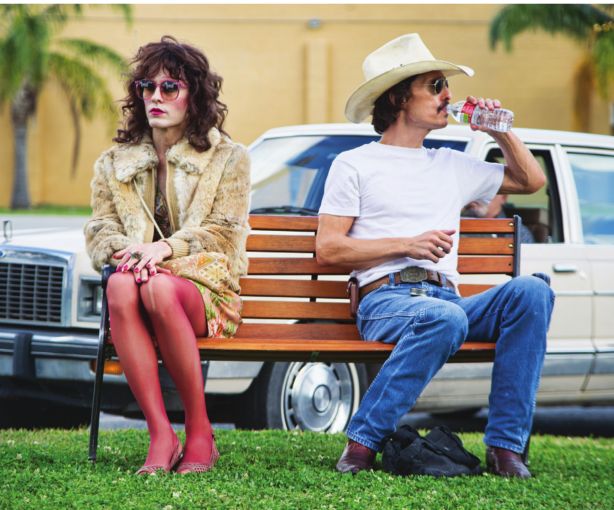
Director
Jean-Marc Vallee’s examination of AIDS activist Ron Woodroof is a
lacerating look at government indifference and negligence as well as one
man’s journey from bigotry to acceptance as he looks death in the face.
As Woodroof, Matthew McConaughey delivers a career-best performance,
displaying a willingness to invest in a character that he’s rarely
displayed before. The result is a turn that brims with anger and
conviction as we see Woodroof openly defy the authorities that will
stand in his way to get and provide the treatment that he and others
afflicted with the disease need. As Woodroof’s transsexual ally Rayon,
Jared Leto is equally as captivating. Both performers disappear within
their roles in this tragic and powerful tale of two men who are able to
find a sense of grace during their final days.
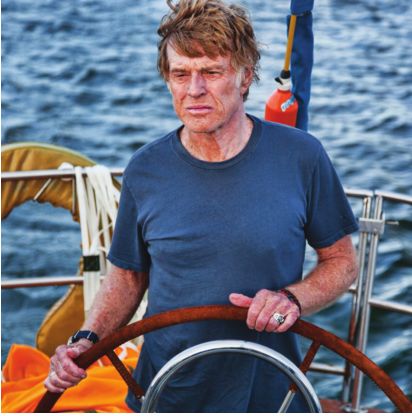
9. All is Lost
Robert
Redford delivers an insular but powerful performance as a man adrift at
sea on a sinking ship who must keep his wits about him if he hopes to
survive. As more and more artifice dominates the big screen, director
J.C. Chandor, who also wrote the script, takes a more stripped down
approach, filming at sea and in large tanks to create a more organic and
thus realistic threat. Meanwhile Redford, charged with holding our
attention on his own, puts on a master class in screen acting, conveying
volumes with a telling glance or slight movement and displaying
uncharacteristic emotion during crucial moments. Old-fashioned and
simple, the movie is never less than compelling as we’re able to
identify with this man’s fight for survival.
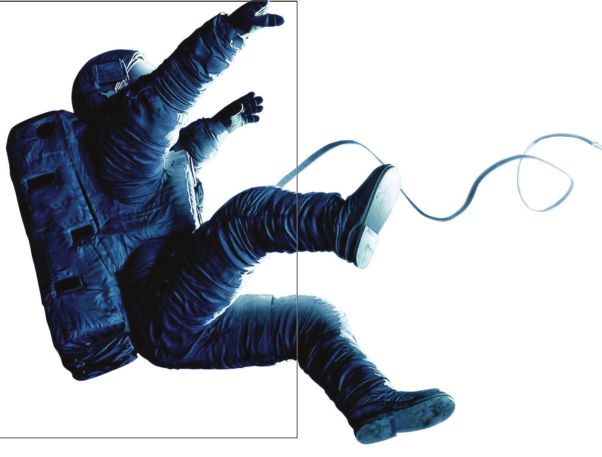
10. Gravity
Director
Alfonso Cuaron’s space adventure is a groundbreaking visual exercise
that opens with an unbroken 14-minute shot that conveys, unlike any
other film before, just how vast and dangerous space is. The plot is
relatively simple. Two astronauts – newbie Ryan Stone (Sandra Bullock)
and veteran Matt Kowalski (George Clooney) – are forced to improvise
when they find themselves adrift after their space shuttle is destroyed
by debris. What ensues is a taut adventure that is not only visually
dynamic but also ultimately moving. The themes of grief, acceptance and
rebirth are beautifully realized through Cuaron’s dazzling images and
Bullock’s powerful performance. A jawdropping exercise from start to
finish, the film is required viewing on the big screen.
Tied for 11th place
Steve
McQueen’s bracing and unfl inching look at America’s Peculiar
Institution, 12 Years a Slave…Spike Jonze’s moving tale of misguided
love in the future, Her…Guillermo del Toro’s innovative monster mash,
Pacifi c Rim…Jeff Nichols’ moving coming-of-age story, Mud, with yet
another solid turn from Matthew McConaughey…Disney’s wildly entertaining
animated musical comedy, Frozen…Alexander Payne’s haunting tale of
perseverance and loss, Nebraska… Stephen Frear’s stranger-than-fi ction
true story of one woman’s search for the son she gave up for adoption,
Philomena…J.J. Abrams’ smart and entertaining, Star Trek Into Darkness.


