Bloodbath in Beason
Murder trial begins in 2009 killings
COURTS | Bruce Rushton
Logan County state’s attorney Jonathan Wright was raging.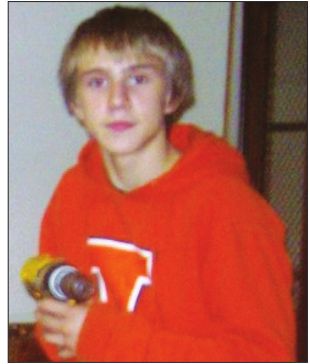
With trial scheduled to start in just three weeks, defense attorney Daniel Fultz had tainted the jury pool by granting an interview to a television news reporter, Wright told the judge as the defense attorney buried his head in his hands, as though deep in thought or despair.
The defense’s conduct was egregious, outrageous – a monumental blow to the chances for a fair trial in one of the biggest murder cases in central Illinois history, Wright thundered during the pretrial hearing in early April.
The prosecutor urged that the trial, already moved once from Lincoln to Peoria, be moved again, and if that wasn’t possible, then postponed until August or September. Perhaps by then, Wright suggested, memories of Fultz’s interview would have faded in the minds of prospective jurors.
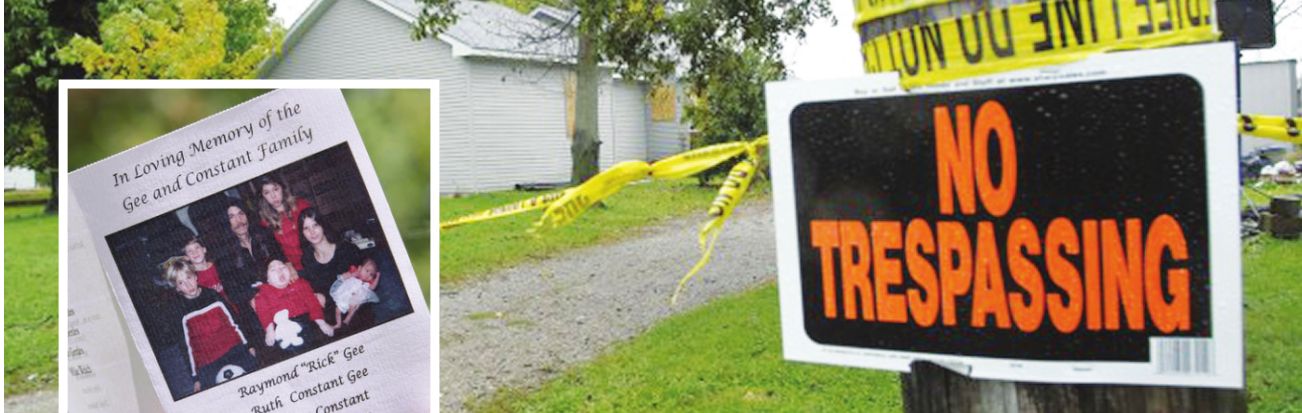
The stakes could hardly be higher. The defendant, Christopher Harris, stands accused of murdering Rick and Ruth Gee and three of four children who were in the tiny home in the miniscule burg of Beason, 10 miles east of Lincoln, population 200 or so, during the early hours of Sept. 21, 2009. Only the youngest person in the house, Tabitha Gee, then just three years old, survived. The murder weapon? A tire iron. It is difficult to imagine a more gruesome blood bath.
Since the slayings, police and prosecutors had said virtually nothing about the case outside the courtroom. And now, here was the defense, blabbing to the press.
Fortunately, Wright said, someone alerted the prosecution to the interview that had aired on the 10 p.m. news. Prosecutors, he said, had been working late and might otherwise never have learned about the expose that was broadcast over the course of two nights.
Prosecutors had been working late. As Circuit Court Judge Scott Drazewski listened impassively, Fultz acknowledged that he had screwed up by discussing what evidence would be presented at the upcoming trial.
“What happened was wrong and it shouldn’t have happened,” Fultz said in a quiet tone. “I apologize to the court and I apologize to the state. … There are some days when you feel like you can’t do anything right, and for me, this is one of those days.”
Then he attacked. The prosecution was asking for a continuance, Fultz said, because they’re not ready, not because the jury pool had been tainted. We’re prepared, the defense attorney told the judge – don’t stop this now.
“If they need more time, just ask for more time,” Fultz said.
If Wright was on fire before, Fultz had just thrown gasoline. Irresponsible! Disingenuous! Not ready for trial? Nothing could be further from the truth, insisted the state’s attorney – a lawyer who had just suggested a continuance after saying that his team had been burning midnight oil. And on this day, Wright lost.
Proceedings would be neither moved nor postponed, decreed the judge, who had nary a word of criticism for Fultz. So the long-awaited trial in a mass killing now nearly four years old begins this week. And what may on first glance seem a slam-dunk for the prosecution could prove a difficult haul.
A quiet family in a quiet town
What happened in Beason the night that Christopher Harris and his younger brother Jason paid a visit to the Gee family was a chapter straight out of Helter Skelter.
“I can tell you that one individual lost the entire top of her head,” Fultz told the judge during a Monday hearing in an unsuccessful bid to show crime-scene photos to prospective jurors to determine whether they can render a fair verdict despite the horror.
The killings were quiet.
Tom Ramlow, who lives across the street from the Gee home, slept through the massacre in the house on the northern edge of town where he has lived for 33 years. He now locks his doors, even during the day, which he had never done before.
The slayings have made Beason, 40 miles northeast of Springfield, infamous.
“I go to Chicago – everyone knows where Beason is now,” Ramlow said.
The Gee family lived in their home on the northern edge of town about six years, says Ramlow, who considered them good people, even though they kept to themselves and he never got to know them very well. The yard was kept neat, he says, and they were quiet.
Ruth and Raymond “Rick” Gee married in 1997. Rick Gee was a contractor who owned his own construction company. They had two children together, Tabitha and Austin, and Ruth’s two children by a prior relationship, Justina and Dillen, also lived in the small house that has been boarded up. Playground equipment and a large above-ground swimming pool, now falling apart, takes up most of the backyard; a Chevrolet Lumina minivan with tags that expired in 2008 is parked in the front driveway. At 16, Justina was the oldest child in the home. Her brother, Dillen, was 14, Austin was 11. Tabitha, who somehow survived a blow from a tire iron to her head, was 3.
Christopher Harris, 34, was convicted of felony theft in 1999 and had previously been convicted of shoplifting, writing a bad check and possessing marijuana. The 1999 theft conviction,
a decade before the killings, was his last brush with the law aside
from traffic tickets. He had an on-again-off-again relationship with his
ex-wife, Nicole Gee, Rick Gee’s daughter, who filed for divorce in 2006
on the grounds of mental cruelty but made a handwritten notation in a
standard form stating that there had also been “some” physical cruelty.
She did not elaborate. She has said that she doesn’t believe that Harris
killed her relatives and defended him on her Myspace.com page, writing
that he had never been violent toward her or the two children she had
with him, one born less than a month before the Gees died.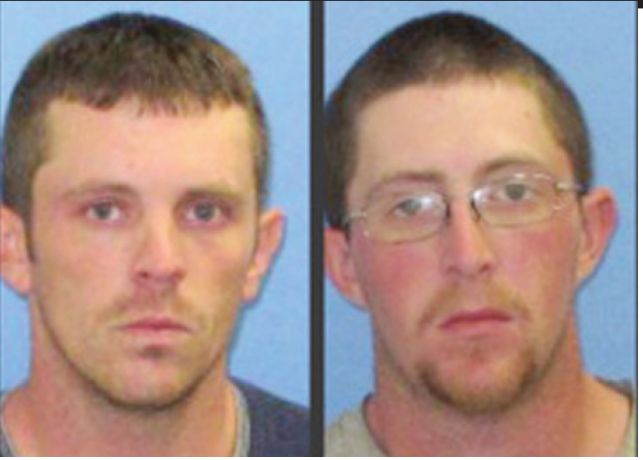
Ramlow,
the neighbor, says that he believes that the defendant is guilty as
charged. Call it gut feel, he says, and the conclusion is
understandable. After all, if Harris is innocent and acknowledges being
at the house and seeing the carnage, why didn’t he call police?
“I’m sure drugs had something to do with it,” Ramlow says.
Who
else but a drug-crazed maniac would kill five people with a tire iron?,
Ramlow figures. Apparently without sufficient evidence, prosecutors on
Tuesday dropped charges of attempted sexual assault on Justina. Nothing
aside from a laptop computer was stolen.
Drugs
did play a role in the killings, according to the defense, but to what
extent will be the jury’s call. Christopher Harris admits that he and
his brother went to the Gee home to score marijuana, and prosecutors say
that the brothers had been drinking, smoking pot and using cocaine
before they arrived.
If
Christopher Harris wasn’t the killer, then who? Harris says that
everyone was dead before he arrived except for Tabitha, a toddler who
posed no threat, and Dillen. Dillen, the defense says, killed his
family, and the defendant in turn killed him in a life-or-death
confrontation. It is not necessarily a surprising defense. Someone,
after all, murdered the family, and pinning it on someone who is dead
avoids the potentially problematic matter of calling the alternative
killer to the stand.
“I
think it’s pretty clear we’re all-in with this defense,” Fultz said
during an April 19 pre-trial hearing. “We don’t have an alternative
defense.”
Growing pains or murderous rage?
Dillen,
the defense says, was a troubled teenager with a taste for violent
video games that may have fueled his propensity to hurt people. He also
had attention deficit hyperactivity disorder (ADHD), and Harris’
attorneys have subpoenaed pharmacies for prescription records.
If jurors don’t dismiss it as a red herring, the ADHD issue could prove a two-edged sword for the defense.
Some
drugs commonly used to treat the disorder can cause irritability, but
prosecutors say that any argument that side effects of medication could
have triggered violence is moot because Dillen hadn’t been prescribed
drugs to treat ADHD for two years. However, ADHD can cause impulsive
behavior, so the defense could still argue that the absence of drugs
suggests an untreated disorder that might have made the teenager more
prone to violence.
Dillen certainly had plenty of disciplinary issues.
Dillen
Constant’s history of problems at school dates to kindergarten,
according to Harris’ lawyers, who subpoenaed school disciplinary records
for the last three years of the teenager’s life. There were
approximately 250 incidents, according to the defense.
“No
doubt he acted out in school,” allowed assistant attorney general
Steven Nate at an April 19 hearing. He is one of three prosecutors,
including two from the state attorney general’s office, who are handling
the case against Harris.
During
the last three years of his life, Dillen’s teachers and other school
officials wrote him up for everything from slapping fellow students to
throwing rocks to kicking someone in the crotch to spraying Lysol on a
classmate to slashing seats on a school bus with a stolen razor knife.
“I can’t wait until this stupid school blows up,” he once said after he
didn’t do well on a test, prompting school officials to call police. On
another occasion, he elbowed a student in the face hard enough to break
his target’s glasses and bloody his nose.
Dillen
Constant’s bad behavior didn’t stop outside the schoolhouse, Harris’
lawyers say. The defense wants to introduce testimony from Harris’
daughter, who says that she saw Dillen pull a knife on his older sister,
Justina. He also once put his younger brother, Austin, in a headlock
while in a swimming pool, then forced the boy’s head under water
repeatedly and forcefully enough that eyewitnesses feared he was trying
to drown the boy.
“He is a violent person,” Fultz said during the April 19 hearing.
Prosecutors
have fought to exclude such testimony, dismissing Dillen’s misbehavior
as horseplay or the acts of an immature boy who wanted attention. When
he made threats, he didn’t act on them, prosecutors say, and there is no
evidence that he ever seriously hurt anyone.
“This is a juvenile,” Nate told the judge during the April 19 hearing. “We’re not dealing with an adult here.”
Just
how many instances of Dillen’s misbehavior the jury will hear isn’t
clear, but Judge Drazewski has opened the door for more than a dozen
examples aimed at showing the boy had violent impulses that could have
reached the extreme.
The
judge on Monday sided with prosecutors and ruled that the jury will not
be allowed to hear that Ruth Gee in 2007 told a therapist for her son
that she feared that Dillen would either seriously hurt himself or
someone else. The statement contained no specific threat, noted the
judge, who decided that it was made so long before the killings that the
jury shouldn’t hear about it. Within the past week, Rick Gee’s mother
told state investigators that her son was also concerned about Dillen.
“(She)
told the state that Rick told her if they didn’t get Dillen under
control, they would all wake up dead one day,” Fultz told the judge on
Monday.
It’s not clear
when that statement was made, and prosecutors say that jurors should
not be allowed to know about it. The judge hasn’t ruled.
But prosecutors have more than Dillen’s temper and medical history to worry about.
Forensics could prove key
Ten
days passed between the killings and Christopher Harris’ arrest. During
that period, authorities had told the public to look for a gray pickup
truck driven by someone who might well have been injured during the
struggle.
But Harris had no injuries, according to the defense. While he didn’t
call police to report the deaths, he didn’t hide, either. Indeed, he
attended the funeral of the family that was buried together. And while
police pulled over gray pickups and descended on the tiny town looking
for clues, Harris after the killings parked his gray pickup at the
Beason home of his ex-wife, Nicole Gee, just a few blocks from the crime
scene.
If prosecutors
are right, it was close combat -- and five against one. No one, the
defense has suggested, could kill five people with a tire iron inside a
tiny home and walk away without a scratch. One body was found in a hall
about three feet wide. Nicole Gee, who is expected to testify for the
defense, said shortly after Harris was arrested that police got the
wrong man. In a posting on her Myspace.com page days after police deemed
the case solved, she wrote that her ex-husband had been set up.
“(T)here
is hard solid evidence of all 6 of them fighting for there (sic) lives
and chris had not even the slightest nik (sic) on his body anywhere,”
Nicole Gee wrote. “He had been by our side through all this in every
possible way and now they took him from us too.”
While
there has been little sign of physical evidence against Christopher
Harris, investigators did find a potential clue under Rick Gee’s
fingernails: DNA that the defense says came from Dillen.
So what?, prosecutors said at the April 19 proceedings.
“This was his dad,” Nate argued. “He lives in the same house. Dillen Constant had no scratch marks on his body.”
There
are plenty of ways that Dillen’s DNA could have gotten under his
stepfather’s fingernails, Fultz countered, none of them easy.
“Dillen
had, I believe, over 100 wounds to his body,” said Fultz in winning the
argument to admit the DNA evidence. “He was cut. He was beaten. … It
takes some effort to force DNA under fingernails. It doesn’t just
happen.”
With an
apparent lack of forensic evidence pointing to the defendant,
prosecutors are left with witnesses with issues and a defendant who
didn’t call police.
Defendant will testify
The
only eyewitness to the slaughter aside from Tabitha Gee is Jason
Harris, the defendant’s brother, who is also charged with murder and is
expected to testify for the prosecution.
There
is no indication what sort of deal, if any, prosecutors have offered
Jason Harris in exchange for his testimony, but he has baggage beyond
accusations that he burned his brother’s clothing after the killings and
hid a laptop computer stolen from the Gee home.
In
2007, Jason Harris pleaded guilty to perjury. His courtroom fibs five
years ago were laughable. Jailed in connection with a juvenile offense
unspecified in Logan County sheriff’s records, Harris, then 19, told a
judge that he had an infant son, in hopes he would be released. He also
said that he had not had any contact with law enforcement during the
previous three years. Both tales were easily proven false, and so Jason
Harris was convicted of lying under oath, a conviction that the jury
must weigh when determining his truthfulness in the murder case.
The
defense didn’t sound concerned during the April 19 hearing when Nate
said that Jason Harris saw his brother pursue Dillen and strike him with
a tire iron when the boy came out of the house.
“That’s one of about 13 versions of what Jason Harris said happened that night,” Fultz said.
Also
expected to testify against Christopher Harris is at least one
jailhouse informant, Ty Cline, who was convicted of first-degree murder
in the 2009 killing of a two-year-old boy who died after a beating.
Cline, who was babysitting the child, is serving a 30-year sentence. He
will, presumably, tell jurors that the defendant confessed or at least
revealed knowledge of the killings that only the culprit could know.
Jailhouse
informants almost always want something in exchange for their testimony
– after all, snitching is generally frowned upon by fellow inmates.
What Cline might be seeking isn’t clear, but his wish list could be
limited because jailhouse informants who have already been sentenced are
not eligible for sentence reductions. And a witness who can’t get a
deal for less time in jail might be more credible than one angling for
freedom.
“I know that
most prosecutors would much rather have a snitch testify after he’s been
convicted and sentenced,” said Steven Beckett, a University of Illinois
law professor who also practices criminal law.
Cline
is no ordinary child killer. Facing 60 years, he professed his
innocence during sentencing proceedings last year, not usually a good
idea in a legal system that rewards contrition and remorse. He got 30
years from a Logan County judge who praised Cline’s moral character and
said that he was “no different than any other man walking down the
street in Lincoln.”
The
defense will argue that any damning statements Harris might have made
about the case to fellow inmates were rooted in information that he got
from his first attorney in the case, Patrick “Tim” Timoney, a Springfield attorney who works as a public defender in Logan County.
 In
a letter to the court, Timoney said that he could not testify without a
waiver of attorney-client privilege from the defendant, which would
allow prosecutors to ask the Harris’ former attorney anything they wish,
a potentially dangerous situation for the defense. Any incriminating
statements, including a confession, that Harris made to his ex-lawyer
would be fair game. However, Drazewski has ruled that Timoney must take
the stand without a waiver but can only answer general questions, such
as whether he shared information gleaned from discovery with Harris. He
cannot say what information, exactly, he gave to the defendant, and he
cannot say what Harris told him.
In
a letter to the court, Timoney said that he could not testify without a
waiver of attorney-client privilege from the defendant, which would
allow prosecutors to ask the Harris’ former attorney anything they wish,
a potentially dangerous situation for the defense. Any incriminating
statements, including a confession, that Harris made to his ex-lawyer
would be fair game. However, Drazewski has ruled that Timoney must take
the stand without a waiver but can only answer general questions, such
as whether he shared information gleaned from discovery with Harris. He
cannot say what information, exactly, he gave to the defendant, and he
cannot say what Harris told him.
It
was, potentially, an important victory for the defense. If jailhouse
informants testify that Harris confessed, or knew details of the case
that had not been made public, jurors will be allowed to know that
Harris, via his lawyer, had a way of knowing things that only the killer
could know, without being the killer himself. And prosecutors could be
hamstrung. For instance, Harris could tell the jury that Timoney told
him how many times a victim was struck and he passed that on to a
cellmate, but prosecutors cannot verify the truth by questioning
Timoney.
Harris will take the stand, his lawyers promise.
And he will have a lot of explaining to do.
If
he’s innocent, why didn’t he call police? Or show any outward sign that
he had stumbled onto a scene of unspeakable violence? Or do anything to
help Tabitha, the toddler who survived? Or admit that he had been at
the house when police initially questioned him, the first time just two
days after the deaths, the second time one week later and just one day
before finding his bloody palm print on the premises and placing him
under arrest?
Anything
less than a first-degree murder conviction would be a victory for
Harris and a defeat for prosecutors in a sparsely populated county where
elected officials have discussed issuing a bond to pay for Harris’
attorneys and other trial costs. The county hopes that permit fees for
wind farms will help defray the expense, and so wind turbines that dot
the county’s farmland are, in a sense, a visual reminder of the tragedy.
In
a system built on reasonable doubt, a single holdout juror could force
another trial. A conviction on second-degree murder could bring just 10
years in prison instead of a lifetime behind bars.
Prosecutors
say they’re ready. “This trial needs to happen, it needs to come to a
conclusion,” Wright, the state’s attorney, told the court last month
during his unsuccessful argument for either a change of venue or a
continuance. “The people are prepared to proceed to trial on April 29,
2013.”
Opening statements are expected on Monday.
Contact Bruce Rushton at [email protected].


