Food, money, and sexuality
Finding wellness in relationships
HEALTH AND WELLNESS | R. Kathryn Pearson
This is an abridged version of a talk delivered Nov. 17 by Kathryn Pearson at the Sangamon County Medical Society’s Physician Wellness Conference.
How are food, money and sexuality related to our relationship wellness? Relationship wellness concerns our search for unruffled peace, ease of being in body, mind and heart in our relationships, what we might call everyday wholeness or worthiness. Our relationship to food, money and our sexuality is an exact copy of our relationship to life itself. We are walking, talking expressions of our deepest convictions; everything we believe about love, fear, transformation and our spirituality is revealed in how, when and what we eat, how we deal with our money and how we express our sexuality.
Anatomy of feeling good Many of us find that we spend a lifetime getting to know our true selves. Although you came into this world with an implicit understanding of who you were (an authentic being worthy of the love from which you’ve come), you had no way of knowing this as an infant. The only way children experience their “authentic” self is by seeing themselves in their caregivers’ eyes. Their authentic self is vulnerable, spontaneous, without shame and whole. Our authentic self requires a secure attachment to our caregivers in order to sustain a sense of worthiness, safety and security. Secure attachment implies a bond of emotional communication between the infant and the primary caregiver. Our caregivers’ experience of themselves can alter that secure attachment. Lonely, depressed, fearful or troubled caregivers may pass the sum of their limitations onto their child and create an insecure attachment which brings about anxiety or disconnection. Caregivers with positive, affirmative, more optimistic messages of themselves can give their child a more secure attachment with a healthier sense of love and belonging and safety. We come into our marital relationships with either secure or insecure attachment styles and negotiate our relationship with food, money and sex from a standpoint of fear and anxiety or one of safety, security and love.
When I begin to think about how my relationship to money got formed, I think not of my primary caregiver, but about a relative who introduced me to a nickel.
Uncle Lester
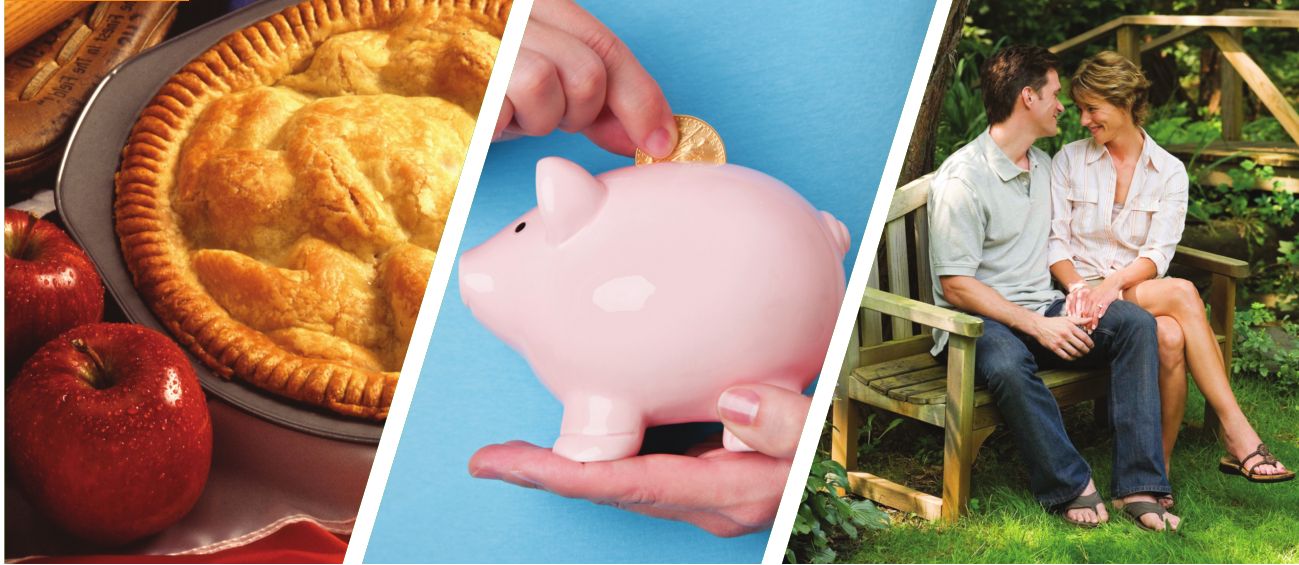
My Uncle Lester (the oldest sibling in my mother’s family) had a nickname for me when I was a three-year-old. He called me “some nickel.” That’s because from my first memory, Uncle Lester would greet me by digging deep in his pockets, bringing out a shiny nickel and asking me if I would like a nickel. After only a few times of his offer, I began greeting my uncle whenever I saw him with the question “Do you have some nickel?” It was my first experience with money and one that I soon learned was unrealistic. Money did not come that easily in life, nor could I rely on a benevolent uncle for my financial security. It was my first lesson in noticing that asking for money was embarrassing to some adults around me and that there were differences in how certain family members were esteemed for the jobs they held and the wealth they had accumulated. Over the years I came to understand the financial deprivation that my mother’s family with 12 children had experienced growing up. There was an underlying shame that my mother carried about growing up in such poverty. Along with the shame was an anxiety about making enough money so that other people could see the family as being “good enough.” As a result of these messages about money passed on to me, I have spent a good deal of my life working on the belief that no matter how much money I have or don’t have, it’s not the test of my worth. My self worth has to do with being peaceful, not with having possessions.
Grandma’s apple pie
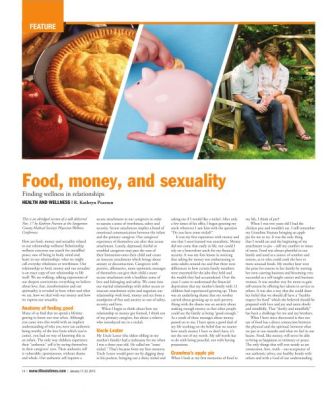
When I look at my first memories of food in my life, I think of pie!!
When I was two years old I had the chicken pox and wouldn’t eat. I still remember my Grandma Yeaman bringing an apple pie for me to try. It was the only thing that I would eat and the beginning of my attachment to pie – still my comfort in times of stress. Food was always plentiful in our family and used as a source of comfort and esteem, as in who could cook the best or more unusual foods. My mother later won the prize for esteem in her family by starting her own catering business and becoming very successful as a self-taught caterer and business woman. It was another way for mom to gain self-esteem by offering her talents in service to others. It was also a way that she could share her belief that we should all have a “healthy respect for food” which she believed should be prepared with love and joy and eaten slowly and mindfully. That “slowly and mindfully” has been a challenge for me and my brothers.
What I have since discovered is that our use of food has a direct connection between the physical and the spiritual, between what we put in our mouths and what we feel in our hearts. Food, like money, will never be able to bring us happiness or intimacy or peace. The only things that will ever satisfy us are connection, love, truth – our acceptance of our authentic selves, our healthy bonds with others and with a God of our understanding.
Pay attention
To
discover what you really believe, pay attention to the way you act –
and to what you do when things don’t go the way you think they should.
Pay attention to what you value and on what you spend your time and your
money. And pay attention to the way you eat.
You
will quickly discover if you believe the world is a hostile place and
that you need to be in control of the immediate universe for things to
go smoothly. You will discover if you believe there is not enough to go
around and that taking more than you need is necessary for survival. You
will find out if you believe that being quiet is unbearable, and that
being alone means being lonely. You will learn if you think being
vulnerable is for sissies or if opening to love is a big mistake. And
you will discover how you use food and money to express each one of
these core beliefs.
The
reason compulsive eating and spending, as well as the compulsive need
to restrict both, are so difficult to stop is that the cure does not
address the problem. Almost every compulsive eater and spender knows
exactly what, when and how much to eat or spend. Calories, exercise,
food and spending and hoarding aren’t the problem – they’re only the
middleman. They are the vehicle to express our sense of value and worth
or our sense of deficiency and scarcity. When we look at the world
through the lens of not having enough, all we see is lack, hunger and
emptiness.
In her books Women, Food and God and Lost and Found, Geneen
Roth talks about two types of compulsive eaters and spenders:
“restrictors” and “permitters.” “Restrictors” believe in control – of
themselves, their food intake, their spending and their environments.
Deprivation is comforting because it provides a sense of control. One of
their core beliefs is that less is more. Eating less – and therefore
being thin – is equated with being safe, and safety means survival.
Spending less will keep them from having buyer’s remorse. Restrictors
believe that there’s not enough to go around and therefore react by
depriving themselves before they can be deprived. Restrictors are
constantly trying to contain the wild energy that is stomping to be
released and they can never truly relax.
For
fun, we turn to their sisters, “permitters.” “Permitters” prefer to go
through life in a daze. They numb themselves to their experience by
getting lost in a fog of overeating and overspending. That way, they
don’t need to feel pain – theirs or anyone else’s. They believe: “If I
go through life asleep, I don’t need to be concerned about the future
because I won’t be aware of it. If I give up trying, I won’t be
disappointed when I fail.” Permitters see no point in trying to control
the uncontrollable and have decided that it’s best to be blurry and numb
and have a good time. Since they too believe that there’s not enough to
go around, they react by trying to store up before the bounty/love/
attention runs out. They use an idealized version of the future to fill
the holes of the past.
It’s
shocking to see how we eat and spend or ignore our finances and our
bodies. It’s humbling to see that we value being unconscious or being
perfect more than we value a fundamental ease of being, and that we are
paying the cost in the daily discomfort and spiritual bankruptcy in our
lives.
Sexuality
Another
of our human gifts and pleasures that we tend to either repress or
abuse in life is that of our sexuality. We frequently repress our desire
for love because love makes us vulnerable to being hurt, especially
being hurt through the sex act. The word “passion,” which is used to
express strong, loving desire, comes from the Latin root passus, which
means “suffered.” All of us know that along with bringing joy, love can
bring about suffering. We often repress our desire for love to minimize
this suffering. This happens especially after someone betrays our love;
we stifle our desire and it may take us a long time before we’re ready
to love again. It’s a normal human response to repress our longings when
they hurt us too much.
While repression stifles desire, addiction to sex or other love objects bonds and enslaves the energy of desire. Sex acts or persons then become preoccupations and
obsessions; they come to rule people’s lives. The same brain processes
that are responsible for addiction to alcohol and narcotics are also
responsible for addiction to work, relationships, sex, power, moods,
fantasies, food, money and an endless variety of other things.
Addictions are simply those irrational attachments to substances,
processes, or possessions that we use to numb or distract feelings of
any kind, but especially feelings of unworthiness, inadequacy or shame.
Many
of us are inspired to change, but few of us are willing to be as
uncomfortable as is required to actually change. In your daily moments
when you want to eat or withdraw, when you don’t want to think about
where your money is going or make financial choices based on healthy
values, or when you have a choice of whether you spend time with your
loved ones or ponder the porn on the web or get lost in the fantasy of
having romance and heightened sexual experiences as in the trilogy of
books beginning with Fifty Shades of Grey, where do you turn for
refuge? Do you convince yourself that you have so much to do that taking
responsibility for your own choices is too much of a burden? Do you
return to the safety of familiar patterns? Or do you undertake the
time-consuming and intense work of change?
Dealing with shame
Whether
it’s the relationship with food or money or alcohol or shopping or sex,
the main factor in any kind of change is whether or not you are willing
to truly question your beliefs about yourself and the world – to deal
with any shame (which Jungian analysts call “the swamp place of the
soul”).
According to
Brené Brown, a researcher, counselor and author, shame is an unspoken
epidemic, the secret behind many forms of broken behavior. Shame is
highly coordinated with addiction, depression, eating disorders,
violence, aggression, bullying and suicide. It’s driven by two big tapes
that we run in our heads: “Never good enough” and, if that one doesn’t
work, “Who do you think you are?” There’s a difference between guilt and
shame. Guilt is focused on behavior: “I did something bad” “I made a
mistake.” Shame is focused on the self: “I am bad” or “I am a mistake.”
Shame for a woman has come out of a belief in our culture that women
should “be able to do it all, do it perfectly, and never let them see
you sweat.” I know many women, including myself, who have to wrestle
with that one every day.
And
for men the belief that brings about most of their shame is “you can
never let them see you being weak.” When men reach out and try to be
vulnerable, they sometimes get clobbered by us women, who want them to
be strong and invulnerable.
The
antidote to shame is having empathy for yourself so that you can share
it with your partner. Vulnerability, acknowledging our imperfection, is
our way back to each other. Vulnerability is not weakness. It is
emotional risk, exposure and uncertainty, as well as our most accurate
measurement of courage. Vulnerability is the birthplace of innovation,
creativity and change.
It’s
a challenge to find out what is truly important to us in our lives –
such as our ability to feel, give, receive, know, question, learn,
change, love. These things comprise the wellspring of our worth. When we
spend as much time investing in our inner lives as we do in getting and
having more of everything, then how we live on this earth and inside
our bodies will change. When this change occurs it will, in turn, affect
our relationships as couples and families.
Practicing
empathy and vulnerability in our everyday choices with food, money and
sexuality is the first step toward relationship wellness.
Kathryn
Pearson, LCPC, CSAT, CMAT, is a Licensed Clinical Professional
Counselor who focuses on individuals, couples and family counseling in
Springfield. Her specialty areas include relationship counseling,
survivors of trauma, treatment of multiple addictions and how addictions
interact with one another.