Arts of the patron 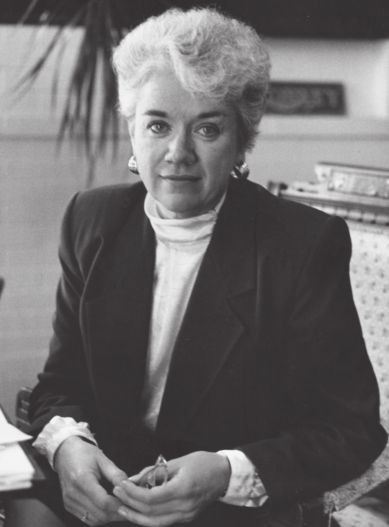
What Mary Lee Leahy did and didn’t change
DYSPEPSIANA | James Krohe Jr.
Mary Lee Leahy died Dec. 12, after a busy life working for good causes as an attorney and public servant. Perhaps unfairly, she is remembered mainly as a Holy Warrior against patronage in public employment. This alone made her passing notable in Springfield, where patronage has been a way of life since they unloaded the wagons from Vandalia.
So has reforming patronage, come to think of it. Illinois first got rid of patronage hiring in 1905, when the reformist State Civil Service Law was passed and the Civil Service Commission created. It has been got rid of several times since, killed off by court cases and prosecutions, yet still it walks the streets. That’s because most office-holders who are against patronage as candidates embrace it after they win and are faced with the responsibility of staffing and managing administrative departments staffed by hundreds.
Unlike his boss, Walker’s deputy governor Victor De Grazia was one of the people who actually had to make state government work. Making it work means being able to hire and fire, but as De Grazia complained in a 1981 interview, if you protect people from dismissal under civil service, “departments become post offices where it’s impossible for anything to get done.”
The
system De Grazia inherited in 1973 would have been recognizable to any
post- Depression governor. David Knox, who worked in personnel under
five governors, once recalled that the Secretary of State had a job
classification whose duties consisted entirely of paper-clipping checks
to driver’s license applications. It was inefficient, but that was the
point; more people needed to do the work meant more people indentured to
the party in power.
This
sort of thing was general in the bureaucracy. Because so many jobs
required no training beyond how to find one’s desk, the state government
machinery did not grind to a halt when thousands of employees were
replaced overnight after a change of administration. Indeed, the jobs
were kept simple so as to facilitate these changeovers.
Middle
managers however were often exempt from the ax. They were usually
holdovers from one regime to the next because only they knew how to
actually run things. The result was that every new administration had to
take on people who wanted to do things their way rather than the
administration’s way. “You’re elected to do a certain thing, and you
have a bureaucracy that fights it,” complained De Grazia. “The ones at
the upper levels…are the ones that give you the trouble. The garbage
collector doesn’t give you the trouble. It’s the foreman that gives you
the
trouble, or the assistant superintendent gives you the trouble, and
those are the ones who are [protected by] civil service.”
Which
is where Mary Lee Leahy came in. You probably know the story. When Big
Jim Thompson came to town he set up a new Office of Personnel in his
office whose job it was to subject his agencies’ preferred picks to the
party test. Both parties – Big Jim placed job hunters who had Democratic
sponsors too. That didn’t much benefit the Republican Party but it did
wonders for the popularity of the Thompson Party.
A
State of Illinois employee from Springfield, Cynthia Rutan, claimed
that she had been passed over for promotion even though she passed the
abilities test because she failed Thompson’s politics test by refusing
to agree to a shakedown in the form of a campaign contribution. Leahy
took the inevitable lawsuit to the U.S. Supreme Court, whose ultimate
ruling ostensibly banned patronage hiring for all government jobs except
for the so-called “policy positions” of the sort that so vexed Vic De
Grazia.
The wisdom of
leaving elected officials free to staff departments with sympathetic
managers was conceded even by Leahy. As a result, these days each new
administration inherits the rank-and-file workers like the office
furniture, rust, dents and all. It is middle management that changes.
That’s good for the new administration but arguably bad for state
government. In the old days, the people who knew what needed to be done
had to cope with staff who didn’t know how to do it; these days, staff
who know how to do things must cope with managers who don’t know what
needs to be done.
Because
policy people are the only ones who can be easily fired, it is in the
interests of each new administration to define “policy” expansively to
include career administrators who are thus exempted from protections.
Management staff has joined unions en masse because contracts provide
protections that Rutan does not. And why these days it is unions
rather than civil service that turn some departments into post offices
where it’s impossible for anything to get done.
Dick
Durbin wrote that Leahy “changed our state for the better and ended
some of the worst abuses in government hiring.” Ending the worst abuses
is a real reform in Illinois, however, and Leahy deserves credit for
that.
Contact James Krohe Jr. at [email protected].


