Four new holiday films
FILM | Chuck Koplinski
Epic vision of The Hobbit hobbled by tepid pace
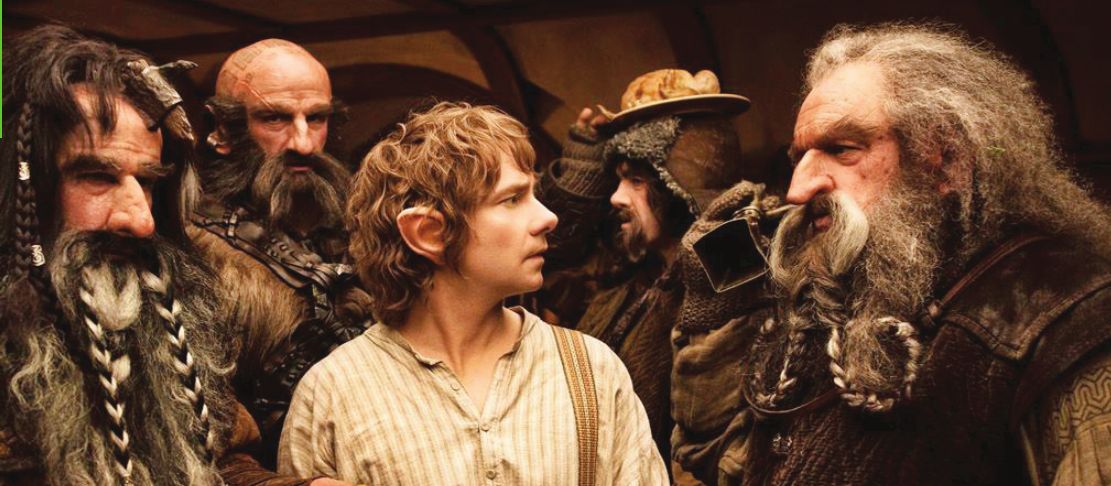
Director Peter Jackson returns to take care of unfinished business with his adaptation of The Hobbit, J.R.R. Tolkien’s prequel to the filmmaker’s “Lord of the Rings” trilogy. It’s a gorgeous exercise containing gloriously rendered mystical lands, horrific creatures and magical sights. The film is an immersive experience and only seeing it in 3D will do it justice. As far as the story at the center of this technical wizardry is  concerned…well, it’s something of a long slog.
The tale gets off to a slow start as the wizard Gandalf (Ian McKellen) and the 13 dwarves who’ve met at the home of the hobbit Bilbo Baggins (Martin Freeman), seem in no hurry to set off on their epic quest. They’re headed to the kingdom of Erebor, formerly the home of all dwarves, that’s been taken and controlled by the dragon Smaug for some years. He controls the city’s massive cache of gold and it’s the intention of the dwarf prince, Lord Thorin (Richard Armitage), to take it back.
The film soon falls into a pattern that undercuts all suspense. Our heroes are chased and attacked by a malevolent band of creatures, certain death is eminent, a last-minute reprieve occurs and they discover a new mystical city. This is repeated ad nauseum and, while Jackson will be applauded by the Tolkien faithful for not leaving out a single detail, in the end it makes for a plodding adventure.
Still, there are highlights. Smaug’s initial attack, as well as his last appearance, is memorable and a battle with the Orcs that finds our heroes literally up a tree is a keeper. But the showstopper is Bilbo’s encounter with Gollum (Andy Serkis), a creature whose mind has been bent and soul eaten away by a magical ring in his possession. Jackson steadily builds the tension as they duel for the talisman using a series of riddles, while Freeman effectively conveys Bilbo’s palpable fear. The motioncapture effects and Andy Serkis’ expressions create a creature that’s simultaneously sympathetic and malevolent. Though Gollum’s appearance is brief, its impact resonates.
The Hobbit’s alternate title is There and Back Again. By the end of this first segment, we’re not even “there” yet. This may thrill fans of these tales, but for the rest of us, if this first segment is any indication, the next two chapters in the story promise to be a slow, slow trek through a gorgeous land from which we may be eager to escape.
Faulty third act can’t dull Les Miserables
Epic in scope but emotionally intimate, Tom Hopper’s adaptation of the theatrical juggernaut that is Les Miserables plays much like it does on stage – that is it reaches soaring, passionate heights, building towards a cathartic release, yet stumbles along the way, getting sidetracked and nearly collapsing due to a lessthan-engaging love story. Director Tom Hooper cannot be faulted for this as this is the hand he’s been dealt – excising any third-act songs would have been considered sacrilege to the musical’s faithful fans – and yet he manages to succeed in delivering a satisfying, but at times exhausting, film-going experience.
 The story is one of abuse, salvation and obsession. The peasant Jean Valjean (Hugh Jackman), who has just spent 19 years in jail, is forced to change his identity in order to go on with his life, given a second chance by a kindly priest soon after his release. Though he ultimately becomes a successful businessman and the mayor of a provincial French town, he’s unable to rest due to a fanatical police officer, Javert (Russell Crowe), who dogs him after realizing he’s broken his parole.
This is a compelling story, thanks to the passionate songs of Herbert Kretzmer and the intense turns of the two leads. Their dueling duets propel the story past its hard-to-believe circumstances. As the veteran performers go toe-to-toe, they prove to be formidable, impassioned foes. However, the production’s third act has always been problematic, as the love story involving Valjean’s adoptive daughter Cosette (Amanda Seyfried) and the young revolutionary Marius (Eddie Redmayne) nearly grinds the story to a halt. This isn’t nearly as compelling as the Valjean/Javert dynamic and the film suffers for it.
But, when it all comes together, the film is a stirring and moving production. The opening sequence sets the tone as Valjean and hundreds of other prisoners are seen trying to drag a massive ship into dry dock, an exercise in futility that underscores how useless their lives have become. Equally moving is Valjean’s redemption at the hands of a kindly priest, who tells him he’s “saved his soul for God,” Anne Hathaway’s (as Cosette’s mother Fantine) bitter rendition of “I Dreamed a Dream,” and Javert’s final scene (yes, Crowe can sing!). When driven to tears by the tidal wave of emotion contained in these moments, it’s easy to forgive Les Miserables its bloated faults and better to simply be swept away by its grand design.
40 has fun with anxiety and doubt
One of the problems with Judd Apatow’s This is 40 is
that its characters live a lifestyle that’s difficult for many of us to
relate to. It’s hard to empathize with someone who’s complaining about
money problems while seeing them spend a weekend at a posh resort. This
sort of disconnect points to Apatow’s lack of awareness where the
economic realities of the day are concerned. What he hasn’t lost sight
of is what makes us tick or, more accurately, what drives us insane,
something he’s able to portray on screen with his trademark sense of
sharp, ironic humor.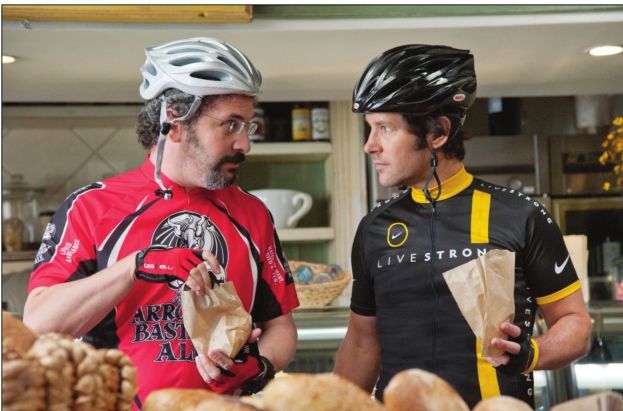
40 is
full of touchstone moments that anyone who’s ever been married will be
able to relate to as one couple attempts to juggle their various roles –
that of parent, spouse, child and individual. Pete and Debbie (Paul
Rudd and Leslie Mann) are in the trap most of us have fallen into --
they’re barely able to meet all of their responsibilities and they
rarely do any of them well. Both celebrating their 40th birthdays in the
same week, they’re each approaching this milestone in different ways.
For Pete it’s no big deal, but for Debbie it’s more traumatic. She
insists that this is really her 38th birthday.
Their
week becomes more hellish as it unfolds. Each attempts to deal with
their own personal issues – Pete tries to salvage his music business
while Debbie reconnects with her distant father (John Lithgow). These
crises are hardly original, but what makes the film work is Apatow’s
uncanny ability in his writing and direction to accurately recreate
moments any married couple will recognize. They pick at one another over
petty things, argue about sex, differ in how to raise their two
daughters and harbor hidden resentments that are ultimately revealed.
These moments are rendered with Apatow’s trademark brand of humor, as awkwardness and honesty combine to create wholly human moments. Rudd and Mann
inhabit their roles fully, conveying a sense of weathered but loving
togetherness, making it easy to connect with them. In the end, 40 reminds
us that the best way to deal with life’s curveballs is with a sense of
humor. And if you’re lucky enough, you’ll do so with a partner who
accepts you despite your faults.
Streisand and Rogan connect in surprising Trip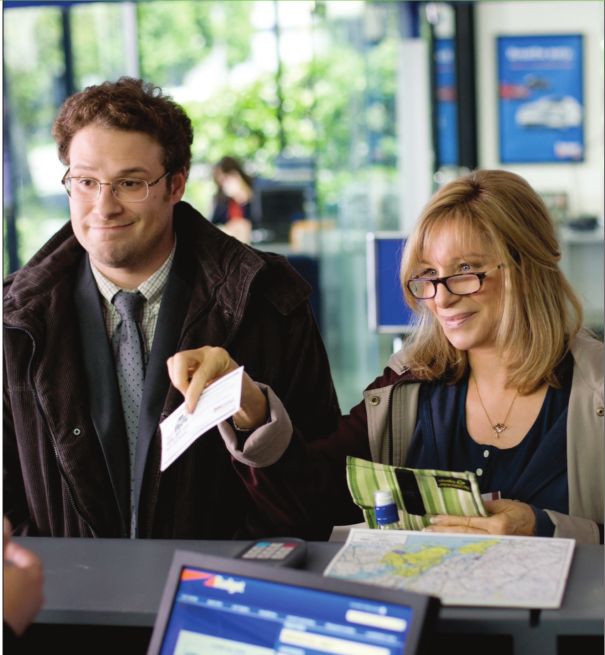
Who says Hollywood is out of new ideas? Anne Fletcher’s The Guilt Trip manages
to put a new spin on an old formula. How about a buddy picture between a
mother and a son? Seems simple enough, and it is. The film is quite
funny at times as well as poignant without laying things on too thick.
However, what’s most surprising about the feature is its star, Barbra
Streisand, a polarizing performer who’s never been more appealing than
she is here.
Moving a
brisk 96 minutes, Fletcher wastes little time getting things underway as
we meet Andy Brewster (Seth Rogan), an inventor who’s devoted far too
much time and money on his organic cleaning product. Broke and alone, he
decides to set out on a cross-country car trip, from New Jersey to San
Francisco, in an attempt to sell his invention to a series of suitable
companies. However, before leaving Andy pays a visit to his mother,
Joyce (Streisand), who smothers him, feeds him and tells him a story
that prompts him to ask her if she’d like to come along. She jumps at
the opportunity and the fun begins.
The
chemistry between the two stars is very good and it actually is a
pleasure to spend time with them. Rogan effectively shows Andy
struggling with being supportive of his mother but having to constantly
deal with her many faux pas that embarrass him. Meanwhile, Streisand is
able to put her more grating qualities aside (her tendency to dominate a
scene, her sense of superiority) and conveys a sweetness born from the
best of intentions that has her in the audience’s good favor from the
start.
This winds up
being the film’s strong suit – the sense of restraint that all parties
involved demonstrate. The laughs, which are plentiful, are never too
ribald or over the top, while the script by Dan Fogelman never becomes
so desperate that it resorts to simplistic slapstick gags. Generational
misunderstandings are all he needs. Equally surprising is the deft touch
Fletcher employs regarding the film’s more emotional elements. While
the tone is sincere, it never veers into the maudlin and her two leads
wisely never overplay their most poignant moments.
While The Guilt Trip isn’t
likely to appear on anyone’s “10 Best” list for the year, it’s a
pleasant enough, and surprisingly entertaining diversion. It reminds us
that while some good deeds may be precipitated by guilt they can
ultimately pay off in sound emotional dividends. Who knows, maybe a rash
of mother-son road trips will result after the film proves successful.
Contact Chuck Koplinski at [email protected].


