
Democrats get their Statehouse chance
A new political map and lots of money give an edge to Scherer and Manar
POLITICS | Patrick Yeagle
The Republican legislative hegemony in Springfield is in peril. For the first time in almost 20 years, Springfield seems poised to help elect at least one – maybe even two – Democrats to represent the city in the Illinois General Assembly.
On Nov. 6, voters in the near north and southeast area of Springfield will see Democratic names for state representative and state senator on their general election ballots. While the Republican candidates running in those two contested races insist they’re holding their own, the two Democratic candidates enjoy a clear advantage in fundraising and voter demographics. It’s part of a plan by the Democratic Party of Illinois to go all-in on winnable races, in order to chip away at downstate Republican strongholds. The races are rife with negative ads, misleading claims and pushback against the influence of Chicago in downstate politics.
Redistricting as a tool Springfield has long been solid Republican territory when it comes to seats in the Illinois General Assembly. The past 18 years saw Republicans in all three legislative seats that represent this city, and the last Democrat to hold a state legislative office covering Springfield – former representative Michael Curran – retired in 1994 to run for mayor. (He lost that race to former state representative and state senator Karen Hasara, a Republican.) The Republican streak could end, however, following a round of redistricting that divided Springfield among three Senate districts and three House districts. The general election on Nov. 6 is the first test of those new districts, and Democrats believe they have a chance to take over one Senate district and one House district.
Illinois’ Constitution calls for state lawmakers to draw new legislative and congressional districts every 10 years. During the latest round in 2011, the Democratcontrolled legislature shifted the boundaries around enough to concentrate likely Democratic voters into certain districts. In Illinois, each Senate district contains two House districts, and the previous map put Springfield in one Senate district with two House districts covering the city.
The new map splits Springfield into three Senate districts, each of which contains one House district covering Springfield and a separate House district outside Springfield.
Sen. Bill Brady, R-Bloomington, is running unopposed in the 44th District, while Rep.
Rich Brauer, R-Petersburg has no challenger in the 87th House District. They represent the northern part of Springfield. The city’s southern and western sections are covered by Sen. Sam McCann, R-Carlinville, in the 49th Senate District and Rep. Raymond Poe, R-Springfield, in the 99th House District. McCann and Poe are running unopposed.
The only contested state legislative races in Springfield are the 96th House District and the 48th Senate District. These districts share the same boundaries, encompassing the downtown and neighborhoods like Enos Park, Vinegar Hill, Pillsbury, Bunn Park, Eastview and Glen Aire.
It’s in these two districts that Democrats see potential to gain a foothold in an otherwise Republican-controlled area. They’ve poured resources into these two races, including paid staff, print and broadcast advertising campaigns, and nearly million dollars total for the two races. If the Democrats want to end the Republican domination of representation in Springfield, this is their chance.
Scherer v. Schackelford In the 96 th House District, Democrat Sue Scherer enjoys a comfortable lead in fundraising and in the polls over Republican Dennis
Shackelford. As of Oct. 26, Scherer had received nearly $665,000 in cash and in-kind contributions, while Shackelford reported only $71,551. Scherer has about nine times more money than Shackelford and seems poised for an easy victory.
Scherer is a first-grade teacher at Maroa- Forsyth Grade School near Decatur, where she lives with her husband, Brad. A mother of four grown children, Scherer took a break from teaching to run for office, winning a bitter Democratic primary victory over Springfield Ward 5 Ald. Sam Cahnman and former pro footballer Winston Taylor of Decatur. Scherer largely avoided the media during the primary, which her opponents have used as ammunition against her, claiming she was a surrogate for longtime Democratic House Speaker Michael Madigan of Chicago, who has largely funded her campaign. But Scherer says she isn’t avoiding anyone; she’s just busy. For part of her campaign, she attempted to continue working as a teacher, but she says she finally had to choose one or the other.
“It’s a miracle I even lived through the primary,” Scherer says with a laugh. “I was working from 5:30 a.m. until about midnight every day, and I didn’t even take a full day off for Christmas. My family hardly remembered what I looked like. There are only so many hours in the day, and you can’t do everything.”
Scherer describes herself as “fiscally conservative,” adding that “If I ran my house the way the state ran the Statehouse, we’d be probably living as homeless people.” She says she’s “all about cutting waste” in state government.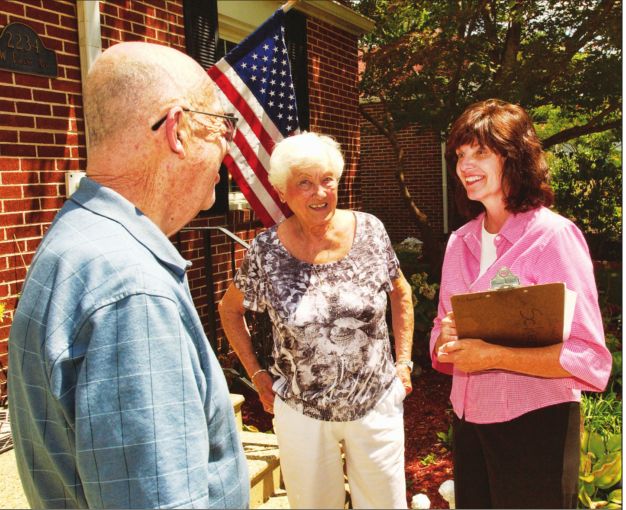
Republican Dennis Shackelford lives in Rochester with his wife, Judy. A father of four grown children, Shackelford describes himself as a fiscally conservative Republican. Shackelford started a chain of Hallmark shops in Springfield at the age of 24, and he says his business experience prepared him to address the state’s budget problem.
Shackelford handily won the primary race against Jared Perry of Decatur, but he faces an uphill battle against Scherer. In addition to being far behind in fundraising, Shackelford must contend with voter demographics that heavily favor a Democratic candidate.
In the precincts that comprise the 96th House District within Springfield, voters in 2008 overwhelmingly chose President Barrack Obama over Republican Sen. John McCain of Arizona. Obama received 69 percent of the vote in those precincts, compared to McCain’s 30 percent. In almost every precinct that Obama carried, it was a landslide in his favor, while McCain carried his handful of precincts by much slimmer margins. The district also encompasses the majority of Decatur precincts, and voters in that city overwhelmingly voted for Obama during the 2008 election, giving him 62 percent of the vote over McCain’s 38 percent.
Despite Shackelford’s smaller warchest, he says he’s “in the hunt,” and he discounts the Republican Party’s tepid financial support of him by saying they simply needed to spend their money on other races. He continues to walk the district with volunteers while running advertisements that tout his business experience and paint Scherer as Michael Madigan’s candidate of choice.
“I think we have too many people in office or running for office who have been chosen to run instead of who have chosen to run,” he says. “The concept of a citizen-statesman has kind of gone by the wayside, and we have too much influence from outside of our district that dictates how the state is run.”
Out of the $665,000 Scherer reported as of Oct. 26, about $392,000 of that was from Democratic political action committees, the majority of which are controlled by Madigan.
Scherer denies the notion that she is Madigan’s chosen candidate. She says she decided to run for office on her own before she even found out that lawmakers had redrawn the legislative district in a way that would give a Democratic candidate a chance. Her decision was based on a conversation with a fellow teacher, she says, and while she’s grateful for Madigan’s financial support, she considers herself an independent candidate.
“I’m running on who I am,” Scherer says.
“I’m an independent thinker. I don’t know why they (Shackelford’s campaign) got the idea that just because I am supported by my party – as most people who run for office are – that they can automatically say that I’m going to be owned by them (the party). … I will vote for the people of my community that I represent every single solitary time. I’m too old to be doing this to make some people from Chicago that I don’t even know happy.”
Charlie Wheeler, longtime political observer and professor in the Public Affairs Reporting program at the University of Illinois Springfield, says Scherer shouldn’t be seen as a Madigan clone because Madigan doesn’t tightly control the members of
his caucus. A candidate bankrolled by Madigan will have a measure of
independence that varies by issue, Wheeler says.
 “She’s
not going to have the independence to say, ‘I want to vote for [House
Republican Leader] Tom Cross for speaker,’” Wheeler said. “On the other
hand, if there’s an issue that’s important to her district, and it’s not
something that’s of much concern to the city of Chicago, she can vote
for her district. Despite what some editorial writers think, Mike
Madigan does not force his people to vote against their best interest,
because if he did, it wouldn’t help him in the long run. He works hard
to get these people re-elected, and the only vote he really, really
cares about is the first vote that determines who is going to be
speaker.”
“She’s
not going to have the independence to say, ‘I want to vote for [House
Republican Leader] Tom Cross for speaker,’” Wheeler said. “On the other
hand, if there’s an issue that’s important to her district, and it’s not
something that’s of much concern to the city of Chicago, she can vote
for her district. Despite what some editorial writers think, Mike
Madigan does not force his people to vote against their best interest,
because if he did, it wouldn’t help him in the long run. He works hard
to get these people re-elected, and the only vote he really, really
cares about is the first vote that determines who is going to be
speaker.”
Scherer says
her campaign has benefited from logistical and staff support provided
by the state Democratic Party, but most of her campaign materials have
been her own creation, including several direct mail fliers sent out by
the state Democrats.
“I
ran the whole show, for lack of better words,” she says, adding that
negative ads run in her name by the Democratic Party during the primary
left a sour taste in her mouth.
“After
the primary, I learned a lot, having been new,” she says. “I said ‘It’s
going to be a whole new program or I’m going to go this alone without
the Democratic Party.’ I just cleaned house and basically started with a
whole new staff.”
Still,
some of Scherer’s direct mail fliers raise questions about her
knowledge of public policy. One flier says she will prevent cuts to
Social Security and Medicare, which are federally administered programs,
the benefits for which state legislators don’t have a say in changing.
“It’s
based on the premise that people don’t really understand what’s going
on,” Wheeler says. “About the only nice thing that can be said about it
is that it’s not being negative against another candidate.”
Asked
to explain the mailer, Scherer says that as a state lawmaker, she’ll
have direct access to Illinois’ lawmakers in Washington, D.C., which she
says puts her in a better position to argue against cuts. She says
she’ll also work to help constituents with any problems they may have
with those federal programs.
Another
mailer for Scherer says she will keep downstate education dollars from
being spent on Chicago schools. Data compiled by the Illinois Commission
on Forecasting and Government Accountability shows that Chicago’s Cook County and a
handful of collar counties produce more revenue for the state than they
receive in General State Aid for education, while most downstate
counties receive more state aid than they generate in revenue. Scherer
explains the discrepancy by saying she knows the state’s education
funding formula in-depth from her years of negotiating teacher
contracts, and she still believes downstate counties get shortchanged.

The
most recent polling by We Ask America shows Scherer ahead of
Shackelford by 16 points at 58-42. Kent Redfield, professor emeritus of
political science at UIS, says Scherer likely has the race won already.
He points to Scherer’s massive fundraising lead and the extensive direct
mail campaign by the state Democrats, which likely gave Scherer
superior name recognition among voters.
Manar v. McElroy
While
the race in the 96 th House District looks to be already decided, the
48th Senate District race seems much closer. Republican Mike McElroy of
Decatur and Democrat Andy Manar from Bunker Hill square off to replace
retiring Sen. Larry Bomke, R-Springfield. The race has spawned several
negative ads, with each accusing the other of mishandling roles they
have already served in local government.
The
candidates both say their local government experience has prepared them
for the Senate, though Manar has more broad experience in addition to a
background in state government. Manar formerly served on the city
council in his hometown of Bunker Hill, which is about 50 miles
southwest of Springfield. After one term on the city council, Manar
served for two years as mayor of Bunker Hill and was elected to the
Macoupin County Board. He is finishing his fourth term on the board,
where he has been chairman since 2004.
Manar’s
interest in the Senate seat comes from his work for the Illinois Senate
Democratic Caucus. His early work there focused on constituent
services, and he later went on to become the Senate Democrats’ budget
director and chief of staff for Senate President John Cullerton of
Chicago. Manar describes himself as a centrist and says his experience
in state and local government has given him knowledge of dealing with
budget problems.
“I
see the same types of things in state government that I saw in Macoupin
County,” Manar says. “I obviously have a strong budget background, both
on the local level and the state level. I want to use my proven
knowledge, experience and track record of being able to balance a budget
during a financial crisis at the state level.”
Mike
McElroy was elected mayor of Decatur in 2011, a post he’ll have to give
up if elected to the Senate. McElroy previously served 10 years on the
Decatur City Council and is vice president of sales for beer
distribution company Skeff Distributing. He describes himself as
fiscally conservative and says he decided to run for the Senate because
he’s concerned about the state’s budget situation. The City of Decatur
was able to build a $4.5 million “rainy day” fund while he was in office
as a councilman and mayor, he says, and he looks forward to working
with Democrats to solve the state’s budget problem.
“I
don’t believe for one minute that the only good idea comes from a
Republican,” he says. “Quite frankly, I wish you didn’t have to be a
Republican or Democrat. I have always felt consensus-building was one of
my strengths, and it’s something I really enjoy doing.”
The
two candidates have traded accusations of poor financial management of
their respective offices. In one advertisement, McElroy calls Manar
“Blago’s Senate budget boss,” referring to the fact that Manar was
budget director for the Senate Democratic Caucus during the time that
disgraced former governor Rod Blagojevich was in office. McElroy claims
in his ad that Manar had a hand in engineering Illinois’ current budget
shortfall. Manar fired back with his own ad, denying McElroy’s
accusations and leveling his own charges that McElroy had raised
property taxes in Decatur and increased the city’s spending by 37
percent. McElroy denies the accusations, saying some of the time frame
referred to in Manar’s ad was before he was even on the city council. The Decatur Herald & Review newspaper chastised Manar for using H&R articles misleadingly in an ad attacking McElroy.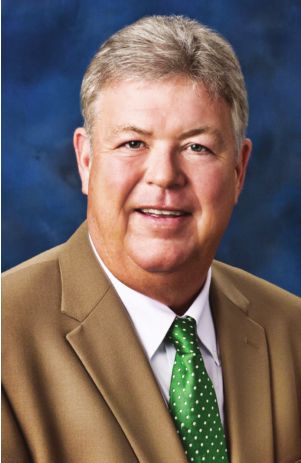
Polling
in the 48th Senate District has shown mixed results, with McElroy and
Manar about even at the start of the campaign. McElroy got a later start
to the race, however, giving Manar a leg up. An early Senate GOP poll
put McElroy ahead by 13 points, but subsequent polls by the Senate
Democrats and polling firm We Ask America show Manar leading by five
points.
Manar has also
raised and spent far more campaign cash than McElroy. As of Oct. 28,
Manar had reported almost $1.4 million in campaign contributions and
more than $579,000 spent. McElroy reported nearly $900,000 in
contributions and about $224,000 spent. Manar has received heavy support
from his party, including nearly $564,000 from state and county
Democratic PACs and from funds controlled by Democratic state lawmakers.
McElroy has received considerably less from the Republican camp,
totaling about $403,000 from state and county Republican PACs and from
funds controlled by Republican state lawmakers.
Redfield says Manar likely has the upper hand in fundraising because of his connection to Senate President Cullerton.
“I’m
just speculating, but the Senate Democrats probably want to invest in
the district they drew to elect their guy,” Redfield said. “Andy was
Cullerton’s chief of staff, so the personal element in this race makes
it feel less clinical than a lot of other races. Maybe the Republicans
have not put as much money into the race because they see it may be
better spent elsewhere in another race.”
Despite Manar’s fundraising advantage, the race is still too close to call, Redfield says.
“It’s
a lot easier to draw a downstate House district that either protects an
incumbent or punishes an incumbent of the other party,” Redfield said.
“Senate districts are different because there aren’t huge concentrations
of Democrats downstate. It’s not a slam dunk by any stretch of the
imagination.”
Contact Patrick Yeagle at [email protected].


