FOOD | Julianne Glatz
The folks at Greater Midwest Foodways Alliance are at it again! In years past, the GMFA, an organization dedicated to “celebrating, exploring, and preserving unique food traditions and their cultural contexts in the American Midwest,” has held symposia with such Midwestern themes as “Stuffed” (Sausages), “Sweets,” “Beef” (Following the Cattlemen’s Trail), and Foodways of the Great Depression. I’ve not been able to attend them all, but thoroughly enjoyed those I have. I asked GMFA Vice-President Catherine Lambrecht how they choose their symposia themes: “Ideas come from prior symposium participants, board members and whatever we observe is being discussed in the media, Internet and literature. Once we have a salad bowl of ideas, we begin to prioritize by available resources (books, potential speakers, web searches, research topics). What’s most important is our enthusiasm for a topic, because a keen interest and lots of ideas can move mountains!” This year’s symposium topic is “Road Food: Exploring the Midwest One Bite at a Time.” Lambrecht says, “It was clear the topic of Road Food would resonate to many in different ways. We had people independent of each other who suggested food carts, food trucks, drive-ins, diners and supper clubs.” This year’s GFMA Symposium will take place April 27-29 at its usual location, Chicago’s Kendall College School of Culinary Arts. Also as usual, it’s sure to include lots of fascinating and fun information and lots of delicious food – not least among the reasons to delve into the anthropology of food!
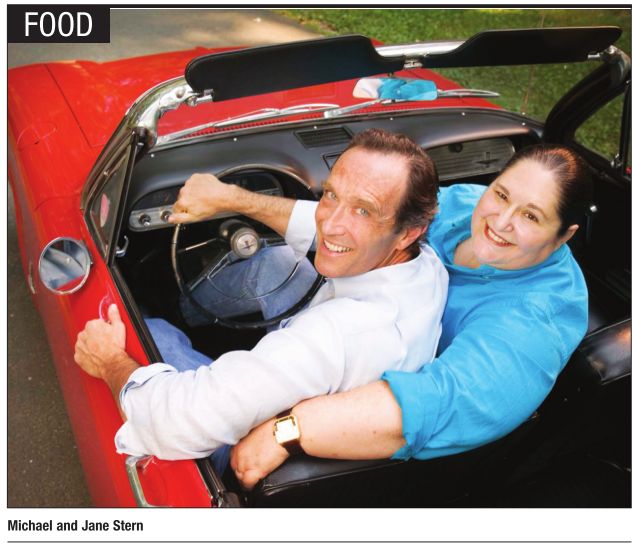
This year’s keynote speaker is Michael Stern, who, along with Jane Stern, founded Road Food, which since 1977 has comprised the publication of more than 40 books and a website, Roadfood.com, that pioneered Internet food reporting and photography and is my go-to source for local eats when I’m traveling. The Sterns appear weekly on PBS’s “The Splendid Table” (which can be heard locally at 3 p.m. every Sunday), are contributing editors to Saveur Magazine, and frequently write for Parade. I met the Sterns several years ago, and last year had the opportunity to interview Michael, a Chicago native, at length for my 7/21/11 IT column. Talking with him was delightful; I’m certain it will be equally pleasurable to hear him discuss “Will Success Spoil Regional Food?” Speakers at the symposium come from all over the Midwest and will include yours truly. On Saturday I’ll be talking about Springfield’s signature sandwich, the horseshoe; miniature versions (horseshoe sliders?) will be part of Saturday’s lunch menu that will also include dishes referenced in other talks.
Here are some highlights from the rest of the program:
Terri Ryburn’s humorous tale of her family’s Route 66 road trip taken in 1953 when she was five years old. She traveled in a Ford Model A pickup truck along with her parents, four brothers and her dad’s two hunting dogs. That trip instilled a lasting love for the “Mother Road,” which culminated in her 2007 purchase of a gas station along old Route 66 in Normal that she’s restoring to it’s 1931 heyday and will be opening as a Route 66 Visitors Center, tea room and bed and breakfast.
“Drive-In Restaurants Before and After the Dawn of Fast Food: Food Theater.” Mary Bergin explores why some
classic drive-ins in her native Wisconsin still flourish – including
two with roller-skating carhops! Joan Stuttgen is a folklorist who has
authored two ethnographic books about the food, people, culture, social
rituals and history of Indiana and Wisconsin small town cafés. She’ll
compare the iconic foods, cultural traditions and history of the two
states and how they impacted daily specials and social rituals in small
town cafés. She’ll also talk about her fieldwork methodologies and
research. “Everyone is always very curious about why and how I ate my
way across two states one diner at a time,” she says. “Most people have a
romantic view of my adventures and have no idea just how much work
there is!” Lucy Long is the executive director of the Center for Food
and Culture in Bowling Green, Ohio, as well as adjunct faculty for the
Master’s Degree Gastronomy Program at Boston University. She’ll be
discussing “Culinary Tourism in the Land of Meat and Potatoes and Green
Bean
Casseroles.” Long says, “If we open our eyes to the meaningfulness of
food to residents, the historical contexts behind contemporary food, the
…totality of activities and concepts surrounding food, and the idea of
‘reading’ a culture through its food, we can turn a culinary roadtrip to
the Midwest into an adventurous exploration.”
 Culinary
historian Shirley Cherkasky will share the story of how her family made
it through the Great Depression. After her father lost his job, he
converted the family car into a bakery truck and drove it from farm to
farm selling Cherkasky’s mother’s pies. She made 15-20 pies six days a
week which sold for 25 cents each: single or double crust, fruit, cream
or custard.
Culinary
historian Shirley Cherkasky will share the story of how her family made
it through the Great Depression. After her father lost his job, he
converted the family car into a bakery truck and drove it from farm to
farm selling Cherkasky’s mother’s pies. She made 15-20 pies six days a
week which sold for 25 cents each: single or double crust, fruit, cream
or custard.
Glen Ellyn Chef Kelly Sears
will reminisce about her vacations in northern Wisconsin that she’s
taken virtually every summer of her life. To her
those vacations are not just about “sun, fun, water and bug spray;” they
also provide “a membership card to an exclusive club of food memories
from the lake.”
A Chicago Sun-Times reporter
since 1985, David Hoekstra will be discussing Midwest Supper Clubs. But
Hoekstra’s supper clubs are a different genre than the now-defunct
Springfield establishments that locals defined as supper clubs: The Lake
Club, The Mill, and Stevie’s Latin Village. Like Springfield supper
clubs, Hoekstra’s had their heyday in the 1950s and 60s and “opened as a
one-stop dining destination where folks would spend an entire evening
from a cocktail hour to nightclub-style entertainment after dinner.” But
they’re located in the upper Midwest: Michigan, Minnesota and
Wisconsin. Hoekstra says a Midwest supper club is “so out there its
characteristics are indelible. A good supper club has a cool, dark
setting…cloth napkins…and relish trays. A good supper club has a Friday
Night Fish Fry… will serve prime rib on Saturday...and [is] almost
always out in the country with a lake and woods view….Beer is never
served on tap at a real supper club. Real supper clubbers drink Old
Fashioneds and martinis. A few still exist and they’re at the fork in
the road between yesterday and today.”
There
will also be an exploration of Midwest farmers markets and the stories
of some of the vendors Janine MacLachlan discovered as she researched
her upcoming book, Farmers Markets of the Heartland. And sommelier and linguist Clara Orban will talk about Illinois wineries.
As
I said, participants don’t just talk and learn about food – they get to
eat it too. The feasting begins with a discussion of the explosive
growth and popularity of food trucks that leads to food truck dining on
Friday night, to a plethora of dishes on Saturday starting with Indiana
baked oatmeal in the morning and a lunch that will provide samples of
multitudinous Midwest classics, among them Springfield’s horseshoes,
Nebraskan Runza (??), Pig Pickin’ Cake, Double Crust Fruit Cobbler; the
day ends with an Illinois Wine and Wisconsin Cheese tasting. The grand
finale is Sunday breakfast at Chicago’s legendary Lou Mitchell’s. That
is, unless participants opt for the guided tour of the Maxwell Street
Market, which has some of the best and most authentic Mexican street
food north of the border. I’ll be passing on that, not only because I’ve
been to the Maxwell Street market many times, but also because I’m sure
I won’t have room for more! Cost for GMFA's April 27-29 Road Food
Symposium is $85, which includes the program and all Saturday meals, but
not Friday’s food truck dinner or Sunday breakfast. For more
information or to register, visit GFMA’s website, www.greatermidwestfoodways.com.
On Sunday, April 22, I’ll be appearing with Lambecht on Chicago’s WLS
TV to talk about the symposium and Springfield horseshoes.
Contact Julianne Glatz at [email protected].


