The writings of Andrew Bacevich, a Vietnam veteran and retired Army lieutenant colonel whose own son was killed in Iraq in 2007, is one place to begin. Bacevich, a professor at Boston University, has written
The New American Militarism and edited
The Long War, both worth absorbing.
For the military point of view, there is the 2007 Army-Marine Counterinsurgency Field Manual developed by Gen. David Petraeus, with its stunning resurrection of the Phoenix model from Vietnam, in which thousands of Vietnamese were tortured or killed before media outcry and Senate hearings shut it down. David Kilkullen, Petraeus’ main doctrinal adviser, even calls for a “global Phoenix program” to combat Al Qaeda-style groupings. These are Ivy League calls to war, Kilcullen even endorsing “armed social science” in a New Yorker article in 2007.
For a criticism of counterinsurgency and defense of the “martial spirit,” Bing West’s recent The Wrong War is a must-read. West, a combat Marine and former Pentagon official, worries that counterinsurgency is turning the army into a Peace Corps, when it needs grit and bullets. “America is the last Western nation standing that fights for what it believes,” he roars.
Not enough is being written about how to end the wars in Iraq, Afghanistan and Pakistan, but experts with much to say are the University of Michigan’s Scott Atran (Talking to the Enemy) and former UK envoy Sherard Cowper Coles (Cables from Kabul). Also there is my own 2007 book, Ending the War in Iraq, which sketches a strategy of grass-roots pressure against the pillars of the policy (the pillars necessary for the war are public opinion, trillions of dollars, thousands of available troops and global alliances; as those fall, the war must be resolved by diplomacy).
The more we know about the Long War doctrine, the more we understand the need for a long peace movement. The pillars of the peace movement, in my experience and reading, are the networks of local progressives in hundreds of communities across the United States. Most of them are citizen volunteers, always immersed in the crises of the moment, nowadays the economic recession and unemployment. Look at them from the bottom up, and not the top down, and you will see:
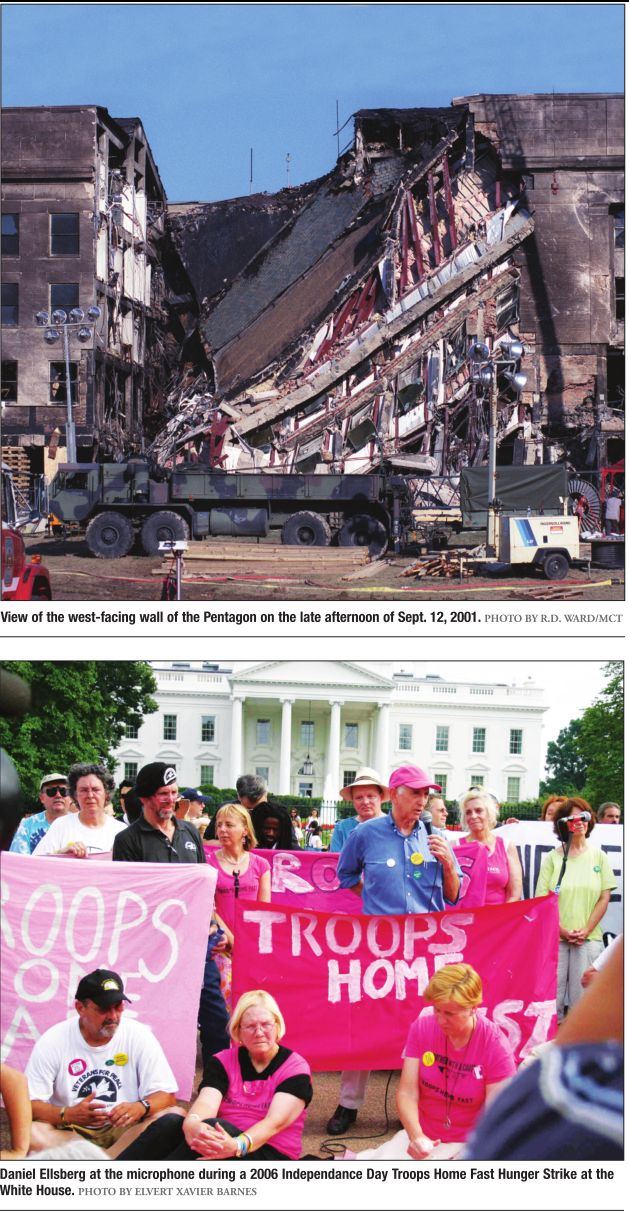
• the people who marched in the hundreds of thousands during the Iraq War; • those who became the enthusiastic consumer base for Michael Moore’s documentaries and the Dixie Chicks’ anti-Bush lyrics; • the first to support Howard Dean when he opposed the Iraq war, and the stalwarts who formed the anti-war base for Barack Obama; • the online legions of MoveOn who raised millions of dollars and turned out thousands of focused bloggers; • the voters who dumped a Republican Congress in 2006 on the Iraq issue, when the party experts said it was impossible; • the millions who elected Obama president by an historic flood of voluntary enthusiasm and get-out-the-vote drives.
• the majorities who still oppose the Afghanistan and Iraq wars, and want military spending reversed.
This peace bloc deserves more. It won’t happen overnight, but gradually we are wearing down the pillars of the war. It’s painfully slow, because the president is threatened by Pentagon officials, private military contractors and an entire Republican Party (except the Ron Paul contingent), all of whom benefit from the politics and economics of the Long War.
But consider the progress, however slow. In February of this year, Rep. Barbara Lee passed a unanimous resolution at the Democratic National Committee calling for a rapid withdrawal from Afghanistan and transfer of funds to job creation. The White House approved of the resolution. Then 205 House members, including a majority of Democrats, voted for a resolution that almost passed calling for the same rapid withdrawal. Even the AFL-CIO executive board, despite a long history of militarism, adopted a policy opposing Afghanistan.
The president himself is quoted in Obama’s Wars as opposing his military advisors, demanding an exit strategy and musing that he “can’t lose the whole Democratic Party.”
At every step of the way, it must be emphasized, public opinion in congressional districts has been a key factor in changing establishment behavior.
In
the end, the president decided to withdraw 33,000 American troops from
Afghanistan by next summer, and continue “steady” withdrawals of the
rest (68,000) from combat roles by 2014. At this writing, it is unclear
how many remaining troops Obama will withdraw from Iraq, or when and
whether the drone attacks on Pakistan will be forced to an end.
continued on page 16