Choice schools
District 186 banks on “choice,” so parents will choose city schools
EDUCATION | Rachel Wells
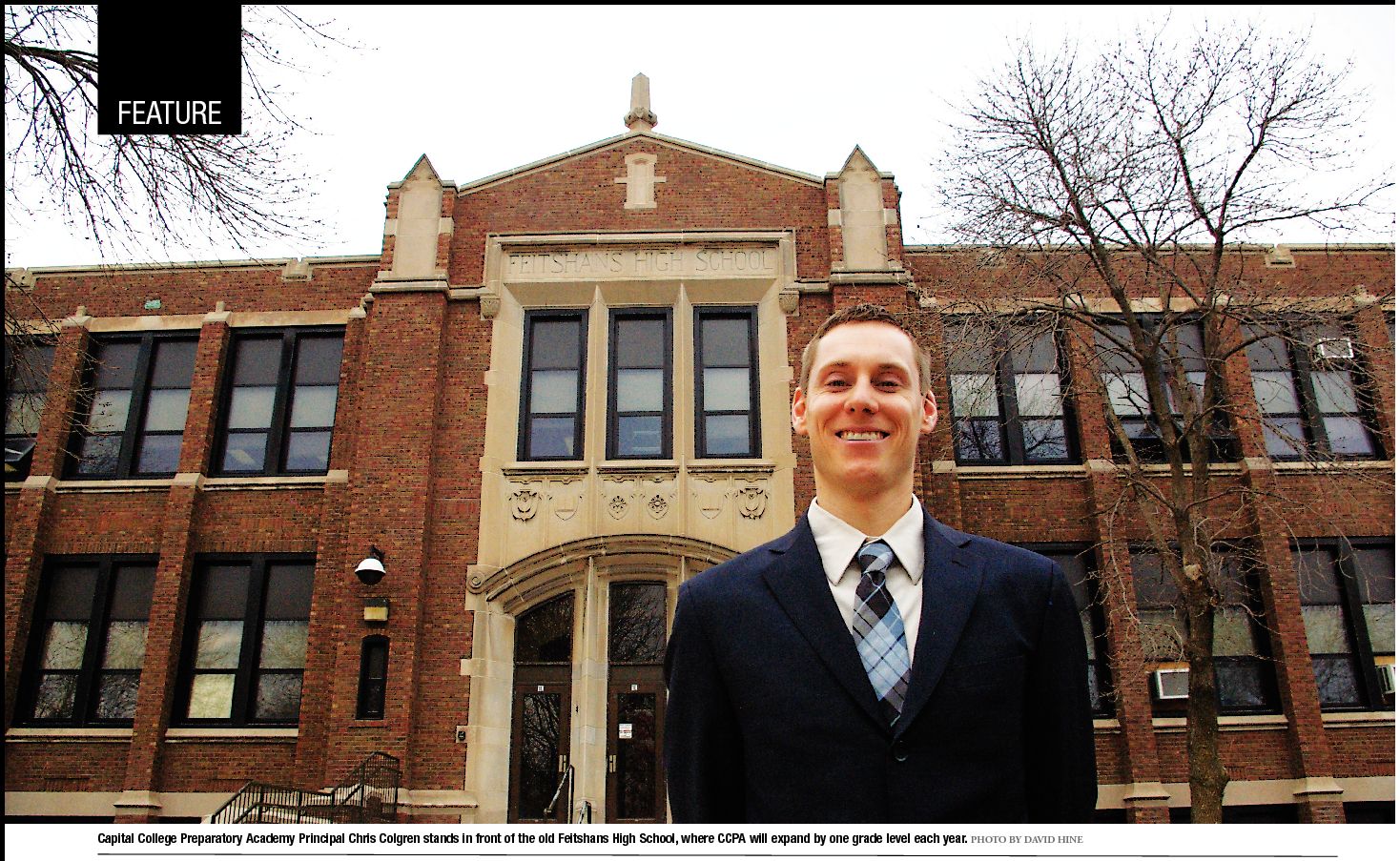
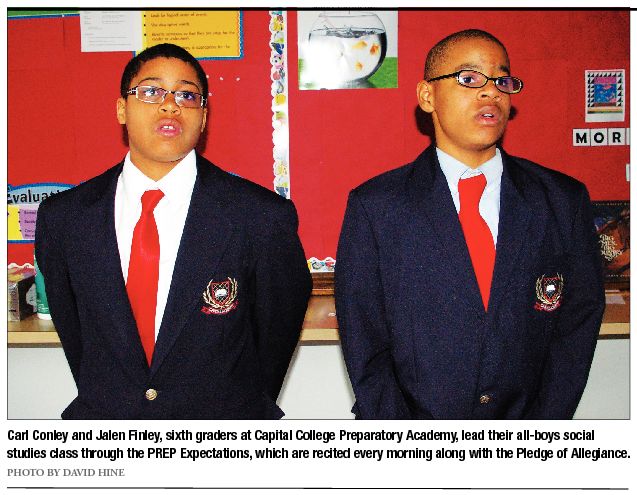
District 186 Superintendent Dr. Walter Milton dreams of a Springfield public school system full of “choice,” with a series of magnet schools, which accept students regardless of where they live within the district, that teach the three R’s with unique approaches and focused missions. To that end, the district opened in August the new Capital College Preparatory Academy, a middle school designed to send 100 percent of its graduates to and through college. In support of the new program, the district in March approved a plan for CCPA’s expansion. If Milton has his way, within the next two years the district will be developing yet another specialized school, or magnet school, designed to draw students from across the district.
All of this, Milton says, is the way to keep Springfield students engaged in their learning and district parents engaged in Springfield public schools. In addition to boosting some students’ academic achievement, offering “choice” is a way to keep families from fleeing either to less-urban districts or to independent but district-funded charter schools, he adds. “Capital College is not for everyone, but if you go to a restaurant and you look at the menu, you have different options to satisfy your taste buds, and that’s what we want to do for families. We believe that we can attract more families … from all ends,” Milton says.
But Milton’s first move toward more choice in Springfield schools has been controversial. The expansion of CCPA necessarily means the end of another magnet school, Feitshans Academy, a kindergarten through fifth-grade elementary school, which has been housed for a decade in the same 1101 S. 15th Street building, where Feitshans High School was housed until it closed in 1967. The year-byyear phaseout of Feitshans Academy, starting with kindergarten in the next school year, to make room for new CCPA students also highlights the impact of the district’s first flirtation with choice schools.
In 2000, District 186 entered the choice arena, opening its first three magnet schools – Feitshans; Iles, a school for gifted students; and the technology-focused Lincoln Magnet – all at the same time, a response to the 1998 opening of Springfield’s first charter school, Ball Charter, says Bob Hill, former District 186 superintendent. While Ball Charter, Lincoln Magnet and Iles all continue to thrive, Feitshans falls short. Though Milton’s longterm vision for District 186’s future includes a fine arts magnet school, Feitshans – itself a fine arts magnet school – won’t be it.
The district’s decision to phase out Feitshans has upset devoted Feitshans parents, but as they lobbied the school board to abort plans for a Feitshans phaseout, school board president Bill Looby offered one inarguable truth: “The parents at Feitshans and the staff are very passionate about their school, but it’s a choice district school that less and less people choose every year, precipitously.” Once with more than 600 students enrolled, Feitshans now hosts only 267 students, down significantly even from last year’s 324-student enrollment.
That population decline may be rooted in Feitshans’ first year, when, according to articles published at that time by the State Journal- Register, dozens of parents removed their children from the school within just the first few months due to behavior problems. While Ball Charter and Lincoln’s long waiting lists required lottery enrollment systems, and Iles operated on an invitation-only system, Feitshans – with nearly twice the maximum capacity as Lincoln – takes students on a firstcome-first-served basis.
Springfield Education Association president Dan Ford, who started teaching in Springfield at Feitshans during its second year, says Feitshans’ enrollment system may have led to a general feeling that the school became a dumping ground for problem students. “The perception of the staff was that other buildings were sending students … who didn’t necessarily fit the profile of the program, but that they just wanted out of the building,” Ford says.
At that time, Feitshans
was under the management of Edison Schools Inc., which promised to bring
technology and new assessment tools to quickly boost academic
achievement. By the end of the second year in operation, the for-profit
company managing Feitshans-Edison earned less-than-favorable headlines
nationally as its stock price plummeted. Through the five-year contract,
academic achievement barely budged, and in 2005 District 186 and Edison
Schools Inc. allowed the contract to expire. The district took over the
school but kept many of the Edison programs in place.
“Edison was unique. It
was a nationallyknown model,” says Diane Rutledge, the superintendent
who oversaw the school’s move from Edison back to District 186
management. Rutledge is now executive director of the Large Unit
District Association, of which District 186 is a member. “Though we
didn’t keep it forever, it really served its purpose for a period of
time.” She says that, through the Edison model, the district gained
experience with online assessment and new curriculum models.
Dan
Ford says the change, though in practicality not that significant, may
have led to changing views of the school. “I think when Edison went
away, they [District 186] maintained the basic design from when Edison
was there, but the perception was, if it’s a district school, how is it
going to be any different?” Rachel Thome, a Feitshans parent who opposes
the school’s phaseout, acknowledges that Feitshans has always had a bit
of a “bad rap,” though she says that the teachers are “excellent,” that
her own children have excelled there academically and that the overall
test scores of the school are higher than those of Graham Elementary,
the school her children would have attended if not for the district’s
choice schools.
Feitshans
in 2010 did perform significantly better than Graham on the Illinois
Standards Achievement Test (ISAT). While 63 percent of Feitshans
students met standards last year, only 55 percent of Graham students did
the same. Still, several other neighborhood elementary schools,
including Sandburg, Owen Marsh, Lindsay, Hazel Dell and Butler,
outperformed Feitshans.
Feitshans
also scored well below the district’s overall 71 percent passing rate,
and far below Iles’ 100 percent, Lincoln’s 96 percent and Ball Charter’s
85 percent passing rates.
continued on page 16