It’s a zoo out here
“In my group, there were individuals who were unhappy [with the changes]. I think all of us were,” zoo society president Dave Ploskonka says. “But we moved past it very quickly and got to the point that we were just going to find additional sources of revenue, and I really feel that by next year we will have made up for those with the new events we’ve added.” The society this year took over and expanded the food operations at Zoolie Ghoulie and has added a pancake breakfast to its fundraising repertoire. “Ultimately our goal is to help the zoo succeed and prosper. Whether those funds from those events are coming to us or going to the zoo, it’s really staying in the same place. … It’s still for the betterment of the zoo.”
Turning point
Madura and Estep’s complaints don’t stop with the handling of the budget. They’re concerned about the zoo’s long-term future. “It’s the neglected stepchild of the park district in some ways,” Estep says.
Madura says she used to be proud of Henson Robinson Zoo, especially when comparing it to other community zoos in central Illinois. Now, however, Springfield’s facility pales in comparison to places like Decatur’s Scovill Zoo, opened just a few years before Henson Robinson Zoo opened in 1970, she says.
At Scovill, visitors are greeted first thing by a flock of flamingos, a rare thing for Illinois zoos, says Dave Webster, the zoo’s director. Inside, visitors can take a quick zip past the monkeys on a zoo train, ride a carousel of endangered species and see the new red panda or a couple of cheetahs.
Scovill Zoo, with about 15 acres of land, is about the same size as Henson Robinson Zoo, which sits on about 14 acres of land on the east side of Lake Springfield, but Scovill has an annual budget of about $993,000, or nearly $300,000 more than Henson Robinson. Scovill closes through the winter but has an attendance of about 97,000 people each year. Thornton says Henson Robinson hosts anywhere from 85,000 to 95,000 visitors each year, depending on weather, with record numbers in the mid- 1990s reaching about 112,000 visitors.
Scovill Zoo’s next project is to update exhibits at the center of the zoo, where the facility was focused when it opened 43 years ago. That project is outlined in the zoo’s master plan, updated just a few months ago at a cost of about $20,000. Webster says the zoo’s previous master plan was written about five years earlier.
Henson Robinson Zoo, in contrast, is still working with a master plan written in 1987 and never since revised. Although Springfield’s zoo director Thornton has requested funding for a master plan for at least the last four years, the park district has never provided the tens of thousands of dollars it expects hiring a planning firm would cost.
But, with the help of a few volunteers, Thornton may get his wish. Estep’s vocalization of some of the zoo’s problems has led the park district to form a volunteer committee, which will include zookeepers and administrators, zoo society members and community members, who will collaborate to write the zoo’s next master plan. The group has yet to meet, but all those involved with the zoo are already dreaming of new exhibits and improvements. Park District executive director Mike Stratton says the plan could be completed within six to eight months.
Peeler says the idea of a new master plan, developed with direct input from zookeepers and the community, is bringing new energy to the zoo that could help it on all fronts. “One of the things that I think is very exciting about this [the master plan] is, yes, we do have communication issues, and we have morale issues, but sometimes we have to hit the bottom and say, ‘OK this is where we’re at. We know we don’t want to be here,’ and look at the overall picture and see where we want to go.”
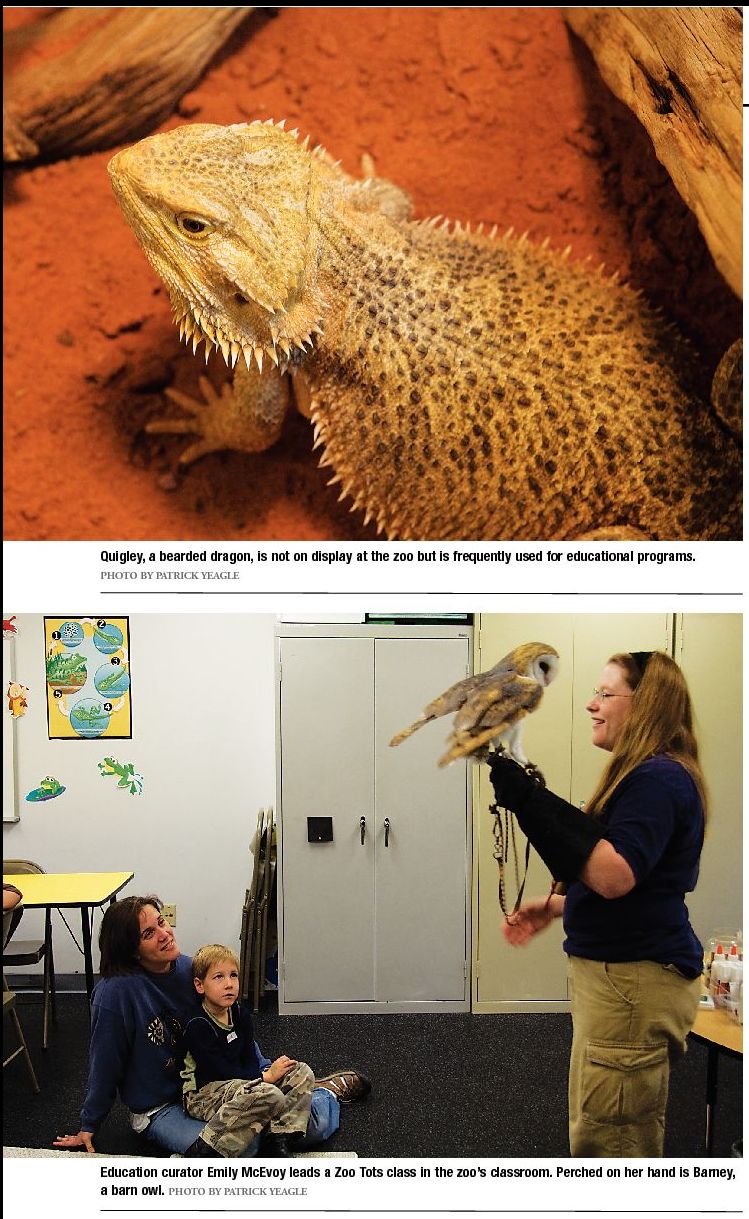
One of the most common refrains from zoo staff is a call for a reptile building to house several snakes and lizards that the zoo now keeps in a barn out of
public view. Some of the creatures are used for educational programs,
but others, including Saffron, a 16foot long, 120-pound amelanistic
Burmese python, are only ever seen by zoo staff.


