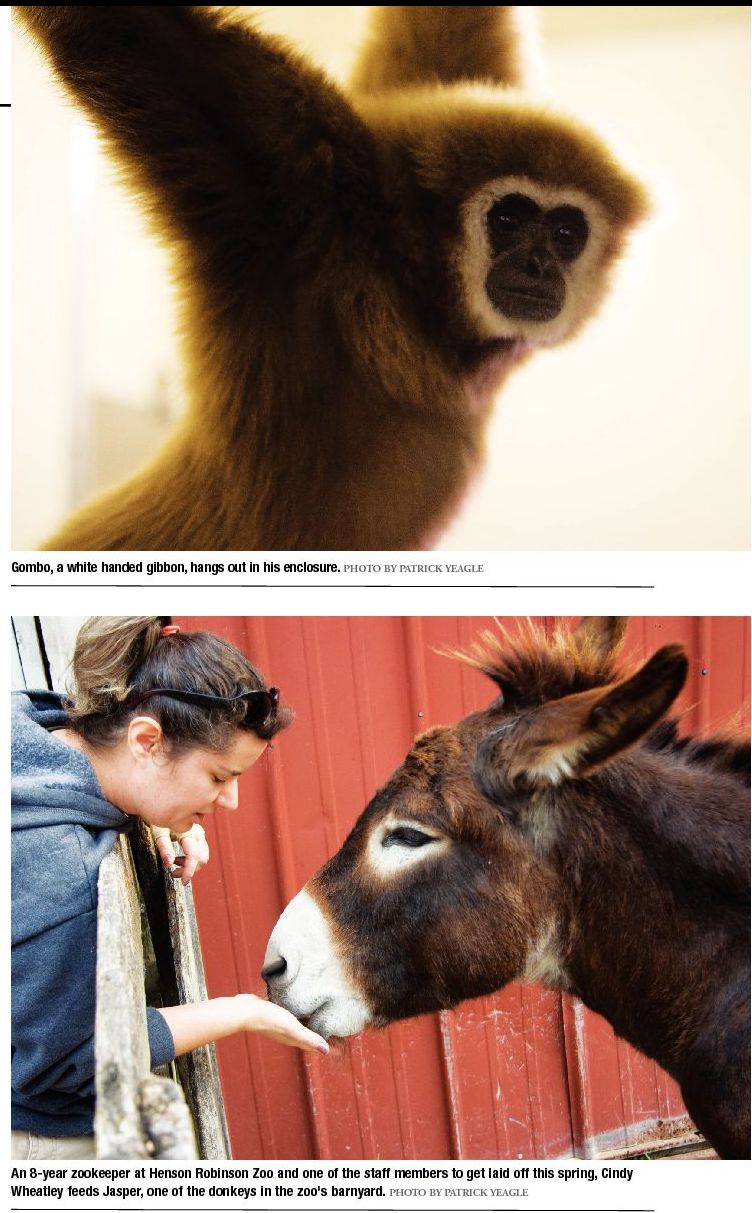
“Layoffs were the last thing we wanted to do,” says zoo director Talon Thornton, adding that most other line items took hits as well. He highlights the fact that salaries, before the layoffs, made up about $549,000 of the zoo’s $711,000 budget in fiscal year 2009-2010. With the layoffs, salaries will cost the zoo about $413,000, for a savings of about $136,000.
The zoo requires at least four zookeepers every day to ensure that the animals receive the proper care. To meet that need, while also adjusting to the new budget situation, the zoo kept three of its seven zookeepers as full-time staff members. The remaining four zookeepers, all of whom have college degrees related to zoology, were offered part-time seasonal positions in which they take up to four unpaid months off of work and receive no benefits but still perform the same duties when they are at the zoo.
Three zookeepers accepted the part-time jobs while one quit. The zoo also hired two new part-time zookeepers to maintain appropriate daily staffing levels. The threeperson full-time maintenance crew also took a hit. The park district transferred two zoo maintenance workers to Southwind Park, leaving only one behind at the zoo, which hired another part-time seasonal maintenance worker to help out.
“We’re a small staff, so anything like that can be pretty devastating and difficult to figure out how to wiggle through and get through it,” says Jackie Peeler, the zoo’s assistant director and curator, acknowledging that morale is at an all-time low.
Megan Madura, who started working at Henson Robinson Zoo in 1996 and was the laid-off zookeeper with the most seniority, says morale has never been great. “We don’t get information, let alone say our opinions. I think from their point of view they have involved us, but they haven’t,” Madura says of the four zoo administrators, including Peeler and Thornton.
Now, after unexpectedly losing her benefits and about one-third of her $32,000 salary, she’s asking more and more questions, including why administrators chose to make the cuts they did.
Four administrators at the zoo kept their jobs, but their salaries – ranging from about $33,000 to about $59,000, and totaling about $174,000 – were held flat from the previous year. Madura, as well as volunteer Estep who became friends with Madura, says the zoo has too many administrators, in light of the recent layoffs, but Thornton says two administrative positions were already cut in the last several years.
The union representing Madura and her fellow zookeepers, American Federation of State, County and Municipal Employees Local 2050, blames the park district for shifting resources to new parks instead of working to maintain old parks. “There’s no way we can keep up with the work,” says Brian Schroeder, AFSCME Local 2050 president. “They’re laying off 27 of our people [throughout the park district] and expanding with Southwind Park. It doesn’t make any sense.”
Schroeder has filed two labor grievances involving the zoo, both charging that the administration is weakening the union and avoiding paying overtime by using nonunion workers to perform his members’ jobs.
The first grievance was a response to a volunteer day at the zoo, which Estep says was necessary to keep leaves from overtaking the park. The second grievance complains that zoo director Thornton, a non-union employee, was performing maintenance work that should have been addressed by a union maintenance worker.
When asked about the second grievance, Thornton said he wasn’t aware one had been filed but did admit that he has performed duties usually delegated to maintenance staff, such as mopping and cleaning the restrooms, when the remaining full-time worker has been out sick. “We went from three maintenance staff to one. He needed help. … Stuff had to get done,” Thornton says.
Volunteers always have been essential for raising funds for the zoo’s capital improvements. The Springfield Zoological Society has been the major benefactor behind every new or upgraded exhibit at Henson Robinson Zoo, at least in the last decade. In the past, it has collected funds through zoo memberships and admissions to special zoo events, includ
continued on page 14


