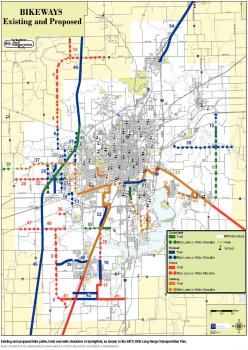
Bike to the future
continued from page 11
Communion with your fellow man is just one biking benefit, says Dick Westfall, manager of greenways and trails for the Illinois Department of Natural Resources. Alternative transportation – essentially any non-motorized way of getting around – can have a major impact on a city’s economy, environment and health.
“The oil spill in the Gulf of Mexico right now is showing that, if we can shift our routine, short trips from cars to bicycles and walking, it won’t solve all of our problems, but it can lessen our dependence on oil significantly and the environmental concerns that come with it,” Westfall says. “In addition, people are starting to understand they need to get more active. Ten or 20 years ago, people said, “I need to join a gym,” but now they’re looking at trails and seeing that it’s very easy to build that type of activity into their everyday lives.”
Promoting bike friendliness also helps develop tourism, says Amy Madigan, DNR greenways and trails coordinator. DNR is collecting economic data regarding bikes with the help of the national Rails to Trails Conservancy, and the data so far seem to show strong economic development in areas with well-planned trail systems.
“It’s made a pretty big impact on small businesses that are located near trails – ice cream shops, bicycle shops and such,” Madigan says. “People are finding businesses and things to do that they wouldn’t have normally seen, all because they’re using bike trails.”
Westfall says Springfield is already a prime spot for tourism because of the Abraham Lincoln historical sites here, and developing a better bikeway system “provides a reason (for tourists) to stay in Springfield an extra day, to shift from a passive museum experience to an active bicycling experience.
“I think trails can become people places,” Westfall says. “Trails can go through business districts, and they draw people. It becomes the place to go, and businesses take advantage of the density of people. It also helps to market our community to prospective businesses and workers by saying we have this set of amenities.”
There are even arguments for bikes as tools to bridge social and economic divides. Dave Sykuta, chairman of the Springfield Bicycle Advisory Council, says bikes may not be a panacea for all of society’s ills, but they are certainly much cheaper to own and operate than cars.
“I think the great common denominator is that you can enjoy bicycling on a lot of different levels,” Sykuta says. “There is an ‘everyman’ component to it. You can go out and get a good used bike for fifty bucks and you’re in business. It’s available to a lot of people who may not be able to afford a car.”
Planning for pedaling
In store for Springfield are a plethora of projects that should significantly enhance the


