8 Put it all on the line
Save energy with your laundry
Sooner or later, no matter how long you put it off, you’re going to have to do laundry. Here are some quick tips that will save energy and make your wash more earth-friendly.
Don’t over-dry. Over-drying can waste a ton of energy, and consequently cost you money! If you’re operating a dryer at your house, find out exactly how long you’ll need, so you can pull your clothes out without wasting time. If you’re an apartment-dweller, this is harder because some dryers don’t let you start them again if you open the door halfway through the cycle. Unless you’re drying super-heavy fabrics, you probably won’t need a full hour. If you go with the recommended medium-sized load, your clothes should be done in abut 40 minutes.
Air dry any remaining damp items. Cotton items like towels and underwear tend to dry pretty quickly. Take those
out about 30 minutes into the cycle, and finish the laundry with the
remaining items. This will dry your other clothes quicker. Put your
still-damp clothing over a chair or table. In the morning, they’ll be
dry and you can wear them to work or school. It’s not like you’re going
to fold your laundry right away anyway.
Don’t overload the machine. This seems
like common sense, but people do this all the time. Don’t stuff every
hooded sweatshirt you own, plus bed sheets and dress pants into one
machine. Overloading the machine means you’ll spend more time washing
and drying, thus you’re wasting energy. Unnecessary. Some washers will
tell you not to fill past a certain point, but the bottom line is: if
you’re struggling to fit everything in, there’s a problem. –Diane
Ivey
9 Commune with nature
Adopt a wild bird to Celebrate Earth Day
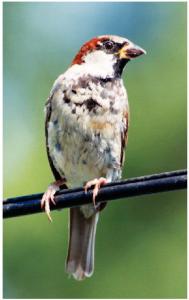
Earth Day revelers searching for a specific specimen to celebrate can check out International Migratory Bird Day — an annual event that calls attention to bird migration in the United States, Canada, Mexico, Central and South America and the Caribbean — at Adams Wildlife Sanctuary in Springfield this Saturday, April 24. Vern Kleen, a retired avian ecologist with the Illinois Department of Natural Resources, will man the Margery Adams Bird Banding Station from 9 a.m. to noon. He’ll collect birds from thin mist nets that are scattered throughout the sanctuary and bring them to the station to identify, measure and weigh. He’ll affix a band to their leg, and maybe even let you hold one before he releases it back into the wild.
Visitors will get the chance to “adopt” a bird — and if your bird is ever re-caught, you’ll get a letter from Kleen telling you when and where it was found. In just one three-month bird banding session last spring, Kleen identified 81 different species and nearly 1,500 total birds.
Jo Skoglund, membership/volunteer development coordinator for the Illinois Audubon Society, says Kleen’s work is the major draw because visitors “see birds up close and learn about bird banding.”
At 10 a.m. and 11 a.m., sanctuary staff will lead nature hikes to identify birds, trees and plants along the property’s one-mile trail. Throughout the day, visitors can also play the Migration Game on the shorter, quarter-mile trail. The goal is to successfully migrate by completing all 25 stations, but Skoglund warns that some birds won’t make it — that’s just how migration is.
“It’s fun
for families,” she says, “and it’ll be encouraging to get people to do
the trail.”
Sanctuary
staff will also offer face-painting and temporary bird tattoos for
kids. —Amanda Robert
For more information on International Migratory Bird Day, visit www.birdday.org.


