pital, she says, she was comfortable.
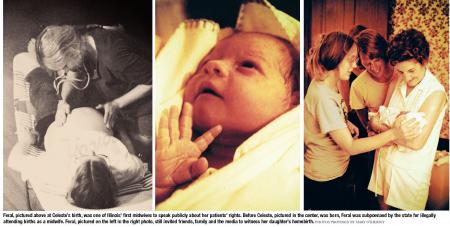
She was not drugged. She was attended by a midwife, and had immediate access to a pediatrician. She had her children by her side, and she was not separated from her new baby.
“I had no problem with being in the hospital,” Feral says. “I wasn’t opposed to hospitals — I’ve done lots of hospital births. It’s just having the choices and the control.”
Even as certified nurse midwives become more common, certified professional midwives are still mostly considered amateurs by the medical field since they don’t always receive a college education.
Nichols-Johnson agrees that while Feral was a competent midwife, she favors certified nurse midwives for their intensive education and training. American obstetricians are beginning to recognize the value of these health professionals, as well as the potential for safe homebirths, she adds, but need to set up more support for these alternative care methods.
“Childbirth is a physiological process, and so I think that the less we interfere with it, the better,” Nichols-Johnson says. “On the other hand, fortunately we do have means of intervention if it’s necessary. We just have to choose the right time.”
The Coalition for Illinois Midwifery formed in 2000 to help increase the availability of licensed midwifery services for mothers wanting to give birth at home. Legal homebirth practices, with doctors and certified nurse midwives, are located in only five Illinois counties: Cook, Bureau, DuPage, Lake and Winnebago.
Women in other parts of the state don’t have many safe choices, says Michelle Breen, one of the coalition’s board members. They’re forced to travel to a county with a homebirth practice, stay at home and give birth unassisted or seek illegal help from a certified professional midwife.
If the General Assembly passes the Homebirth Safety Act and provides licensure to these midwives, she explains, they could help meet the need for safe, out-of-hospital maternity care in the other 97 counties.
“This bill is needed to protect public safety — women deserve access to licensed care,” Breen says. “Homebirth is not going away. It’s not for everybody, but for the ladies who choose it, let’s give them regulated care.”
The bill has been held up in the House, but Breen says they’ve made progress in the past few weeks. Legislators have called for more education and training for certified professional midwives, and after working with state nursing organizations, the Coalition developed a list of detailed educational requirements to include in the bill.
“We’re pushing, and I think there’s enough support throughout the community to get this bill passed,” Breen says. “We’re hoping this is the time now.”
Twenty-seven states have already regulated certified professional midwives, including Wisconsin, which passed new legislation at the beginning of March.
Feral retired from midwifery in 2001, after 25 years of actively participating in more than 2,000 births. Back in 1997, she helped pass a progressive state law in Oregon that makes licensure voluntary for midwives and provides health care reimbursement for homebirths.
She is now working as an Americorps VISTA volunteer to organize a summer food program for children and youth who are eligible for subsidized lunches during the school year. She hopes to eventually expand the program to support children’s physical, mental and social health.
“I feel very positive about it, and it’s fun because I’m working with people whose babies I’ve delivered, or the kids themselves, who are now young adults,” Feral says.
And in her free time? She recently celebrated her daughter’s 30th birthday by taking her to see Avatar.
Contact Amanda Robert at [email protected].


