It’s hard to believe I’m once again writing the last column of the year. As always, when I look back over what I’ve written during the last 12 months, I think of information I couldn’t include, because of my word limit. The limit is actually good. It can be frustrating, especially when the subject is something I’m particularly enthused – or upset – about. But if I didn’t have that limitation, I’m pretty sure I’d ramble on endlessly, boring you and annoying my editor. I’ve come to appreciate the discipline that the word limit requires.
Often, too, after I’ve written about a topic, I discover additional information about it; updates, or something that’s pertinent or shows another dimension.
So for my last column of 2009, I’d like to share with you some of the rest of those stories.
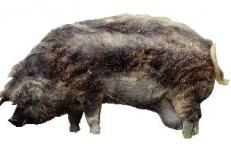
“Swine dining,” 12/3: There’s only one word for the heritage breed Mangalitsa pork and the Slow Food dinner at Maldaner’s that featured it on Dec. 17: WOW!!! I went into Maldaner’s kitchen the day the pig arrived, and watched as chef Michael Higgins cut it up and began preparations. The meat was as dark red as aged beef. The dinner a few days later was nothing short of spectacular. The 10-course pork-a-thon explored a multitude of ways to use this extraordinary ingredient, from lighter-than-air pork rinds that literally melted in the mouth; to testa (an Italianstyle headcheese); Kimchee (Korean pickled cabbage or daikon) consommé with a slice of roasted pork belly; porchetta (roasted pork loin filled with sausage) served with polenta; an astonishingly light and refreshing lard and buttermilk sorbet; pork loin cooked in milk (the recipe is at illinoistimes.com); a pecan tart with lard crust, and the finale of chocolate truffles rolled in Triple S Farms crumbled bacon. The Mangalitsa pork was as light and clean-tasting as advertised: even after all those courses, though everyone was certainly full, there wasn’t that feeling of heaviness that comes after eating a lot of greasy food. The meal definitively proved why Higgins remains at the top of the heap of area chefs. Stan Schutte, who raised the Mangalitsas, is hoping to have some available for purchase by regular customers next year.
“In memoriam: Gourmet Magazine, 1941- 2009,” 10/29: In tracking down some information about slavery in Florida’s tomato industry (see below), I contacted Gourmet’s last editor, Ruth Reichl, and we’ve exchanged several chatty e-mails – which, as I told IT editor Fletcher Farrar, is for me the equivalent of him e-mailing back and forth with Bill Keller, executive editor of the New York Times. Even though Gourmet is no longer, Reichl remains one of the most influential figures in America’s food scene. Look for more about her and her wonderful books in the new year.
“Single-handed cooking,” 10/15: Thanks so much to everyone who has asked how I’m doing after my accident. My shoulder and arm are much better, but it’s been a twosteps-forward-one-step-back process. The trick is exercising the affected areas enough to strengthen them, but not so much as to incur additional damage. Hydro-physical therapy has worked wonders, but just when my shoulder and arm seemed almost completely mended, I spent an afternoon putting up the last of the harvest’s vegetables for the freezer. Except for the by-then-familiar ache, it didn’t hurt while I was chopping and cutting; but an hour after I finished, the pain was even worse than when I first fell. Back to square one! I’m able to do more now, but appreciate my husband, Peter, more than ever: his cooking skills have picked up the slack.

“Julianne on Julie and Julia,” 8/13: Julie Powell’s new book, Cleaving: a Story of Marriage, Meat, and Obsession, was originally scheduled to be published in conjunction with the movie’s release. It was delayed until November, and a cursory look at the book shows why. I read several reviews online, all of which were negative, some scorching: “So Much Spice, Yet the Broth is Insipid,” “Where Narcissism and Insecurity Converge,” and “Not Worth the Paper It’s Written On.” Even the most favorable


