year as well. The number of new construction permits issued by the city has fallen only slightly this year compared with 2008, but the combined value of those projects has plummeted, compared with last year’s figures. By October 2008, the city had issued 165 new building permits for projects worth almost $122 million. By October 2009, it had issued 152 permits worth only $67 million. The decreased valuation means less ambitious projects and less tax revenue to support city services.
Home foreclosures in Sangamon County seem to have slowed their pace, with 509 so far this year, according to data from Sangamon County Circuit Clerk Tony Libri’s office. That number is relatively low for the area, considering there were 761 foreclosures here in 2008, 688 in 2007 and 693 in 2006.
Online foreclosure tracker RealtyTrac, Inc., says Illinois has the sixth highest foreclosure rate among all states, with almost 20,000 foreclosures statewide through October — one for every 263 homes. Across the United States, that rate is even higher, with 937,840 homes — one in every 136 — receiving a foreclosure filing in the third quarter of this year, the company says.
Despite the lower number of foreclosures locally, the state and national rates remain high, feeding fears among consumers that the worst is yet to come.
Bright spots
Considering those factors – shuttered businesses, high unemployment, slowed growth and high foreclosure rates – the situation looks rather bleak, but there is another side of the story that the numbers alone don’t tell. Things could have been a lot worse, say some local professionals, and Springfield’s unique characteristics have spared this city much of the suffering felt elsewhere.
“The past year has been a struggle for a lot of businesses,” Farmer says. “But for cities our size, we’ve fared pretty well. Springfield has always had a fairly reasonable ability to withstand downturns because of some of the stabilizing elements in our economy, like state employment, insurance companies, health care, tourism….”
Despite its high unemployment numbers, Springfield is relatively better off than the rest of the state and the nation. The national unemployment rate is estimated at 10.2 percent, and Illinois’ unemployment rate was 11 percent as of October, with Decatur and Rockford experiencing rates of 13 and 16 percent, respectively. Farmer says Springfield has the second-lowest unemployment rate for middle-sized cities in Illinois, following closely behind Bloomington-Normal.
And although many small businesses around Springfield closed this year, other businesses saw fit to expand operations. The Orthopaedic Center of Illinois opened a posh new facility on Koke Mill Road in early September, allowing them to add more physicians and new services. Despite a decrease in elective surgeries and $2 million in Medicare charges unpaid by the state, OCI was in a position to expand this year because of good planning, says chief executive officer Lori Roethemeyer.
“Luckily, a lot of this was planned three years ago,” Roethemeyer says. “All of the financing was in place before the recent downturn started. And it does make us nervous, but once you start, you can’t stop. We’re taking the approach of growth – that we need to expand our services and revenue options to continue to grow.”
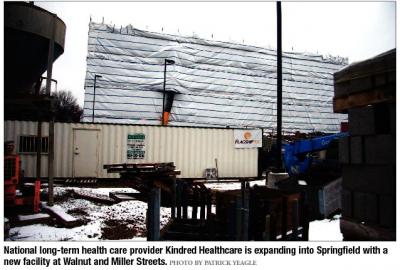
OCI is only one example of health care providers in Springfield pushing forward despite tough conditions. The Springfield Clinic also expanded this year, while the national Kindred Healthcare chain continued building a new 45-bed long-term acute care facility at Walnut and Miller Streets.
Meanwhile, community banks have been able to expand and keep lending relatively flat over the past year, despite the turbulence and scandal enveloping large national bank chains, says J. Michael Houston, president of Town and Country Bank and 2009 chair of the Greater Springfield Chamber of Commerce board of directors.
“If you go back and look at what hap-
continued on page 14


