  holistic system that meets the individual needs of each woman instead of passing them from agency to agency. The organization also helps empower these women through a progressive concept called “restorative justice.”
“The way our society envisions criminal justice, it’s about punishment,” Edmund says. “It’s about what does she deserve for what she did? Restorative justice takes a different tack. We ask, ‘Who’s been hurt and what do we need to do to fix that?’” As part of this method, participants acknowledge that they need to make amends with the people they’ve wronged in the past. They also accept that they, too, have been harmed by people in their lives and can now move forward. Costa never knew she could be so happy: “Today, I have to think about me first.
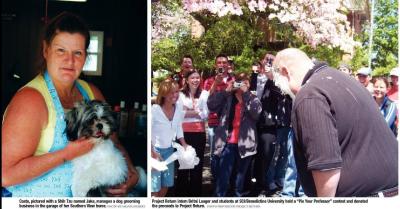
Today, I love me.” In addition to her dog grooming business, Costa works as a banquet server and sells Tupperware with her sister. She goes to bingo with her roommate, but other than that, she says, she’s a real homebody.
Her daughter stays with her most of the time, and she’s also working on reuniting with her youngest son, a soon-to-be 3-year-old named Jaedyn. He’s currently in foster care; she sees him every Monday and Wednesday.
When asked about the hardest part of the program, Costa says it’s been backing away from old friends who still use drugs. It’s difficult for her to watch them fail, she says, and know there’s nothing she can do except pray for them. “Not everyone is where I am,” she says. “Five years ago, I wasn’t there either. I know if I turn back and use, I’ll never be able to return to where I am today. They’re either going to put me away for life or I’m going to end up dead. I’m not willing to take my chances with either of those.”
Terry Dobbs, a third member of Costa’s partnership team, is a recovering alcoholic who’s been clean and sober for 17 years. After dealing with her own struggles and later facilitating selfhelp meetings at the Sangamon County jail, Dobbs wanted to do something more for the women who were in and out of trouble. Costa has broken that cycle, she says. “She has wanted her recovery, so that to me, that’s the difference,” Dobbs says. “It’s all about the footwork that each person does themselves, and you have to want it more than anything else. I believe she does.” Costa graduates from Project Return in October and hopes to become a member of her church’s partnership team. Even though the nonprofit recently lost all of its state funding — $75,000 was administered by the Illinois Department of Children and Family Services last year — due to budget cuts, and had to reduce its staff hours by 50 percent, Edmund feels confident that community support will keep their doors open. She’s still working to recruit partnership teams so more women like Costa will have somewhere to go when they’re ready to come home. “It’s an awesome opportunity for anyone who wants it, [for] any mother who wants to be a family with her kids and be the mother that they can be,” Costa says. Contact Amanda Robert at [email protected]. |


