Protect yourself from UV rays
Ultraviolet
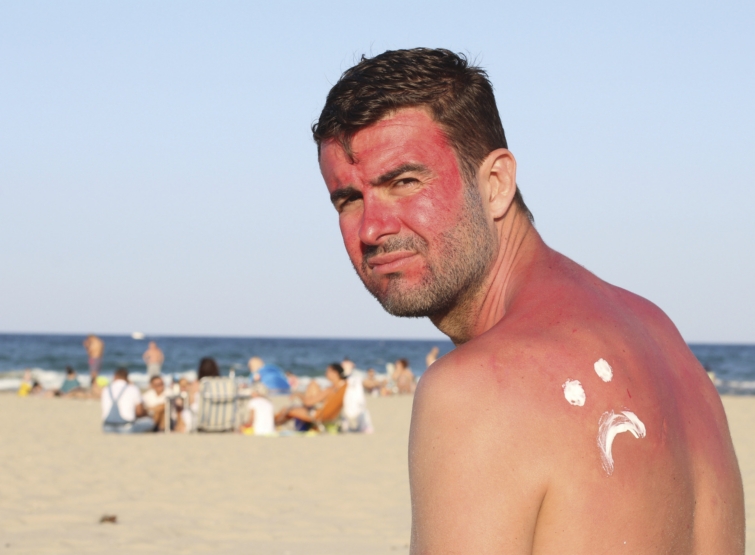
(UV) rays, an invisible component of sunlight, can cause skin damage,
cataracts, wrinkles, age spots and skin cancer. These rays also impair
the skin’s immune system.
UV rays can hurt you on cloudy as well as sunny days. UV rays also bounce off surfaces of the ocean, sand, snow and cement.
One
of the surest ways to reduce your exposure to UV rays is to stay out of
the sun when it is the strongest. Those times in North America are
between 10 a.m. and 4 p.m. in the late spring and early summer. Other
ways to protect yourself are to wear protective clothing, such as a
widebrimmed hat, long-sleeved shirt and long pants. You should use a
sunscreen rated at SPF 30 or more. Eye doctors recommend wraparound
sunglasses that provide 100 percent UV ray protection.
You should also
pay attention to the UV Index developed by the National Weather Service
and the Environmental Protection Agency. This index assesses risk of
overexposure to UV rays.
The UV Index is calculated daily and is reported by the press. It can be found at http://www.epa.gov/sunwise/uvindex.html.
The following are the index levels:
2 or less: Low danger for the average person.
3 to 5: Moderate risk of harm.
6 to 7: High risk of harm.
8 to 10: Very high risk of harm.
11+:
Extreme risk of harm. It is possible to go outside when the UV Index is
11 or higher, but you must be sure to take every step possible to
protect yourself — sunscreen, hats, long sleeves, sunglasses, the works.
Not
everyone reacts to the sun in the same way. The level of danger
calculated for the basic categories of the UV Index are for a person
with Type II skin. The following are the skin types:
I — Always burns, never tans, sensitive to sun exposure
II — Burns easily, tans minimally
III — Burns moderately, tans gradually to light brown
IV — Burns minimally, always tans well to moderately brown
V — Rarely burns, tans profusely to dark
VI — Never burns, deeply pigmented, least sensitive
What is a suntan?
When UV rays
penetrate the skin’s inner layer they generate the production of
melanin, a dark pigment. The melanin eventually moves toward the outer
layers of the skin, and becomes visible as a tan. Every time you tan,
you damage your skin, and this damage accumulates over time.
There
is no safe tan. What some call a base tan may actually increase the
chances you’ll get a burn, because you’re likely to stay out longer
without properly protecting your skin.
You should stay away from tanning beds and sunlamps because they emit UV rays that can
cause serious long-term skin damage. The amount of the radiation
produced during indoor tanning is similar to the sun’s production and in
some cases may be greater.
Many tanning salons are unregulated.
They allow customers access to tanning beds without supervision or eye protection.
Fred
Cicetti is a freelance writer who specializes in health. He has been
writing professionally since 1963. Before he began freelancing, he was a
reporter and columnist for three daily newspapers in New Jersey. If you
would like to ask a question, write to [email protected].


