April is Autism Awareness Month
Welcome to National Autism Awareness Month. There is much to educate ourselves about in this fast-changing field. The field of autism research continues to grow rapidly, and 2020 saw many exciting and groundbreaking research publications.
Public awareness regarding this complex neurobiological disorder continues to increase. According to the Centers for Disease Control, the new updates on estimated prevalence (one in 54 people) show us we will all be touched by this condition in some way -- as parents, friends, family members or co-workers. Below are some of the most exciting changes and research findings in the field of autism.
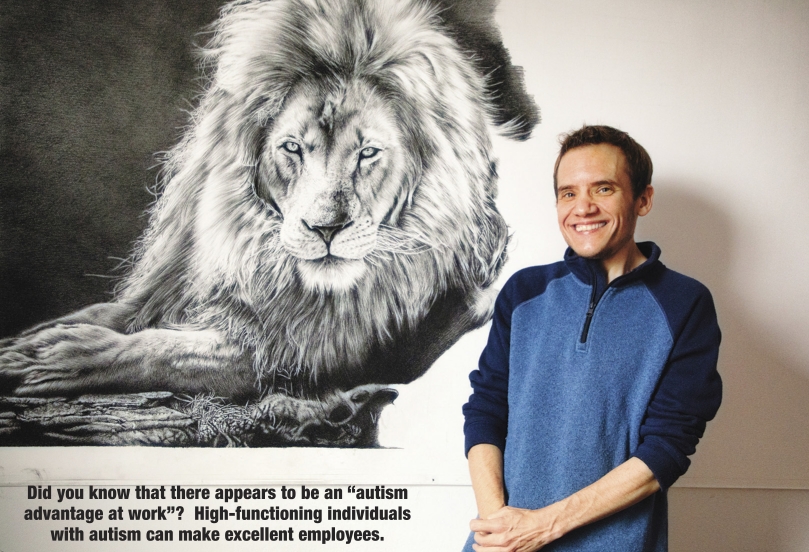
Did you know that there appears to be an “autism advantage at work”? High-functioning individuals with autism can make excellent employees.
While transitioning to the workforce can be challenging for many individuals with autism, recent research shows that individuals with autism spectrum disorders often make outstanding employees due to their unique abilities.
For example, there is a specific branch of the Israeli Army that recruits teens with autism. This unit, known as 9900, is the Israel Defense Force’s “Visual Intelligence Division.” Due to their unique visual scanning ability and tendency to think in pictures, individuals with autism can perform tasks that other soldiers would not be able to do.
For example, one individual with high functioning ASD scans satellite images and aerial maps and looks for movement or change. Within the United States, companies such as JP Morgan /Chase and Ernst & Young and other corporations have recognized the advantage of adding neurodiversity to their workforce.
Individuals on the autism spectrum have unique strengths associated with attention to detail, visual acuity, tolerance for repetitive tasks and strengths
in terms of technology. As employers begin to see their unique
abilities rather than their disability, improvement in the employment
opportunities for individuals with ASD will continue to grow.
Wandering off, also known as “elopement,” is a serious problem for the majority of families with a child who has autism.
According
to a recent survey of parents, nearly half of children with autism
spectrum disorder (ASD) between the ages of 4 and 10 years old have
tried to elope. This behavior is concerning because many individuals
with ASDs may not be able to communicate their names, addresses or phone
numbers if they become lost. One-third of the parents surveyed have had
to call the police.
LSU
Health Shreveport Children’s Center offers community outreach talks to
local law enforcement agencies to help educate first responders on this
unique disability and how best to respond in elopement situations. New
GPS technology is available, often for free or at minimal cost to the
family, allowing law enforcement to find the child in record time.
Parents
can learn how to safety-proof their home, access GPS technology and
other ways to decrease the risk of elopement through websites such as
Autism Society & Sound Initiative: www.
autism-society.org/living-with-autism/ how-we-can-help/safe-and-sound.
Did you know that early intervention could actually alter brain activity?
Clinicians
in the field of ASD have long supported and emphasized the importance
of early intervention. However, it was unclear if behavioral
intervention merely reduced autistic symptomatology or if it actually
“treated” the disorder. Could the early programming a child receives
actually alter the brain biology that underlies the autistic spectrum
disorder?
Of
all the recent research findings, for those of us who work “in the
trenches” providing front-line therapy, this is the most exciting. An
article published in the November issue of the Journal of the American Academy of Child & Adolescent Psychiatry demonstrated
that early behavioral intervention for autism is associated with
changes in brain function as well as positive changes in behavior.
LSUH-Shreveport,
School of Allied Health has recently added an early intervention
treatment arm to our longstanding diagnostic arm of the Children’s
Center to serve children diagnosed with autism spectrum disorder.
Applied Behavior Analysis (ABA) is a therapy based on the science of
learning and behavior. ABA therapy applies our understanding of how
behavior works to real situations. The goal is to increase behaviors
that are helpful and decrease behaviors that are harmful or negatively
impact learning.
ABA
therapy is effective in increasing language and communication skills,
improving attention, focus, social skills, memory and academics, and
decreasing problem behaviors. The methods of behavior analysis have been
used and studied for decades. Therapists have used ABA to help children
with autism and related developmental disorders since the 1960s.
The
American Academy of Pediatrics recommends two autism screenings for all
children before 24 months at varying points in their development. Given
the prevalence mentioned above rates, it is imperative that we have
effective therapies to recommend to such families once their child has
been identified.
The
LSU Health Shreveport Children’s Center, located on the first floor of
the Allied Health Building, is the only multidisciplinary treatment
facility in the region providing comprehensive autistic spectrum
evaluations to children as young as 24 months. If you have concerns
about your child, please call us at (318) 813-2960.
Michelle Yetman, PhD, is an assistant professor, clinical psychologist at LSU Health Shreveport.


